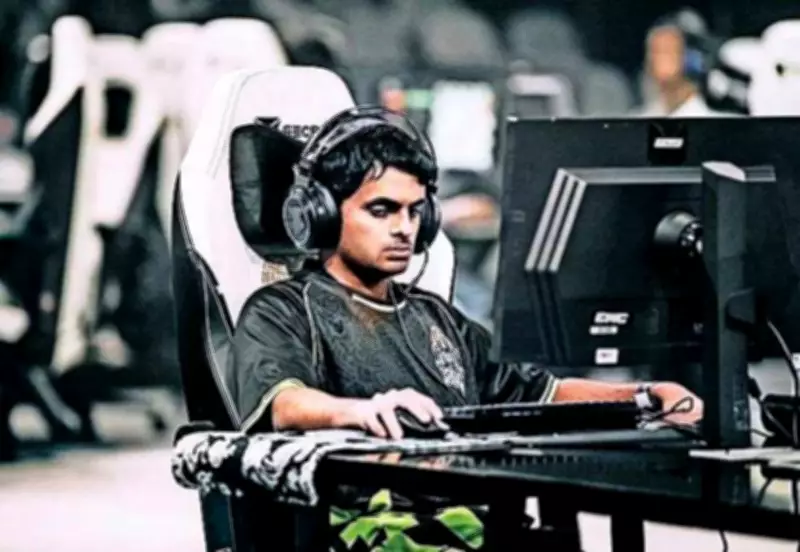
For the first time, two Mumbai-based esports clubs—GodLike and S8UL—will compete in the Esports World Cup (EWC) 2026, starting July 6 in Paris and running until August 23. The event features 25 tournaments across game titles with a prize pool exceeding $75 million (over Rs 700 crore). India accounts for roughly 20 per cent of the world’s gaming population—an estimated 517 million players—but contributes only about 1.1 per cent of global gaming revenue, highlighting a significant gap between audience size and market output.
GodLike and S8UL Join Global Elite
The Esports Foundation’s Club Partner Programme supports 40 leading esports organisations through funding, international promotion, and strategic support. S8UL was selected for a second consecutive year after becoming the first Indian organisation to enter in 2025. GodLike joins this year, placing both alongside global giants including T1, Fnatic, and G2. GodLike’s bootcamp in Navi Mumbai remains tightly guarded, with international players who qualified for the World Cup flying directly to Paris. S8UL’s bungalow, which boasts a private chef for its digital athletes, is equally elusive.
Contrasting Strategies for Success
S8UL, co-founded by Animesh Agarwal, has entered qualification pathways across 13 titles for EWC 2026—the most ever attempted by an Indian organisation. It has already qualified in Apex Legends, Chess, Fortnite, and Honor of Kings. Its Apex Legends roster recently delivered India’s best-ever finish in the title, while its BGMI squad won India’s premier mobile esports competition. GodLike has taken a different route, signing international stars including Switzerland’s Nicolas “Chap” H. and Germany’s Felix “Flickzy” G. in Fortnite, and Dominican Republic fighting game specialist Cristopher “Caba” Rodriguez in Street Fighter 6. “The biggest challenge is not talent,” says Agarwal. “The real challenge is the ecosystem that supports that talent.”

Ecosystem Challenges and Grassroots Growth
Countries that consistently produce world champions benefit from structured coaching, sports psychologists, performance analysts, and regular international competition. Around 97 per cent of Indian gamers play on mobile devices, which has democratised gaming across smaller cities and towns but also has limitations. Visa delays frequently prevent qualified Indian players from competing overseas. To address this, the Esports Foundation and JioBLAST have launched India Rising: Road to EWC—open qualifiers drawing over 10,000 players nationally, with the chess winner earning a direct spot at EWC’s chess event. This grassroots initiative provides a pathway for emerging talent.
Nihal Sarin: India’s Chess Hope
One discipline where India bypasses the traditional hardware barrier entirely is chess. Grandmaster Nihal Sarin, 21, from Kerala may represent India’s strongest medal hope in Paris. At last year’s EWC in Riyadh, his heart rate reached triple figures as he pushed into the quarterfinals of the world championship stage and held legendary Magnus Carlsen to a draw in the opening game before eventually losing. “Against Magnus, you know that every small decision matters,” Nihal says. “There was a moment where I could have taken a draw, but during the game, I felt the position still had enough life in it to keep playing. It didn’t work out, but I don’t regret trying. Those are the experiences you learn the most from.”

Rapid Chess and Heart-Rate Monitors
The EWC chess format is rapid—ten minutes per player, no increment—making speed and instinct critical. Heart-rate monitors are displayed live during broadcasts; at last year’s event, players recorded heart rates approaching 168 beats per minute while seated at the board. Nihal qualified this year through consistent performances across the Champions Chess Tour. “Naturally, I would like to go further this time and challenge for the title,” he says. Chess occupies a unique place in India’s esports story, with India recently winning the Chess Olympiad and boasting a generation of elite players. Yet EWC places them in esports jerseys, competing before gaming audiences for prize pools that often exceed those on traditional circuits. “Classical chess will always remain the purest version,” says Nihal. “But formats like this help bring the game to people who may never have discovered it otherwise.”