Bengaluru Engineer's Rocket Stove Gains Popularity During LPG Supply Crisis
A significant LPG supply disruption has impacted households across India, including major cities, as the ongoing conflict between the United States and Iran disrupts crucial maritime routes like the Strait of Hormuz. This geopolitical tension has led to shortages of essential cooking gas, prompting consumers and businesses to seek alternative solutions.
Innovative Solution Emerges from Unexpected Source
In Bengaluru, where restaurant closures and frantic searches for cooking alternatives have become common, a backyard project by a local engineer has captured widespread attention. This development highlights how practical innovations often arise from addressing real-world challenges, rather than relying solely on high-budget laboratories or advanced technology.
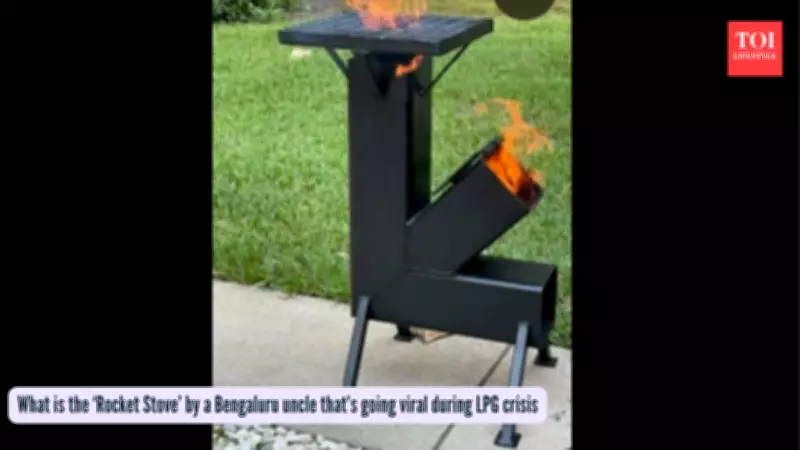
The story centers on Ashok Urs, a 65-year-old former engineer with the Oil and Natural Gas Corporation (ONGC), whose fuel-efficient "rocket stove" has become a viral sensation online. Originally created six years ago for rural households in Karnataka that depend on firewood, this compact stove is now being considered as a potential workaround for commercial establishments facing severe LPG shortages.

Design and Purpose of the Viral Rocket Stove
Urs developed the rocket stove with a focus on sustainability and health, targeting regions where wood is scarce or harvested unsustainably. His primary goals were to reduce biomass consumption and minimize harmful smoke emissions. "In many rural areas, people still cook on open fires that consume large amounts of wood and produce a lot of smoke. I wanted to show that the same work can be done with far less fuel," Urs explained in an interview with The Hindu.
Traditional cooking methods often fill homes with irritants that can damage eyes and lungs, whereas Urs's stove is designed to burn hotter and cleaner, offering a healthier alternative for daily cooking.
How the Rocket Stove Functions
The rocket stove features an L-shaped, insulated combustion chamber that enhances airflow, creating a powerful draft. This design allows various types of biomass—such as twigs, coconut shells, dry leaves, or agricultural waste—to ignite completely at high temperatures. Compared to open fires or basic traditional stoves (chulhas), this innovation significantly reduces firewood requirements while maximizing heat output from small fuel pieces.
The cleaner combustion process results in substantially less smoke, making it a more environmentally friendly and health-conscious option for cooking.
From Rural Households to Urban Commercial Use
Initially intended to raise awareness about sustainable biomass usage in villages, the rocket stove is now attracting interest from small eateries in Bengaluru. The LPG supply issues, exacerbated by West Asian tensions, have led restaurant owners to inquire about its suitability for commercial applications.
Urs acknowledges that while the stove's efficiency could help mitigate fuel shortages during crises, scaling it up for larger hotel operations would require further testing and adaptation. As Bengaluru's food industry struggles with the ongoing crisis, this low-tech innovation offers a temporary respite, combining ecological awareness with practical urgency.
Urs has demonstrated the rocket stove at open days hosted by the Indian Institute of Science (IISc) and prices each unit at approximately ₹3,000, making it an accessible option for both rural and urban users seeking reliable cooking solutions during uncertain times.