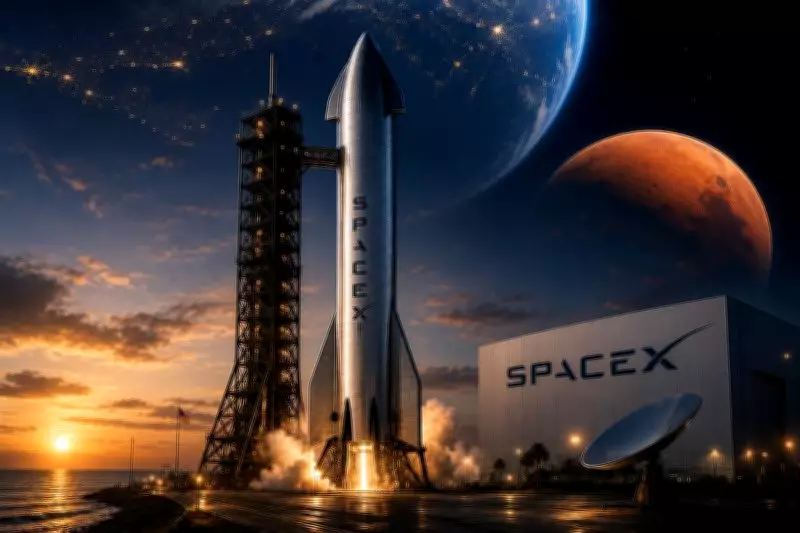
SpaceX, led by Elon Musk, has achieved a blockbuster IPO, marking a new chapter for the company. While the IPO created new billionaires and excited investors, it also spotlighted one of the most ambitious companies in the world. Unlike typical businesses aiming to expand into new markets, SpaceX is working to make humanity a multi-planetary species, with the ultimate goal of establishing a city on Mars. Given its track record of innovation, betting against SpaceX may not be wise.
From Startup to Space Superstar
Founded in 2002 by Elon Musk, SpaceX initially set a goal that seemed wildly unrealistic: make space travel cheaper and more accessible. At that time, rockets were largely expendable, used once and then discarded as expensive space junk. SpaceX challenged this model, asking why rockets should be thrown away like disposable coffee cups. This simple question revolutionized the space industry.
Today, SpaceX is a leading player in the global space race, launching satellites, ferrying astronauts, supplying the International Space Station (ISS), and collaborating with governments and private companies worldwide.

Meet the Rocket Family
SpaceX's success is built on a family of increasingly powerful rockets. The workhorse is the Falcon 9, a two-stage rocket standing about 70 meters tall. It has become one of the most frequently launched rockets in history, capable of carrying satellites, cargo, and astronauts into orbit. Next is the Falcon Heavy, one of the world's most powerful operational rockets, using three Falcon 9 boosters strapped together to lift more than 60 tonnes into orbit.
These rockets are powered by Merlin engines, which burn highly refined rocket-grade kerosene and liquid oxygen. Each Falcon 9 uses nine Merlin engines on its first stage, creating a spectacular liftoff. However, the real game-changer is reusability.
Reusable Launch Systems
SpaceX revolutionized spaceflight by developing rockets that can land and fly again. After launching a payload, the first-stage booster turns around, re-enters Earth's atmosphere, and lands vertically on a landing pad or a drone ship at sea. This breakthrough has dramatically reduced launch costs, allowing SpaceX to launch missions at a pace few competitors can match. Some Falcon 9 boosters have flown well over 20 times, a feat considered nearly impossible a decade ago.
NASA's Favorite Ride
A key factor in SpaceX's success is its close partnership with NASA. For years, NASA relied on Russian spacecraft to transport astronauts to the ISS. That changed in 2020 when SpaceX's Crew Dragon spacecraft carried astronauts to the ISS under NASA's commercial crew program, marking the first time a private company launched astronauts into orbit and returned them safely. Today, Crew Dragon regularly transports astronauts from multiple countries to and from the space station, and SpaceX is also helping NASA return people to the lunar surface.
Starlink: Internet from the Sky
While rockets grab headlines, one of SpaceX's biggest businesses is internet connectivity. The Starlink network consists of thousands of satellites orbiting Earth, creating a global broadband system capable of delivering internet access to remote villages, ships at sea, aircraft, and disaster-hit regions. The concept is simple: if laying cables is difficult, beam the internet from space. Revenue from Starlink is expected to help fund SpaceX's larger ambitions, including Mars exploration.
Starship: The Beast Built for Mars
Standing roughly 120 meters tall when combined with its Super Heavy booster, Starship is the largest and most powerful rocket system ever developed. Unlike Falcon 9, which uses Merlin engines, Starship is powered by next-generation Raptor engines fueled by liquid methane and liquid oxygen. This fuel choice is crucial because methane could potentially be produced on Mars using local resources, enabling future settlers to manufacture rocket fuel for return journeys to Earth. Starship is designed to carry over 100 people, massive cargo loads, and even entire habitat modules.

Dream That Refuses to Go Away
Mars is not just a side project for SpaceX; it is the core mission. Elon Musk has repeatedly stated that humanity should become a multi-planetary civilization to reduce vulnerability to disasters that could affect Earth. Mars is the leading candidate because it has water ice, seasons, a 24.6-hour day, and resources that could support long-term settlements. The vision includes thousands of Starships making regular journeys between Earth and Mars, entire settlements powered by solar energy, and people growing food, building habitats, and creating the first permanent city on another world. Huge challenges remain, including radiation, extreme temperatures, life-support systems, and the difficulty of transporting people across millions of kilometers. However, landing reusable rockets once seemed impossible too.
The Next Frontier
The success of the IPO marks a new chapter for SpaceX, but the company's ambitions extend far beyond stock markets and quarterly earnings. Its real target lies roughly 225 million kilometers away. Whether SpaceX ultimately succeeds in building a city on Mars remains to be seen, but even if it falls short, the company has already transformed spaceflight, slashed launch costs, and pushed the boundaries of private enterprise. While most companies ask how to grow over the next decade, SpaceX is asking how humanity can survive for the next thousand years—a pretty wild business plan.