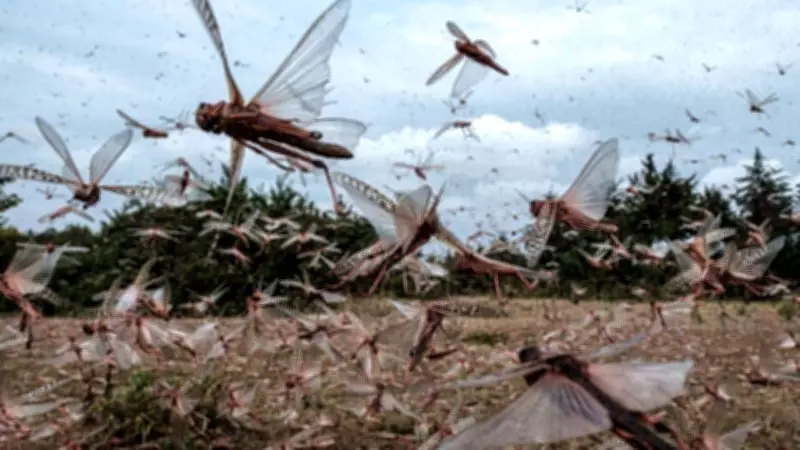
It is easy to underestimate what a swarm actually is until it shows up in real space, not as a metaphor or a headline, but as something physically present and moving. Thousands of bodies behaving like a single system, without a leader or visible direction, shifting shape as conditions change. Insects, fish, birds, and even mammals can fall into this kind of collective rhythm. From a distance, it can look almost organised, but up close it is irregular and restless. BBC Wildlife lists 10 scariest swarms on Earth, some pass quickly without consequence; others reshape entire landscapes for a short period of time. What makes them memorable is not just size, but the feeling that normal rules of scale stop applying once enough living things move together.
African Honeybees
Africanised honeybees spread through parts of the Americas after hybridisation events changed their behaviour compared to many European honeybee strains. They are not inherently aggressive, but they respond quickly to disturbance, which has led to a reputation that follows them wherever they establish colonies. When a hive splits, a swarm can gather in a dense cluster while scouts search for a new nesting site. During this phase, they are relatively exposed, hanging from branches or structures in large groups. The risk comes when the swarm feels threatened, because defensive responses can escalate rapidly when so many individuals react at once.
Locust Swarms
Locusts are grasshoppers that can shift behaviour under certain environmental pressures, forming migratory swarms that travel across regions in search of food. In their solitary phase, they are unremarkable, but once conditions trigger gregarious behaviour, they begin moving in coordinated masses. These swarms can extend across vast distances and consume vegetation as they pass. Farming areas are often affected first, with crops stripped in a short time. The movement is continuous rather than sudden, more like a travelling front than a single event.

Fire Ants
Fire ants come from South America, although they have been widely distributed in warmer climates in different parts of the world. Fire ants create underground nests that can grow rapidly. Their adaptation strategies include strong defence mechanisms and acting collectively against potential dangers. When provoked, they attack en masse very fast. Among the many interesting things about them is their ability to stick together and form floating islands when there are floods. On the other hand, on dry land, their most interesting aspect is their coordinated stinging attack.
Army Ants
The army ant's main characteristic is its nomadic existence within the tropical rainforests, where their colonies keep relocating rather than remaining in permanent nesting sites. The ants migrate in large columns while looking for prey as they sweep across the floors of the forests in an organised fashion. Other smaller organisms tend to make way for them, while some others trail along after them to scavenge any leftovers. The power that they have lies in coordination and not physical attributes alone.
Fat-Tailed Scorpions
Fat-tailed scorpions live in arid regions and typically remain underground, avoiding surface exposure during extreme conditions. Heavy rainfall or flooding can force them out of their burrows, sometimes bringing them into contact with human settlements. Their venom can be medically significant, which is why sudden increases in sightings during environmental disruptions tend to attract attention. These events are usually short-lived, tied closely to unusual weather rather than long-term changes in behaviour.
Piranhas
Piranhas inhabit South American river systems and are often discussed in exaggerated terms compared to their typical behaviour. Many species are scavengers or opportunistic feeders rather than organised predators. They may gather in groups when food is available or when conditions encourage feeding activity, but large-scale coordinated attacks on humans are not characteristic of their normal behaviour. Most encounters occur in specific, limited circumstances.

Water-Line Isopods
These small coastal crustaceans live near shorelines and are usually hidden among rocks and tidal zones. When conditions shift or they are disturbed, they can appear in dense clusters along the water's edge. Although their presence can be surprising in large numbers, they are not dangerous to humans. Reports of bites are rare and typically linked to close contact during unusual congregation events.
Mice Plagues
In some agricultural regions, mouse populations can rise sharply following periods of abundant rainfall and food supply. These outbreaks are tied to rapid breeding cycles and favourable environmental conditions. When numbers peak, mice spread into fields, storage areas, and buildings, moving in continuous waves rather than isolated groups. The impact is mainly economic and agricultural, affecting stored grain and crops over wide areas.
Fruit Bats
Fruit bats, often called flying foxes, form large roosting colonies that shift depending on food availability and climate. At dusk they leave in wide streams, travelling long distances in search of flowering trees and fruiting plants. When populations concentrate near urban areas, the movement becomes highly visible, with thousands crossing the sky in coordinated flight. Their presence is more disruptive than dangerous, often affecting noise levels and local vegetation patterns.
Red Crabs
Red crabs on Christmas Island undertake one of the most recognisable mass movements in the natural world. Triggered by seasonal rainfall, millions leave forest burrows and travel toward the coastline to reproduce. Roads, paths, and open ground become temporary migration routes during this period. After breeding, most return inland, and the landscape gradually shifts back to its usual quiet state until the next cycle begins.