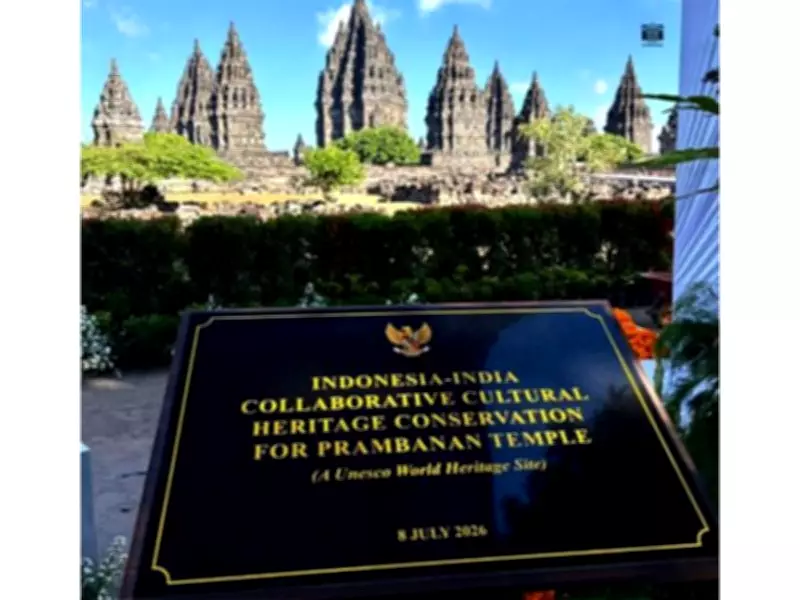
The Archaeological Survey of India (ASI) has been entrusted with the conservation of the Prambanan Temple, a UNESCO World Heritage Site in Indonesia's Special Region of Yogyakarta. This initiative was jointly launched by Indian Prime Minister Narendra Modi and Indonesian President Prabowo Subianto under the India-Indonesia Collaborative Conservation initiative.
ASI's Role in the Conservation Project
In a post on X, the ASI expressed its honour in undertaking the conservation of the 10th-century Hindu temple complex. The ASI described the collaboration as a milestone in bilateral cultural cooperation, highlighting the enduring civilisational ties between India and Indonesia. The statement emphasised a shared commitment to preserving cultural heritage for future generations.
Prambanan Temple, dating back to the 10th century CE, is Indonesia's largest Hindu temple complex, primarily dedicated to Lord Shiva. The sprawling complex comprises 240 temples, with three central shrines devoted to Shiva, Vishnu, and Brahma, along with three temples for their respective vahanas (divine mounts). The temple walls are adorned with intricately carved reliefs narrating the story of the Ramayana.

Joint Inauguration by Leaders
On Wednesday, PM Modi and President Prabowo jointly inaugurated the restoration project at the temple site. PM Modi offered prayers and interacted with officials, while crowds waving the national flags of both countries welcomed the leaders. Earlier, Modi shared an aerial video of the temple on X, describing it as 'The majestic Prambanan Temple.'
On Tuesday, India and Indonesia exchanged a Letter of Intent for the conservation and restoration initiative following bilateral talks between Modi and Prabowo. The discussions focused on strengthening the Comprehensive Strategic Partnership between the two nations and promoting a peaceful and stable Indo-Pacific region.
Historical and Cultural Significance
Constructed in the 9th century, Prambanan is Indonesia's largest Hindu temple complex, with the central Shiva temple standing 47 metres tall. The complex also includes shrines dedicated to Vishnu and Brahma, along with temples for their divine mounts. The intricate stone carvings depict scenes from the Ramayana and other Hindu epics, reflecting deep civilisational links between India and Southeast Asia.