The National Tiger Conservation Authority (NTCA) released a report on Sunday outlining a roadmap to revive tiger populations in India's low-density reserves. The report, titled 'Road Map on Active Management of Tigers in India', suggests that tiger reserves with five or fewer tigers may be prioritised for reintroduction efforts based on scientific assessment and feasibility. The release coincided with the 18th anniversary of the world's first successful tiger reintroduction in Sariska Tiger Reserve.
Reserves identified for potential reintroduction
The report identifies 16 tiger reserves with five or fewer tigers that could be considered for future reintroduction efforts. These include Guru Ghasidas-Tamor Pingla, Udanti-Sitanadi, Indravati, Palamau, Kamlang, Namdapha, Satkosia, Kawal, Mukundara, Ramgarh Vishdhari, Buxa, Dampa, Ranipur, Achanakmar, Kalakad Mundanthurai and Nameri. The assessment is based on habitat suitability, prey base, and connectivity potential.
Rajaji Tiger Reserve example
The report cites Rajaji Tiger Reserve as a case study. Despite a reintroduction programme launched in 2020, the western part of the reserve continues to support only five tigers. Sanjay Kumar, Member Secretary of NTCA, explained, “Disrupted connectivity with eastern Rajaji and the broader Corbett landscape continues to be a major limiting factor for the recovery and long-term growth of the tiger population in western Rajaji. The numbers in Western part still remains five.” The area has extensive suitable habitat, including sal and riverine forests, grasslands and perennial water sources, but connectivity remains a challenge.

National workshop on tiger reintroduction
The NTCA, in collaboration with the Rajasthan government, organised a national workshop on 'Tiger Reintroduction' to deliberate on recovery strategies. SP Yadav, Director General of the International Big Cat Alliance (IBCA), emphasised the importance of community participation. “Tiger re-introduction in Satkosia and Mukundara failed as the community was not taken into confidence. Before Sariska, an attempt was made by Russia to reintroduce tigers but they failed. The world's first successful reintroduction of tigers happened in Sariska. Reintroduction of tigers was successful in Panna as it is inviolate. Cambodia is learning reintroduction of tigers from India,” he said.
Union Minister highlights community support
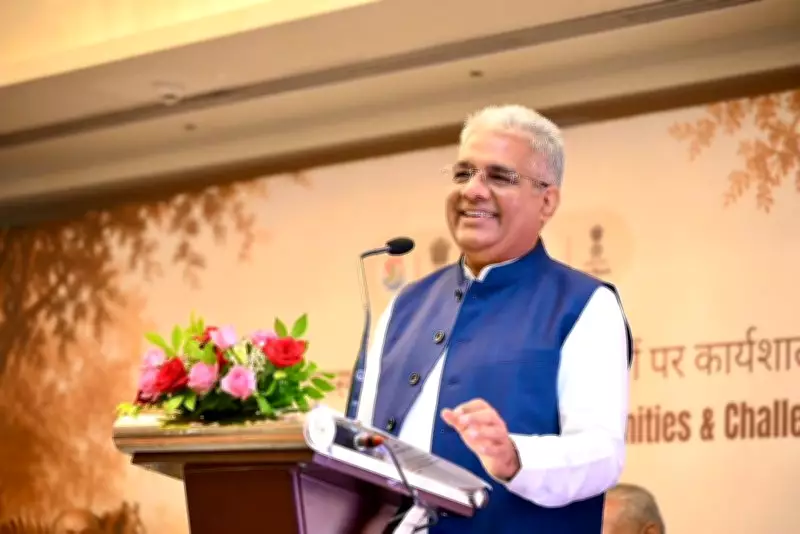
Union Minister Bhupender Yadav, who addressed the event, said community support was instrumental in the success of 'Project Cheetah'. “Community participation is key to reintroduction of tigers. Where tigers had once become completely extinct, today the same Sariska echoes with the roars of 56 tigers. The tiger reintroduction program in Sariska Tiger Reserve is not only a historic and exemplary achievement for India but for the entire world in the field of wildlife conservation and species restoration,” the minister said.
Sariska: a model for restoration
Located in Rajasthan's Aravalli landscape, Sariska once supported a thriving tiger population before intensive poaching led to extinction by 2005. Tigers from Ranthambhore Tiger Reserve were selected for translocation as they belonged to the same regional population. The first tiger was translocated to Sariska on June 28, 2008. Today, the reserve is home to 56 tigers, including cubs, and has re-emerged as a key tiger habitat. The report notes that continued monitoring, habitat management and landscape connectivity are essential for long-term viability. Sariska has become a model for wildlife restoration programmes in India and abroad.