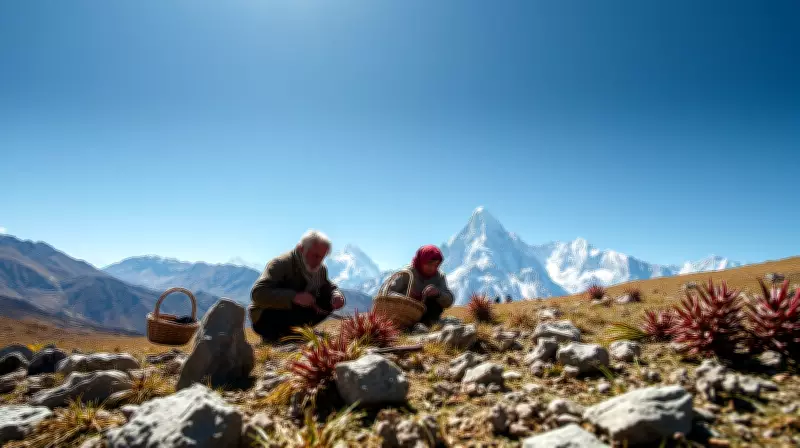
Every spring, thousands of people from Nepal's remotest Himalayan districts abandon their homes and climb above 3,500 metres to search for something barely visible to the untrained eye. They are looking for Yarsa Gumba, a fungus-caterpillar complex no larger than a matchstick, emerging from the frozen ground of alpine meadows where yaks graze. Scientifically known as Ophiocordyceps sinensis, this organism is part insect, part fungus, and entirely extraordinary, valued in traditional Chinese and Ayurvedic medicine for centuries and now traded in global markets at prices that can rival gold by weight. For many hill communities in Nepal, a few weeks of harvesting this single organism can generate more income than the rest of the year combined.
What Yarsa Gumba actually is and how it forms
Yarsa Gumba, known in Tibetan as Yartsa Gunbu, meaning "summer grass, winter worm," is one of the most unusual organisms in the natural world. According to a detailed review published on PubMed Central, Ophiocordyceps sinensis is an entomopathogenic fungus, meaning it specifically infects and kills insects. Its life cycle begins when fungal spores settle into the soil of high-altitude Himalayan meadows and infect the larvae of ghost moths belonging to the genus Thitarodes. The fungus slowly colonises the larva from the inside, eventually mummifying it entirely. Once the host is dead, the fungus sends a dark, finger-like fruiting body upward through the larva's head and a few centimetres above the soil surface, where it can be spotted and collected by harvesters who know exactly what to look for among the short alpine grasses.
Where Yarsa Gumba grows and why it grows nowhere else
The fungus is found only in a narrow band of high-altitude terrain across Nepal, Tibet, Bhutan, and parts of northern India, at elevations ranging from 3,500 to 5,500 metres above sea level. According to a collection and management study published in the Journal of Mountain Science, the fungus is documented from 27 northernmost districts of Nepal, distributed in isolated patches of alpine grassland where specific soil conditions, snowfall patterns, and ghost moth populations coincide. The combination of host-specific infection, extreme altitude requirement, and climate sensitivity means that Yarsa Gumba cannot be reliably cultivated outside its natural habitat, a constraint that has kept wild harvesting the only viable source of supply despite decades of attempts to grow it artificially.

Why Yarsa Gumba commands such extraordinary prices
From a price of roughly Rs. 315 per kilogram in 1992, Yarsa Gumba has risen to values that routinely place it among the most expensive biological products in the world. According to research published in Tropical Agroecosystems, the price per kilogram climbed to Rs. 1,05,000 by 2002 and has continued rising since, driven by surging demand in Chinese traditional medicine and wealthy consumer markets across East Asia. The fungus contains bioactive compounds including cordycepin, polysaccharides, and adenosine, documented in pharmacological research as carrying antiviral, anti-inflammatory, immune-modulating, and cardiovascular properties. It has also long been marketed under the name "Himalayan Viagra" for its reputed effects on stamina and sexual function, a reputation that has driven demand among consumers well beyond traditional medicine circles.
How Yarsa Gumba harvesting works and who depends on it
The collection season runs from approximately mid-April to mid-July, just before the monsoon arrives, when the fruiting body is visible above ground but the soil is still firm enough to climb. Harvesters from districts including Dolpa, Mugu, Jumla, Darchula, and Sankhuwasabha set up temporary camps at altitude and spend weeks crawling across meadows scanning the ground. Nepal legalised the collection and trade of Yarsa Gumba in 2001, after a period when harvesting had been banned, and local authorities have since introduced permit systems and collection taxes to manage the resource. According to reporting by NepalConnect, the forest office in Mugu district alone collected around $54,000 in trade taxes in a single fiscal year, underscoring how significant the fungus has become to state revenue at the district level.

How climate change is threatening Yarsa Gumba's survival
The same altitude and climate sensitivity that make Yarsa Gumba so rare is also making it increasingly vulnerable. A peer-reviewed analysis of climate projections for Nepal's Karnali region published in Climatic Change found that alpine ecosystems producing high-value medicinal plants like Ophiocordyceps sinensis could experience extreme heat on 80 to 90 per cent of days by mid-century even under moderate emissions scenarios, with highland winters potentially more than six degrees warmer by 2100 under high-emissions pathways. Local harvesters in Mugu have already reported declining yields linked to reduced snowfall, which disrupts the cold-season conditions the ghost moth larvae and fungal spores need to complete their cycle. Declining harvests since at least 2008 have been documented across monitored sites, pointing to a resource under growing pressure from both overextraction and a warming climate.