Deep inside the Nallamala forests, far from modern civilisation, lies a remote tribal settlement that once held significant importance during the Vijayanagara empire. Palutla village has now emerged as a key archaeological site following the discovery of an ancient inscription dating back to the reign of Vijayanagara ruler Devaraya II near the Poleramma temple.
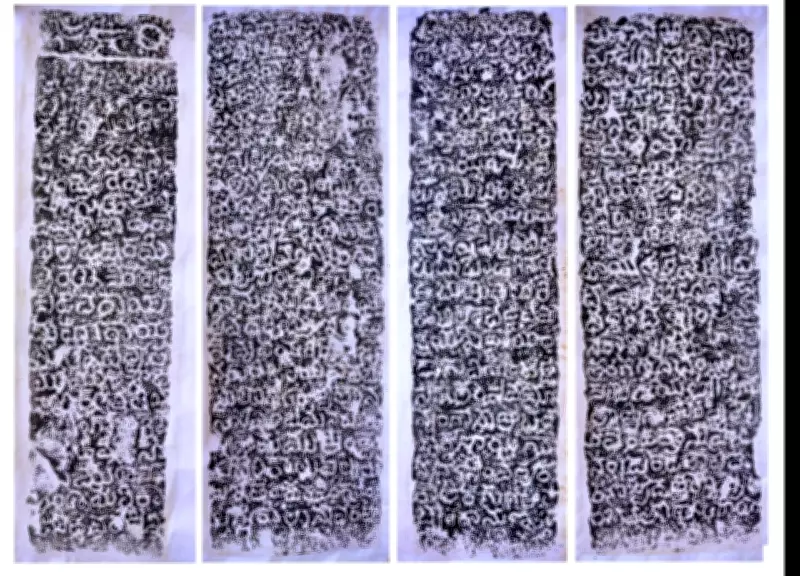
The discovery was made during a recent epigraphical survey conducted by the Archaeological Survey of India (ASI) in the dense Nallamala forest region. The inscription, engraved on a Nandi pillar, sheds light on the administrative, economic and religious significance of Palutla during the 15th century.
ASI director (epigraphy) K Munirathnam Reddy said the findings suggest that Palutla was not merely a forest settlement but a prominent centre under the Vijayanagara empire. “Palutla served as a major trade hub and provided shelter to Shaiva devotees travelling to Srisailam. The inscription reflects the vibrant activity that existed in these forest regions centuries ago,” he said.

The inscription is written in Telugu script and dated to Saka year 1358, corresponding to October 18, 1436 CE. It records that Emperor Devaraya II granted two villages — Puttabadi and Palutla — in Yeruvabhumi of Udayagiri Rajya.
Each village generated an annual revenue of 800 varahas, the gold currency of the period. The grant included income from dry lands, forest produce, local levies, sesame cultivation, tamarind produce, and taxes on trade. The villages were donated to Bhikshavritti Ayyangar of Sriparvata in the presence of Lord Mallikarjunadeva for religious merit and the prosperity of the kingdom.
Another inscription found near Maisammagutta outside Meetota village further highlights the region’s importance. Dated to Saka 1360 (1438 CE), it records a land grant to Tammajiya for conducting rituals, feeding devotees and maintaining a perpetual lamp at the Kandeswara temple.
Historians say these findings offer rare insights into how the forest regions of present-day Markapuram district were integrated into the Vijayanagara empire’s political and economic framework. They also underline the hidden historical significance of tribal settlements in the Nallamala hills, once vibrant centres of trade, pilgrimage and culture.