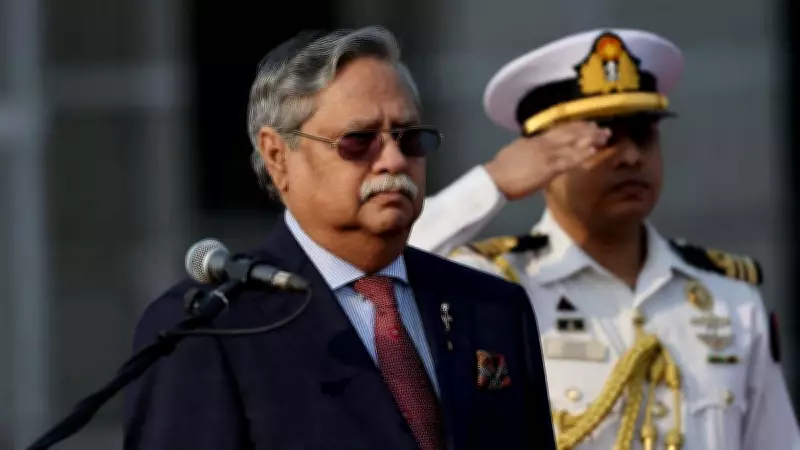
Bangladesh President Mohammed Shahabuddin resigned on 24 July 2026, submitting his resignation letter to parliamentary Speaker Hafizuddin Ahmed. According to the Bangladesh Constitution, Speaker Ahmed will serve as Acting President until a new president is elected by the parliament.
Resignation Process and Constitutional Succession
The resignation letter was handed over to Speaker Hafizuddin Ahmed, who is now empowered as Acting President under Article 54 of the constitution. The Speaker's office confirmed receipt of the letter, and the transition is expected to proceed smoothly. The constitution mandates that a new president be elected within 90 days by members of the Jatiya Sangsad (parliament). This is the first presidential resignation in Bangladesh since 1990.
President Shahabuddin, a former judge and Awami League politician, assumed office in April 2023 for a five-year term. His resignation comes amid ongoing political tensions, though specific reasons were not disclosed in the brief official statement. The PTI news agency reported the development on 24 July 2026 at 12:18 IST.

Political Implications and Next Steps
The resignation marks a significant political event in Bangladesh, a country that has experienced periodic political instability. Speaker Hafizuddin Ahmed, a senior figure in the governing party, will now oversee presidential duties while maintaining his role as Speaker. Elections for a new president will be conducted by the parliament, likely dominated by the ruling Awami League, which holds a majority.
Political analysts expect the new president to be a consensus candidate, though the opposition Bangladesh Nationalist Party (BNP) may demand a non-partisan figure. The last presidential election in 2023 saw Shahabuddin elected with overwhelming support, as the BNP boycotted the vote. The resignation adds uncertainty to the political landscape ahead of the next general election due in 2028.
International observers noted that the constitutional processes are being followed. The transfer of power to the Speaker ensures continuity in the largely ceremonial role. However, the president holds authority during a caretaker government scenario, making the appointment critical for future political transitions.
Historical Context and Constitutional Framework
Bangladesh's presidency has been mostly symbolic since the introduction of parliamentary democracy in 1991. The president appoints the prime minister, dissolves parliament on the advice of the prime minister, and serves as commander-in-chief of the armed forces. The resignation triggers a constitutional mechanism to avoid a power vacuum. Article 54 states that if the president resigns, the Speaker acts as president until a successor is elected. This process was last used in 2023 when then-President Abdul Hamid's term ended.
President Shahabuddin's resignation took many by surprise, as he was expected to serve his full term. No official reason has been given, but speculation in diplomatic circles points to health issues or political pressure. The government has not issued a formal statement beyond confirming the resignation.
As Bangladesh prepares for a presidential election, all eyes are on the parliament's schedule. The ruling party has a strong majority, making the outcome predictable but still significant. The opposition, while weakened, may attempt to raise procedural objections. The international community, including the United Nations, will monitor the process to ensure it aligns with democratic norms.
The resignation of President Shahabuddin underscores the fluidity of Bangladesh's politics. With the Speaker now acting as president, the immediate governance structure remains stable. The next few weeks will reveal how political parties navigate this unexpected development.