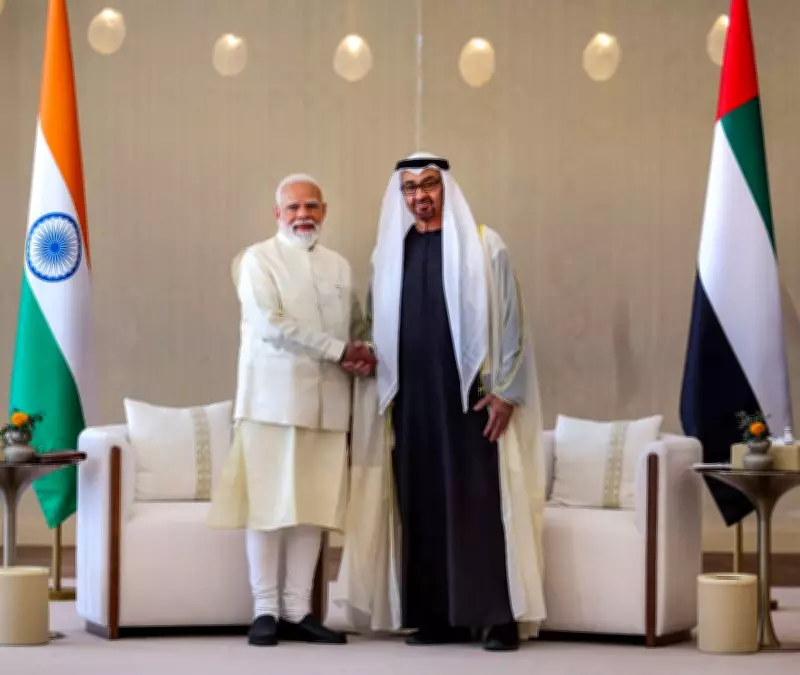
India and the United Arab Emirates (UAE) are charting a course through shifting geopolitical sands, as both nations deepen their strategic partnership in response to evolving global dynamics. The relationship, once primarily economic, has expanded into security, energy, and technology collaboration, reflecting a shared vision for regional stability and prosperity.
Deepening Economic Ties
Economic cooperation remains the cornerstone of India-UAE relations. Bilateral trade has surged, with the UAE emerging as India's third-largest trading partner and a key source of foreign direct investment. The Comprehensive Economic Partnership Agreement (CEPA), signed in 2022, has further boosted trade by reducing tariffs and enhancing market access. Non-oil trade between the two countries is expected to reach $100 billion in the coming years, driven by sectors such as gems and jewelry, pharmaceuticals, and information technology.
Energy Security and Green Transition
Energy security is a critical pillar of the partnership. The UAE is a major supplier of crude oil and liquefied natural gas to India, meeting about 10% of its energy needs. However, both nations are also pivoting toward renewable energy. Indian companies are investing in UAE solar projects, while UAE sovereign wealth funds are financing green hydrogen initiatives in India. This dual focus on traditional and clean energy aligns with India's goal of achieving net-zero emissions by 2070 and the UAE's strategy to diversify its energy portfolio.

Strategic and Security Cooperation
The strategic dimension of India-UAE ties has gained momentum in recent years. The two countries conduct joint military exercises, including naval drills in the Arabian Sea, and share intelligence on counterterrorism and maritime security. The UAE has also become a key partner in India's outreach to the Gulf region, facilitating dialogue on issues like Afghanistan and Iran. India's inclusion in the I2U2 grouping (with Israel, the UAE, and the US) underscores its growing role in Middle East geopolitics.
Diplomatic Balancing Act
Both nations navigate complex regional dynamics with skill. India maintains a delicate balance between its ties with the UAE and its relationship with Iran, while the UAE manages its partnership with India alongside its alliance with Saudi Arabia and the US. The recent normalization of relations between the UAE and Israel, brokered by the US, has opened new avenues for trilateral cooperation in technology, water, and food security. India, too, has benefited from this thaw, as it seeks to deepen its engagement with Israel without alienating Arab partners.
Cultural and Diaspora Links
The Indian diaspora in the UAE, numbering over 3.5 million, serves as a vital bridge between the two societies. Their contributions to the UAE economy are immense, spanning sectors from construction to finance. Cultural exchanges, including yoga festivals and Bollywood film screenings, foster mutual understanding. The UAE's decision to include Hindi as an optional language in its school curriculum reflects the growing cultural affinity.
Challenges and Opportunities
Despite the robust partnership, challenges remain. The volatility of global oil prices, regional conflicts in the Middle East, and competition for influence in Africa and Central Asia could strain ties. However, the strategic convergence between India and the UAE is strong. Both nations advocate for a multipolar world order and seek to reduce dependence on traditional powers. As they navigate shifting sands, their partnership is likely to deepen, setting a model for South-South cooperation in the 21st century.