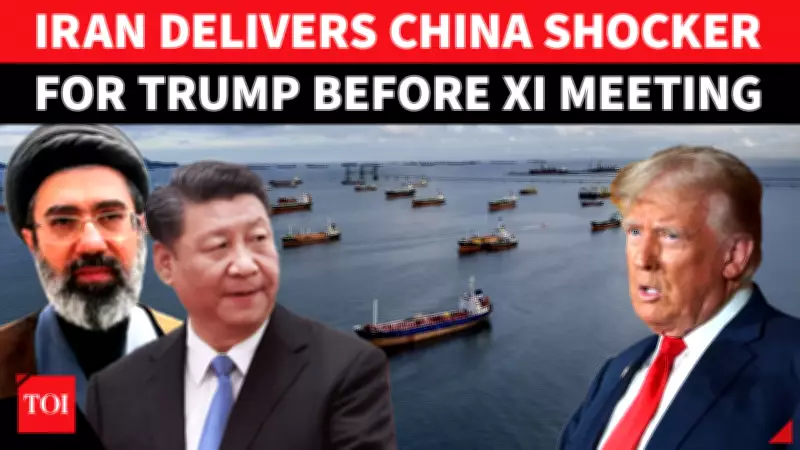
As tensions simmer across the Gulf, Beijing's oil lifeline is moving straight through the eye of the storm. Dozens of Chinese-linked tankers have been granted passage through the Strait of Hormuz under Iran's new control regime, even as Western vessels face blockades, tolls, and attacks.
Strategic implications of the Hormuz breakthrough
The coordinated movement of Chinese ships represents a significant challenge to the US Navy's efforts to enforce a blockade on Iranian oil exports. This development comes just ahead of a highly anticipated meeting between US President Donald Trump and Chinese President Xi Jinping.
Iran's new maritime control regime
Iran has established a system that allows Chinese tankers to transit the strategic waterway while denying passage to Western vessels. This selective enforcement has effectively broken the siege that the US Navy had attempted to impose on Iranian oil shipments.

Impact on global oil markets
The successful passage of Chinese tankers through the Strait of Hormuz is expected to stabilize oil prices, as it ensures continued flow of Iranian crude to one of the world's largest consumers. However, it also raises questions about the effectiveness of US sanctions and military posture in the region.
Related developments
- Trump lands in Beijing without in-person welcome from Xi
- Austria scrambles Eurofighter Typhoon against US spy plane
- China reveals four red lines ahead of Trump-Xi meeting amid Iran war
- Saudi Arabia's covert operation deep inside Iran
- Iran dares US with five hardline terms to resume peace talks
The situation continues to evolve as diplomatic and military maneuvers intensify in the Gulf region. The outcome of the Trump-Xi meeting could have far-reaching consequences for the balance of power in the Middle East and global energy security.