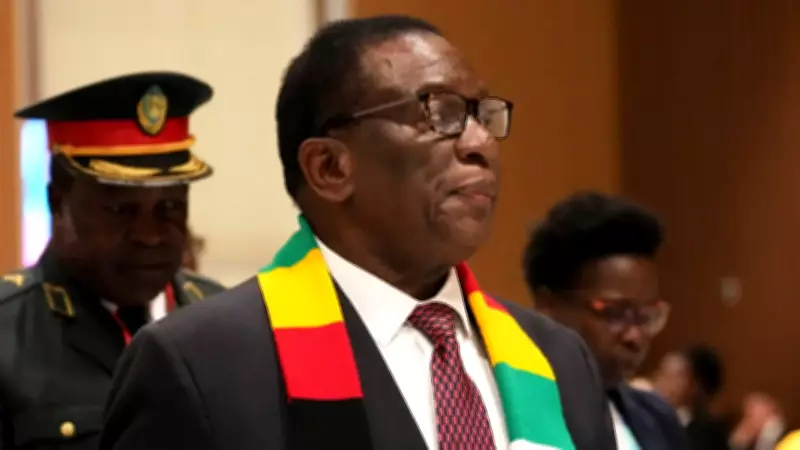
Zimbabwe's parliament voted Thursday to extend President Emmerson Mnangagwa's term by two years and push the next election to 2030, in the latest example of how Africa's ageing rulers are rewriting constitutions to keep themselves in power.
The National Assembly overwhelmingly approved the amendments, which would also strip citizens of the right to directly elect their president, shifting that power to lawmakers instead. The bill now goes to the Senate, where it is also expected to pass, as reported by AP.
At 83, Mnangagwa would join a club of some of the world's oldest heads of state, most of them African. A recent Pew Research Center analysis found that seven of the world's ten oldest leaders govern African nations, even as the continent has a median age of around 20 and more than 60% of its population is under 30, according to the United Nations.

"The population in Africa is getting younger, but the average age of presidents is rising, and tenures are getting longer," said Blessing Vava, director of the Southern Africa Coalition for Democracy and Accountability. "Zimbabwe is just one data point in a much broader story of constitutional erosion for political survival."
Cameroon's Paul Biya, 93, is the world's oldest serving head of state and has governed since 1982, outlasting seven American presidents since Ronald Reagan. In neighbouring Equatorial Guinea, Teodoro Obiang Nguema Mbasogo, 84, has held power for 47 years and has installed his son as vice president. Ivory Coast's Alassane Ouattara, also 84, was sworn in for a fourth term in December 2025. Uganda's Yoweri Museveni, 81, took his seventh consecutive oath of office in May, stretching his rule to four decades.
Like Mnangagwa, each of these leaders has altered or removed constitutional term limits to extend their hold on office.
Africa is not without younger leadership. Senegal's Bassirou Diomaye Faye won the 2024 election at 44. Ethiopia's Abiy Ahmed, 49, has governed since 2018. Several younger men have also come to power through military coups, among them Burkina Faso's Ibrahim Traoré, 38, Africa's youngest ruler, who seized power in 2022.
But analysts say democratic avenues to power remain largely closed to younger Africans. According to the Africa Center for Strategic Studies, roughly 20 of the continent's 54 countries uphold term limits, while others have abolished or bypassed them.
"You get 25-year-olds making up the majority of a country's population, but 75-year-olds decide the candidate or rule," Vava said. "Youth are mobilised for votes and not for power."