

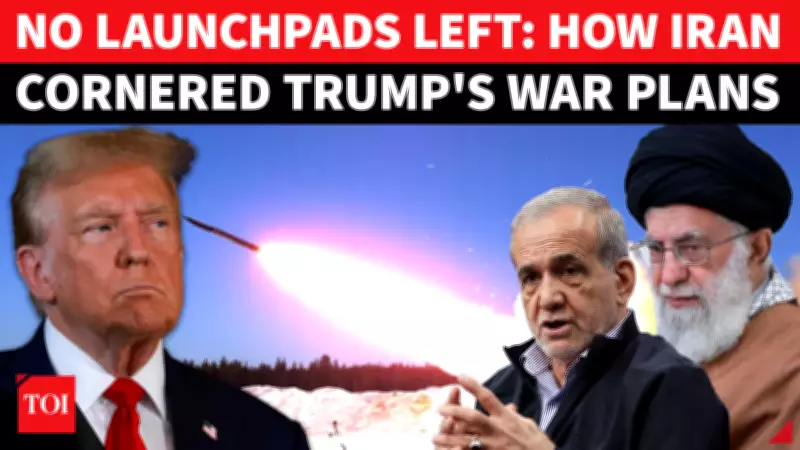
Khamenei Outmaneuvers Trump: Arab Allies Block US Military Options Against Iran
In a significant geopolitical development, the United States finds itself strategically constrained as it contemplates military action against Iran. According to multiple intelligence and diplomatic reports, key American allies across the Middle East and beyond have formally communicated to Washington that they will not permit their airspace, territories, or maritime waters to be utilized for any offensive operations targeting Tehran.
Geographic Isolation of US Military Capabilities
This collective refusal effectively boxes the United States out from every geographic direction, creating a formidable barrier to conventional military planning. With regional launchpads and transit corridors closed off, the Pentagon's operational flexibility has been severely curtailed, leaving military strategists grappling with a complex dilemma.
The current situation presents Washington with only two viable but high-risk alternatives:

- Conducting offshore strikes from distant locations such as the Arabian Sea and Diego Garcia
- Ignoring allied objections entirely and risking broader regional conflict escalation
Iran's Strategic Advantages in Defense Posture
Military analysts emphasize that Iran can now concentrate its sophisticated air defense systems along a single predictable attack corridor, significantly enhancing its defensive capabilities. Furthermore, Iran's extensive missile and drone arsenal possesses operational ranges that far exceed those of US carrier-based aircraft, creating additional tactical challenges for American planners.
Experts unanimously warn that any military strike against Iran would likely fail to achieve decisive strategic objectives while almost certainly triggering severe consequences:
- Immediate and potentially devastating Iranian retaliation
- Significant global economic shockwaves, particularly in energy markets
- Profound diplomatic fallout across international alliances
Political Context and Strategic Implications
As President Donald Trump continues to advocate for leadership changes in Iran while simultaneously pushing for renewed nuclear negotiations, Washington confronts an uncomfortable reality. There exists no clean military option, no contained conflict scenario, and no straightforward exit strategy from this escalating standoff.
Every potential move in this high-stakes geopolitical chess game carries profound global consequences, affecting international security architecture, energy stability, and diplomatic relationships across multiple continents. The current impasse represents what many analysts describe as a strategic checkmate situation, where traditional military superiority cannot be easily translated into operational advantage due to political and geographic constraints.
This development marks a significant shift in Middle Eastern geopolitics, with regional powers asserting unprecedented independence in security matters that directly affect great power military planning. The situation continues to evolve as diplomatic channels remain active while military preparations proceed cautiously on all sides.






