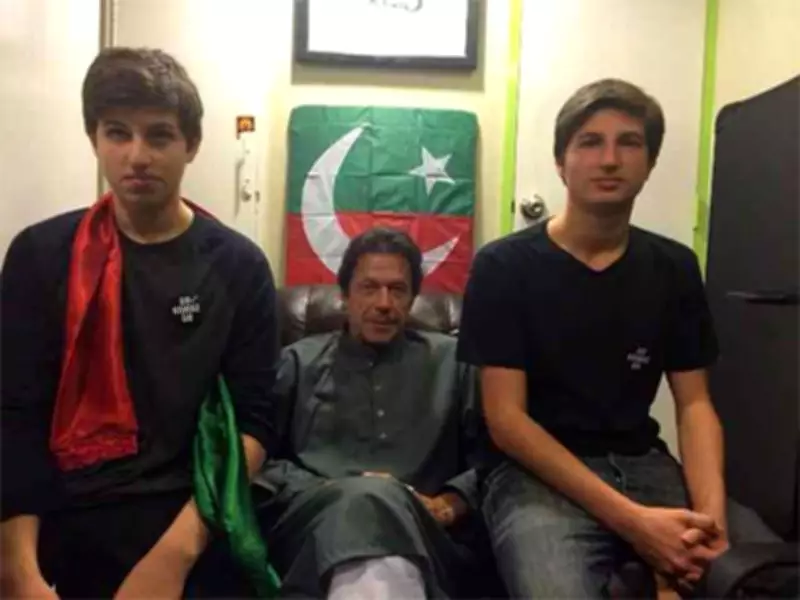
Imran Khan's Son Alleges Pakistan Deliberately Refusing Visas to Prevent Family Visit
In a significant development that highlights the ongoing political turmoil in Pakistan, Junaid Safdar, the son of former Prime Minister Imran Khan, has made serious allegations against the Pakistani authorities. He claims that the government is intentionally denying visas to members of his family, effectively blocking their planned visit to the country. This accusation comes at a time when Imran Khan, a prominent political figure, is facing numerous legal and political challenges, adding another layer of complexity to the already tense situation.
Details of the Allegations
Junaid Safdar, who is based abroad, has publicly stated that the visa applications submitted by his family members have been met with deliberate refusal from Pakistani officials. According to him, this is not a matter of administrative oversight or standard procedure but a calculated move to prevent the family from reuniting or engaging in any activities within Pakistan. The allegations suggest a targeted effort to isolate Imran Khan and his close relatives, potentially as part of broader political maneuvers aimed at undermining his influence and support base.
The timing of these visa denials is particularly noteworthy, as Imran Khan continues to navigate a series of legal battles and political opposition. His party, Pakistan Tehreek-e-Insaf (PTI), has been at the center of controversies, and many observers believe that such actions could be intended to exert pressure on him and his associates. Junaid Safdar's claims have sparked discussions about the use of state machinery for political purposes, raising concerns over fairness and transparency in governance.

Broader Implications and Reactions
This incident has drawn attention to the broader issues of visa policies and their potential misuse in political contexts. In Pakistan, where political rivalries often spill over into administrative decisions, such allegations are not entirely unprecedented. However, the direct involvement of a former prime minister's family adds a personal dimension to the conflict, potentially galvanizing public opinion and international scrutiny.
Reactions to Junaid Safdar's allegations have been mixed. Supporters of Imran Khan view this as evidence of a concerted campaign against him, arguing that it reflects the government's fear of his enduring popularity. On the other hand, critics and government representatives have yet to issue a formal response, leaving room for speculation and further debate. The situation underscores the deep divisions within Pakistani politics and the challenges of maintaining democratic norms amidst intense power struggles.
Key points to consider:
- The allegations highlight potential abuses of administrative power for political gains.
- Imran Khan's ongoing legal and political battles may be influencing such decisions.
- This could impact Pakistan's international image regarding human rights and governance.
As the story develops, it remains to be seen how Pakistani authorities will address these claims and whether any evidence will be presented to support or refute them. For now, the allegations serve as a reminder of the intricate and often contentious nature of politics in the region, with families of leaders sometimes becoming unintended pawns in larger games of power.