Maharashtra Government and Coca-Cola Forge Landmark Partnership for PET Waste Management
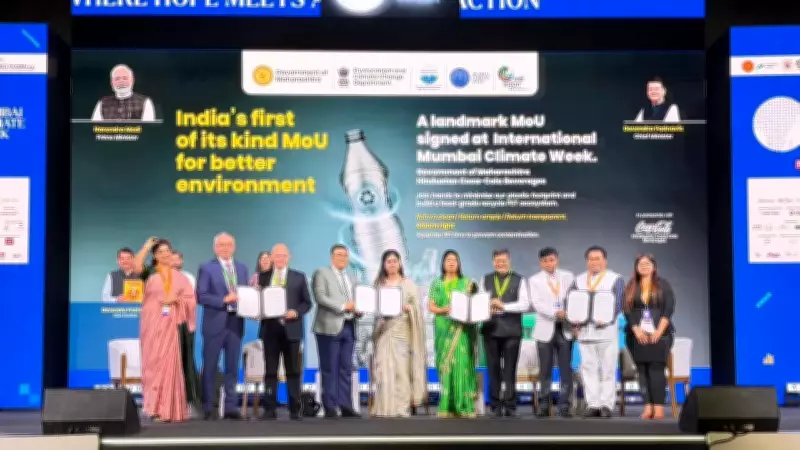
The Maharashtra Environment and Climate Change Department has taken a significant step toward sustainable waste management by signing a formal memorandum of understanding (MoU) with Hindustan Coca-Cola Beverages. This landmark agreement, inked on Tuesday, establishes a comprehensive framework for the collection and recycling of used polyethylene terephthalate (PET) bottles across the state.
Historic Agreement Signed During Mumbai Climate Week 2026
The MoU signing ceremony took place during Mumbai Climate Week 2026, with State Environment Minister Pankaja Munde presiding over the event. Department officials emphasized that this represents the first instance where Coca-Cola has entered into a formal, structured agreement with any Indian state government specifically dedicated to PET bottle collection and recycling initiatives.
"This partnership marks a crucial milestone in our efforts to address plastic waste through collaborative action," said a department spokesperson. "By combining policy oversight with corporate implementation capabilities, we're creating a model for sustainable waste management that other states can emulate."

Launch of the Maha-rPET Campaign
The initiative will be implemented under the newly launched "Maha-rPET Campaign," which aims to establish organized systems for post-consumer PET waste collection throughout Maharashtra. The campaign represents a strategic effort to promote sustainable waste management practices while supporting broader circular economy objectives that keep materials in use for as long as possible.
According to the environment department, the partnership is designed to:
- Create structured collection systems for used PET bottles
- Promote responsible disposal practices among consumers
- Support recycling infrastructure development
- Reduce environmental impact of plastic waste
- Advance circular economy principles in waste management
Statewide Implementation Across Nine Key Cities
The Maha-rPET Campaign will be rolled out across nine major urban centers in Maharashtra, including:
- Mumbai
- Thane
- Navi Mumbai
- Panvel
- Pune
- Nashik
- Chhatrapati Sambhajinagar
- Beed
- Palghar
Collection points will be strategically established at various locations including retail outlets, hotels, workplaces, and other public spaces to maximize accessibility for consumers wishing to dispose of their PET bottles responsibly.
Comprehensive Awareness and Education Component
Beyond physical infrastructure, the initiative includes a substantial educational component. Awareness drives and information-education activities focused on responsible PET disposal will be conducted in coordination with:
- Schools and educational institutions
- Local self-governing bodies
- Community organizations
- Corporate partners
"Effective waste management requires both infrastructure and behavioral change," explained an official involved in the planning. "That's why we're investing equally in collection systems and public education about proper PET disposal practices."
Public-Private Framework for Implementation
The agreement establishes a public-private framework that combines policy-level oversight from the government with on-ground implementation capabilities from the corporate partner. Secretary of the Environment and Climate Change Department Jayashree Bhoj and Director of the State Climate Action Cell Abhijit Ghorpade signed the MoU on behalf of the Maharashtra government.
This collaborative approach is designed to leverage the strengths of both sectors—government regulatory authority and corporate operational expertise—to create a more effective and scalable solution to PET waste management challenges.
The initiative comes at a critical time as Maharashtra continues to address urban waste management challenges while pursuing its climate action goals. By focusing specifically on PET bottles, which represent a significant portion of plastic packaging waste, the partnership aims to create measurable environmental impact while establishing replicable models for other materials and regions.