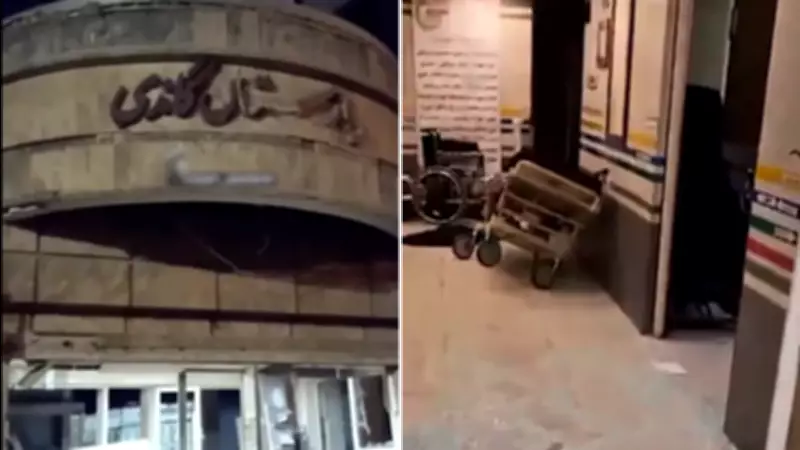
Panic and Damage at Tehran's Gandhi Hospital Following US-Israeli Airstrikes
Videos circulating widely on social media platforms depict scenes of intense panic and confusion outside Gandhi Hospital in Tehran, after the facility was struck during the latest wave of US–Israeli airstrikes targeting the Iranian capital. The footage, which has gone viral, shows visible structural damage to the hospital building located on Gandhi Street, with shattered windows and debris scattered across the entrance area, highlighting the direct impact of the military operations.
Evacuation Efforts and Witness Accounts
In separate clips shared by Iran’s Tasnim News Agency, nurses were seen urgently carrying infants in their arms as they rushed to evacuate hospital wards amid blaring alarms and rising smoke. Two witnesses speaking to Reuters confirmed that Israeli strikes had directly hit the hospital area on Sunday, leaving the facility "badly damaged" and compelling medical staff to move patients into the street for safety. The videos capture people running in various directions, some shouting for relatives, as smoke billows in the background, though the full extent of casualties at the hospital remains unclear at this time.
Escalating Conflict and Regional Tensions
The strike on Gandhi Hospital occurred as explosions were reported across northern Tehran late on Sunday, part of Israel's declared campaign to take its operations to the "heart" of the Iranian capital. This follows the killing of Iran’s Supreme Leader in a joint US–Israeli operation just a day earlier, which has significantly intensified fears over civilian safety in densely populated urban areas. The broader conflict has now entered its second day, with Iran retaliating by firing missiles and drones towards Israel and targeting US military installations across the Gulf region, including in Dubai, Doha, and Manama.

Casualties and International Reactions
According to live updates from the conflict zone, eight people have been killed in Israel as a result of Iran's missile attacks, adding to the mounting human toll. In Washington, a senior White House official indicated that potential new figures within Iran’s leadership have signaled openness to talks with the United States. President Donald Trump, in an interview with The Atlantic, confirmed that he has agreed to speak with Iran’s new leadership, stating, "They want to talk, and I have agreed to talk, so I will be talking to them." However, the official emphasized that, for now, the military operation "continues unabated," with no immediate signs of de-escalation.
Impact on Civilians and Ongoing Threats
As air raid sirens and blasts continue to rock Tehran, the scenes at Gandhi Hospital have emerged as one of the most striking images of the escalating conflict, underscoring the growing toll on civilians caught in the crossfire. The widening assault has raised alarms about the safety of non-combatants in conflict zones, with hospitals and other critical infrastructure becoming unintended targets. The situation remains fluid, with ongoing strikes and counter-strikes threatening to further destabilize the region.
This report is based on verified footage and witness accounts, reflecting the rapidly evolving nature of the US–Israeli–Iranian conflict. The international community watches closely as diplomatic efforts and military actions unfold in tandem.