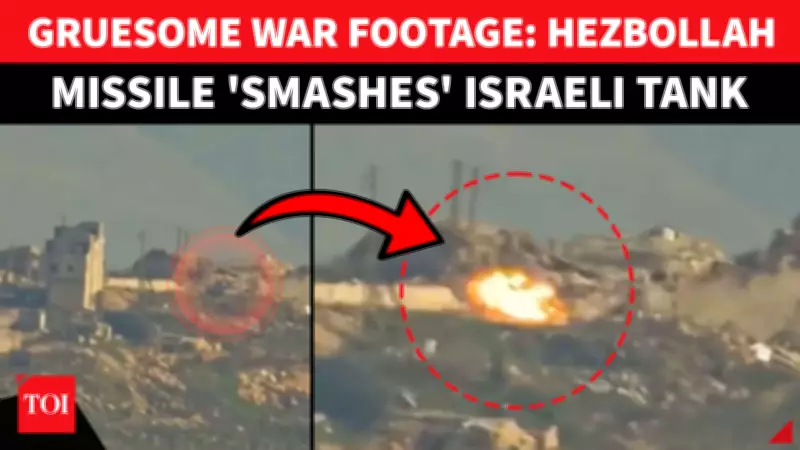
Hezbollah Releases First Combat Video of Missile Strike on Israeli Armored Tank
In a significant development in the ongoing Middle East conflict, the Iran-aligned militant group Hezbollah has released what it claims is its first combat video depicting an anti-tank guided missile strike on an Israeli Merkava tank. The dramatic footage, emerging from southern Lebanon, appears to show a direct hit on the armored vehicle near the border zone, marking a notable escalation in military operations.
Details of the Attack and Tactical Implications
The video, released by Hezbollah, serves as a visual signal of the group's renewed and coordinated military activities. It underscores a shift towards more sophisticated warfare tactics, with the use of rockets, drones, and precision missiles in synchronized attacks. This incident highlights the increasing complexity of the conflict, as both sides engage in armored warfare with advanced weaponry.
The strike on the Merkava tank, a mainstay of the Israeli Defense Forces, is particularly symbolic, given its reputation for robust armor and defensive capabilities. Hezbollah's ability to target such a vehicle suggests enhanced anti-tank capabilities and strategic planning, potentially altering the dynamics of border skirmishes.

Context of Escalating Tensions
This event occurs against a backdrop of heightened tensions in the region, with Iran and its allies, including Hezbollah, involved in various conflicts. The release of the combat footage is seen as a propaganda move to demonstrate military prowess and deterrence, while also rallying support among its followers.
Analysts note that such visual evidence of attacks can influence public perception and international responses, adding pressure on diplomatic efforts to de-escalate the situation. The use of social media and digital platforms to disseminate war footage has become a common tactic in modern conflicts, shaping narratives in real-time.
Regional and Global Implications
The escalation in southern Lebanon raises concerns about broader regional stability, with potential spillover effects into neighboring countries. International observers are closely monitoring the situation, as any significant military engagement could trigger wider involvement from global powers.
- Increased use of precision-guided missiles by non-state actors.
- Growing role of Iran in supporting proxy groups like Hezbollah.
- Impact on civilian populations in border areas due to intensified clashes.
As the conflict evolves, the focus remains on how such tactical developments will affect long-term security arrangements and peace initiatives in the Middle East. The release of this combat video by Hezbollah is a stark reminder of the ongoing volatility and the need for sustained diplomatic engagement to prevent further escalation.