

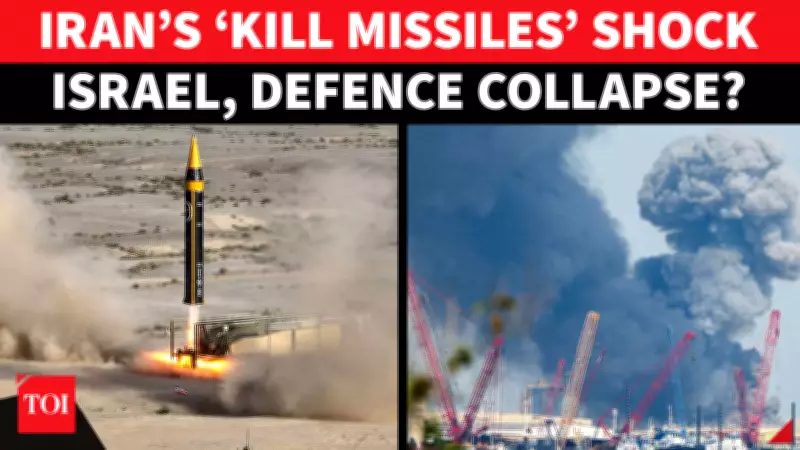
Iran's Advanced Missile Strategy Intensifies Pressure on Israeli Defenses
Tensions between Iran and Israel have reached a critical juncture as recent missile strikes target central regions of Israel, triggering alarms across major urban centers. According to emerging reports, Iran is now actively employing sophisticated ballistic missiles equipped with Multiple Independently Targetable Reentry Vehicle (MIRV) technology. This advanced capability allows a single missile to release multiple warheads during its flight path, significantly complicating interception efforts by defense systems.
Evolving Tactics Strain Air Defense Infrastructure
Military analysts are issuing stark warnings that Iran's evolving missile tactics could place immense strain on Israel's comprehensive air defense network. This includes the highly regarded Arrow 3 missile defense system, designed to intercept threats in the exo-atmospheric region. The deployment of MIRV-equipped missiles represents a strategic shift, potentially overwhelming defensive mechanisms through sheer volume and complexity of incoming projectiles.
In recent weeks, hundreds of missiles have reportedly been launched in this escalating conflict, raising serious questions about the sustainability of such intensive operations. The financial costs associated with maintaining and deploying these advanced weapon systems are substantial, while the risk of further military escalation remains dangerously high. The volatile situation continues to command global attention, with observers closely monitoring potential ramifications for regional stability and international economic dynamics.

Regional Security Implications and Global Concerns
The persistent missile exchanges between Iran and Israel underscore deepening geopolitical fissures in the Middle East. The utilization of MIRV technology marks a significant escalation in offensive capabilities, challenging existing defense paradigms. This development not only affects bilateral relations but also has broader implications for international security architectures and diplomatic efforts in the region.
As both nations navigate this precarious phase, the international community remains vigilant about possible spillover effects. The economic consequences of sustained conflict could disrupt global energy markets and trade routes, while the humanitarian impact on civilian populations in affected areas continues to be a pressing concern. The strategic calculus surrounding missile defense and deterrence is being fundamentally reevaluated in light of these technological advancements.






