US and Israel Launch Devastating Coordinated Strikes Against Iran, Killing Supreme Leader
In a dramatic escalation of Middle East tensions, the United States and Israel executed a meticulously coordinated military operation that resulted in the death of Iran's long-time Supreme Leader, Ayatollah Ali Khamenei. The strikes, which began early Sunday, represent one of the most significant direct military actions against the Iranian regime in decades.
Operation Epic Fury: A Direct Assault on Iranian Leadership
The Donald Trump-led United States initiated Operation Epic Fury, a mission explicitly designed to target the Khamenei-led establishment. According to the United States Central Command (CENTCOM), the operation delivered "an overwhelming and unrelenting blow" against Iranian leadership and military infrastructure.
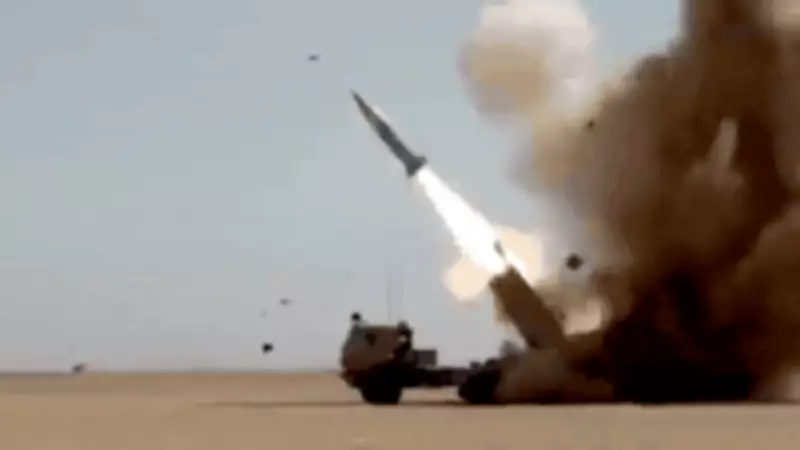
The military campaign relied on a sophisticated array of modern weaponry, including stealth fighter jets, suicide drones, and precision-guided Tomahawk missiles. American warships launched cruise missiles at key Iranian targets while ground forces deployed the High Mobility Artillery Rocket System (HIMARS) for maximum impact.

Casualties and Strategic Targets
Among those reported killed in the strikes were not only Supreme Leader Khamenei but also his daughter and a grandchild, indicating the precision and severity of the attacks. The strikes focused on Tehran and other critical locations across Iran, aiming to cripple the regime's command structure and military capabilities.
President Trump announced the operation in an eight-minute video statement, declaring that the United States was conducting "major combat operations" to prevent Iran from threatening American national security interests. "We're going to destroy their missiles and raze their missile industry to the ground," Trump stated emphatically.
Israel's Role as Key Regional Ally
Israel participated actively alongside the United States, serving as a crucial regional partner in the strikes against the oil-rich nation. The coordinated nature of the attack suggests extensive planning and intelligence sharing between the two allies, who have long viewed Iran's nuclear ambitions and regional influence as significant threats.
The military operation began on Saturday morning and utilized American assets operating from land, sea, and air. US forces employed advanced air defense systems to protect their bases across the Middle East from potential Iranian retaliation during and after the strikes.
Military Technology and Tactical Approach
The United States demonstrated its military superiority through the deployment of cutting-edge technology including:
- Tomahawk cruise missiles launched from naval vessels
- High Mobility Artillery Rocket Systems (HIMARS) operated by ground forces
- Stealth aircraft capable of evading detection
- Suicide drones for precision targeting
- Undisclosed standoff weapons designed for long-range attacks
CENTCOM released video footage showing missiles being launched in precision strikes aimed at the heart of Iran, providing visual confirmation of the operation's scale and sophistication.
Geopolitical Implications and Regional Fallout
The strikes occurred against a backdrop of heightened regional tensions, with explosions reported in Abu Dhabi and Doha, and missiles striking US naval headquarters in Bahrain. Iran had previously launched "Truthful Promise 4" operations against US military bases across the Middle East, setting the stage for this dramatic escalation.
Trump's administration made clear its longstanding opposition to Khamenei's rule, stating that the Iranian regime "did not serve US interests in the region." The operation represents the most direct confrontation between the United States and Iran's leadership in recent history, with potentially far-reaching consequences for Middle East stability and global security dynamics.