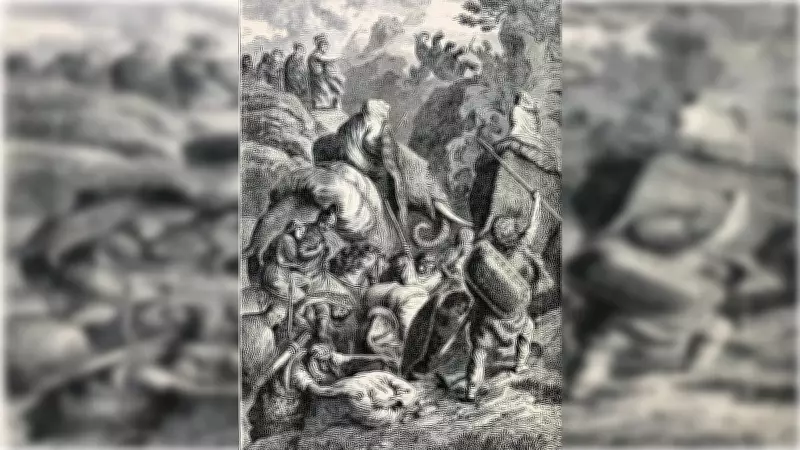
The exact route taken by Carthaginian general Hannibal when he crossed the Alps in 218 BC continues to spark debate among historians, archaeologists, and geologists. According to a report by Kalyan Ray, scholars are carefully weighing historical, logistical, and topographical evidence to pinpoint the path used by his army, which included war elephants, during the Second Punic War.
The Historical Puzzle
Ancient historians Polybius and Livy provided accounts of Hannibal's crossing, but their descriptions are often vague and contradictory. Polybius, writing about 60 years after the event, described a route that involved a difficult ascent over a high pass, while Livy mentioned a narrower, rockier path. These discrepancies have led to multiple competing theories, with proposed passes ranging from the Col de la Traversette in the west to the Montgenèvre in the east.
Logistical and Topographical Evidence
Scholars have long analyzed the logistical challenges Hannibal would have faced: the need for forage for horses and elephants, the ability to move large numbers of troops (estimated at 38,000 infantry, 8,000 cavalry, and 37 elephants), and the timing of the crossing—likely in late autumn. Topographical studies have focused on identifying passes that match descriptions of landslides, snow cover, and local tribes encountered along the way. Soil surveys and pollen analysis have also been employed to trace the passage of such a large force and its animals.

Recent Scientific Findings
In recent years, multidisciplinary teams have turned to geology and microbiology for new clues. For example, analysis of soil layers in the Col de la Traversette has revealed high levels of fecal biomarkers consistent with horse and elephant dung, suggesting a major animal presence at that location. Similarly, pollen records indicate unusual disturbance patterns that could correspond to the army's passage. These findings have revived interest in the Traversette as a candidate, though skeptics question whether the biomarkers could result from later use of the pass.
Implications for History
The exact route matters not only for historical geography but also for understanding the strategic and logistical capabilities of ancient armies. Confirming the path would help explain how Hannibal managed to surprise the Romans by emerging from the mountains into the Po Valley. It would also shed light on the environmental impact of such a massive military operation. As Kalyan Ray's report notes, the debate remains open, and new evidence continues to be weighed. The final answer may come from further archaeological fieldwork or advanced imaging technologies that peer beneath the Alpine ice.