

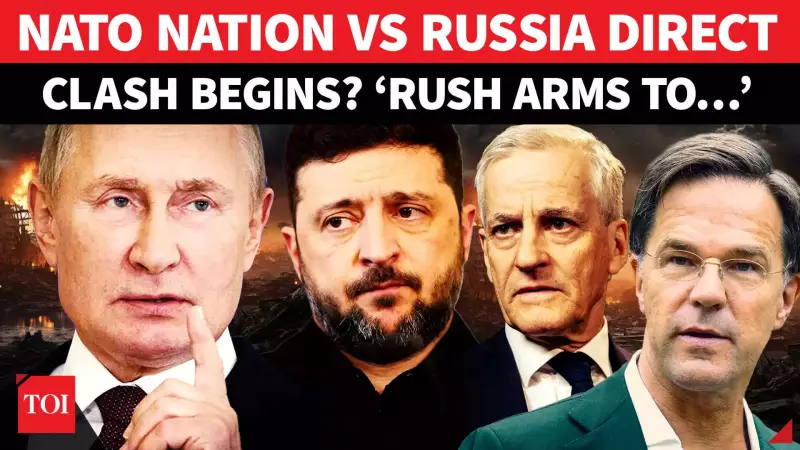
In a bold and potentially risky strategic shift, Norway has openly declared that supporting Ukraine's war effort takes precedence over rebuilding its own national defence capabilities. This decision, confirmed by senior officials, has immediately escalated tensions with Moscow, highlighting a critical dilemma facing European nations.
Stockpiles Strained as Aid Flows East
Norwegian authorities have admitted that their own military stockpiles of crucial ammunition and equipment are now under significant strain. Despite this internal shortfall, the government in Oslo is actively expanding its cooperation with Kyiv. This partnership includes substantial funding, direct transfers of weapons, and even joint ventures for drone production. The move signals a long-term commitment to Ukraine's defence, even at a potential cost to Norway's immediate military readiness.
The announcement, reported on January 3, 2026, frames Norway's choice as part of a larger European debate. Nations across the continent are grappling with a difficult question: should they focus resources on reinforcing their own national defences, or should they invest forward in Ukraine to help shape the battlefield and contain Russian aggression far from their own borders?

A Broader European Security Quandary
Norway's stance throws into sharp relief the complex trade-offs defining European security policy. While diplomatic channels discuss potential peace talks and future security guarantees for Ukraine, the reality on the ground is one of deepening military commitments. Oslo's policy effectively bets that a Ukrainian victory is the best guarantee for long-term Norwegian and European security, justifying the current drawdown on its own arsenals.
This "forward investment" strategy is not without its critics and risks. It leaves Norway more vulnerable in the short term and depends heavily on the success of Ukrainian forces. Furthermore, it represents a clear and calculated challenge to Russia, which has interpreted the move as a direct provocation, leading to a fresh diplomatic clash.
Implications for Regional Stability
The decision places Norway, a NATO member with a long border with Russia in the Arctic, at the centre of an escalating geopolitical standoff. By publicly prioritising Ukraine, Oslo is sending a strong message about its alignment and its assessment of the primary threat. However, it also raises questions about the sustainability of such support if the conflict drags on and the strain on Western stockpiles increases.
The situation underscores a pivotal moment: European nations are being forced to make concrete, costly choices that will define the continent's security architecture for decades. Norway's choice to potentially compromise its own defence for Ukraine is one of the most stark examples of this new, high-stakes reality, where the line between supporting an ally and safeguarding oneself is increasingly blurred.

