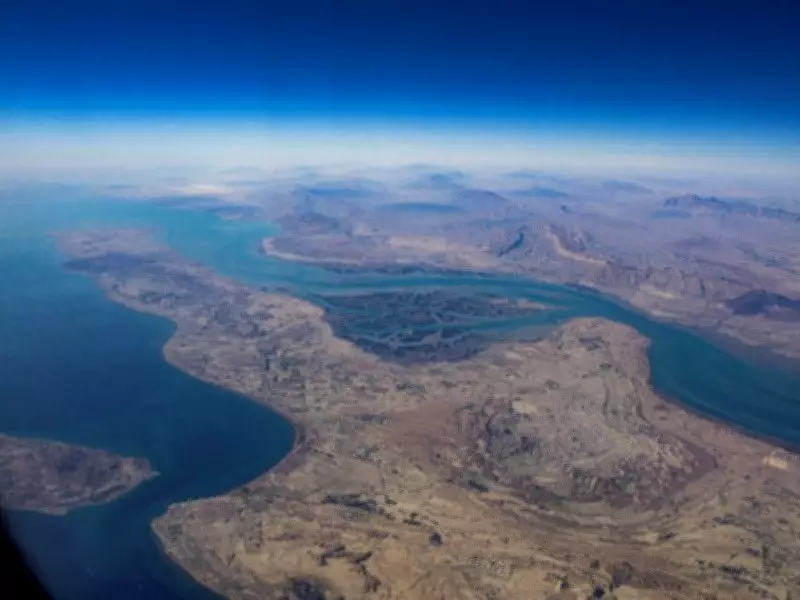
Iran's Islamic Revolutionary Guard Corps (IRGC) Navy announced on June 26, 2026, that all transit through the strategic Strait of Hormuz must follow routes approved by Tehran. This declaration comes despite the establishment of a communication line between the IRGC and the US Central Command (CENTCOM) aimed at preventing incidents that could escalate into military confrontation.
According to the Islamic Republic of Iran Broadcasting (IRIB), the IRGC Navy warned that vessels must adhere to routes announced by Iran. "The only law that governs this region is still the law of the Islamic Republic of Iran and the Revolutionary Guards Navy," an IRIB reporter quoted the IRGC Navy's position.
Foreign Oil Tankers Diverted
The report further claimed that three foreign oil tankers attempting to "illegally" transit the Strait of Hormuz via the Southern Corridor were stopped and redirected towards the Persian Gulf.

Iranian Deputy Foreign Minister Kazem Gharibabadi addressed the issue on X, stating that safe passage through the waterway cannot be guaranteed without coordination with Tehran. "Safe passage through the Strait of Hormuz, with ambiguous arrangements, parallel routes, or decision-making outside of Iran's considerations as the coastal state, cannot be guaranteed," Gharibabadi said.
Islamabad Memorandum of Understanding
Gharibabadi emphasized that any credible framework for navigation must be based on coordination with Iran and the provisions outlined in paragraph five of the Islamabad Memorandum of Understanding (MoU). "Otherwise, the outcome will be the suspension of the designated parallel route," he added.
Earlier on June 26, Iranian state media Press TV reported that Iran and the US established a communication line in the Strait of Hormuz to prevent incidents and facilitate the implementation of the 14-point MoU. "In order to prevent incidents in the Strait of Hormuz that might lead to military confrontation and to implement the provisions of paragraph five of the Islamabad Memorandum of Understanding, a communication line has been established between the two sides," Press TV reported.
Background of the MoU
This development follows the initial round of technical talks in Switzerland as part of the MoU aimed at ending hostilities in West Asia between the US and Iran. Both sides agreed to establish a High-Level Committee and a roadmap towards a final agreement within 60 days.
According to a joint statement by Qatar and Pakistan after the Lake Lucerne Summit in Switzerland's Burgenstock, the parties agreed to establish a direct communication line during the 60-day negotiation period. "In addition, a communication line between the parties has been formed for the period mentioned in paragraph 5 of the MoU to avoid incidents and miscommunication with the aim of safe passage for commercial vessels through the Strait of Hormuz," the statement read.