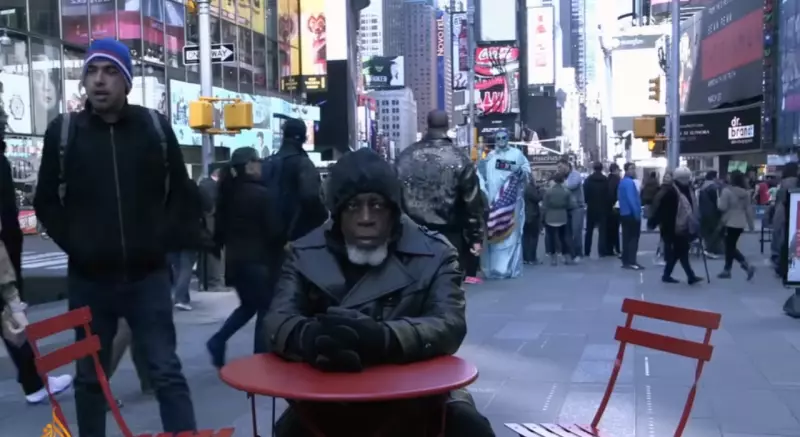
After 44 Years Behind Bars, Otis Johnson Stepped Into a New World
Otis Johnson entered Times Square in 2014 and felt like he had landed in an unreal place. The crowds moved quickly, their faces fixed forward, with thin white wires trailing from their ears. To Johnson, who had last seen the outside world in the mid-1970s, it looked less like New York and more like a scene from a spy novel. He half-seriously wondered if everyone had become a secret agent.
A Life Interrupted and a Delayed Freedom
Johnson had been almost completely cut off from society since 1975. Arrested at age 25 for the attempted murder of a police officer, a charge he has always denied, he received a 25-to-life sentence. This kept him incarcerated for 44 years. When he finally walked free in August 2014, he was 69 years old. His release had been delayed by an additional eight months due to a juvenile shoplifting charge from when he was 17.
Freedom arrived abruptly and with little ceremony. Authorities gave Johnson an ID card, paperwork detailing his case history, two bus tickets, and $40. Then they sent him on his way. With no surviving family ties, he relied on the Fortune Society, a Harlem-based nonprofit that supports people leaving prison. This organization provided him with housing and basic assistance, as documented in a report by Al Jazeera at the time.

The Shock of Technological Change
The scale of adjustment hit Johnson immediately. He had left a world of rotary phones, street corner payphones, and shop windows that showed nothing more than reflections. Now the windows themselves moved. He stared at the digital billboards rolling across Times Square and laughed in disbelief. Johnson had never seen video playing on glass.
"On the windows?!" he exclaimed in the Al Jazeera film. "We ain't seen nothing on no windows but people walking by, not no video."
The people fascinated him as much as the technology. Many appeared to be talking to themselves, eyes fixed ahead, fingers tapping small rectangles in their hands. Only after looking closer did he realize the wires ran from their ears to devices in their pockets.
"iPhones they call them or something like that?" he said, trying out the unfamiliar word. In the 1960s and 1970s, he remembered, only intelligence agents wore earpieces. That was his frame of reference.
Everyday Routines Become Overwhelming
Daily life proved equally disorienting. Supermarkets seemed overwhelming, stocked with an abundance he had never encountered. He was startled by peanut butter and jelly sold together in the same jar, by shelves of brightly colored sports drinks, and by the sheer number of choices.
Even payphones confused him at first. When he went to make a call and saw a $1 price displayed, he assumed it was a mistake. The last time he had used one, it cost 25 cents. Only later did he realize most people no longer used them at all.
A Small Group Facing Unique Challenges
Johnson's experience places him among a small group of individuals. According to the Bureau of Justice Statistics, about 3,900 people were released from US state prisons in 2013 after serving 20 years or more. This accounted for less than 0.7 percent of all releases that year.
For those who have spent most of their adult lives inside, the challenge extends beyond learning new technologies. They must relearn how to make choices at all.
Marieke Liem, a researcher at Harvard Kennedy School, has closely studied this dynamic. She has interviewed people released after decades behind bars. Liem points to a shortage of resources for those leaving prison after long sentences and to the cumulative effects of institutional life.
From learning to use public transport and opening a bank account to making basic decisions about food or daily schedules, many struggle because so much agency has been stripped away over time.
"Prison decides when lights go on and when they go off," Liem said. "Every moment of the day is scheduled. When you have been in the prison system the majority of your life, how can you be expected to function as a member of society? And make a plan?"

Finding Peace and Moving Forward
Yet Johnson's reflections, captured near the end of the Al Jazeera film as he sat quietly in Central Park, were strikingly measured. He spoke about letting go of anger and refusing the idea that society owed him something in return for the lost years.
Holding on to resentment, he said, would only "stagnate your growth and development." Survival, for him, meant facing forward rather than reliving what could not be changed. His journey highlights the profound personal and societal adjustments required after long-term incarceration.