

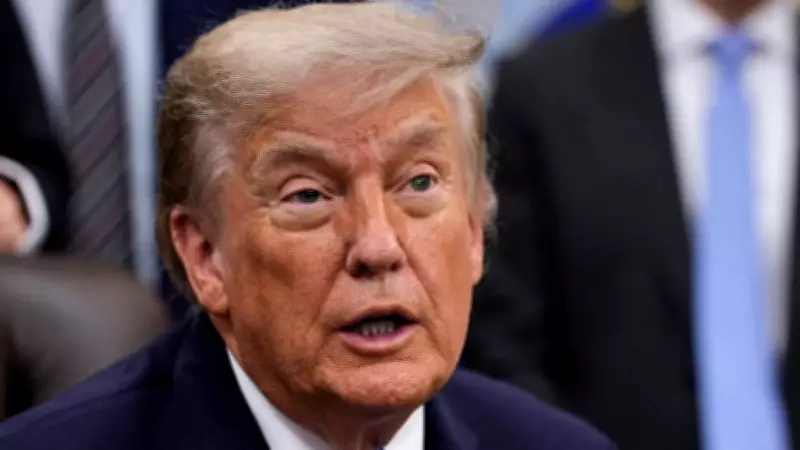
Former President Donald Trump on Monday slammed a US Supreme Court ruling that upheld birthright citizenship, stating it was 'too bad for our country.' The decision, announced earlier in the day, rejected Trump's executive order seeking to end the automatic grant of citizenship to children born in the United States to non-citizen parents.
Executive Order on Day One
Trump, who has repeatedly tested the limits of presidential power in domestic and foreign policy, issued the order last year on his first day back in office. It was part of a suite of policies designed to crack down on both legal and illegal immigration. The order aimed to reinterpret the 14th Amendment of the US Constitution, which guarantees citizenship to all persons born or naturalized in the United States.
The Supreme Court, in a 6-3 ruling, struck down the executive order, affirming that birthright citizenship is a constitutional right that cannot be altered by presidential decree. Trump responded on his social media platform, calling the ruling 'a disaster for our country' and vowing to pursue other avenues to restrict immigration.

Impact and Reactions
The ruling has significant implications for immigration policy in the United States. According to the Pew Research Center, approximately 250,000 children are born annually in the US to unauthorized immigrant parents. The decision ensures these children will continue to receive automatic citizenship, a policy that has been in place for over a century.
Immigration advocates hailed the ruling as a victory for civil rights. 'The Constitution is clear, and the court has upheld the fundamental principle that all people born in the US are equal under the law,' said Omar Jadwat, director of the ACLU's Immigrants' Rights Project. Trump's allies, however, criticized the decision, with some calling for legislative action to amend the Constitution.
The former president's criticism is likely to energize his base as he campaigns for a potential return to the White House. The issue of birthright citizenship remains a flashpoint in US politics, with deep divisions between those who view it as a magnet for illegal immigration and those who see it as a bedrock of American identity.






