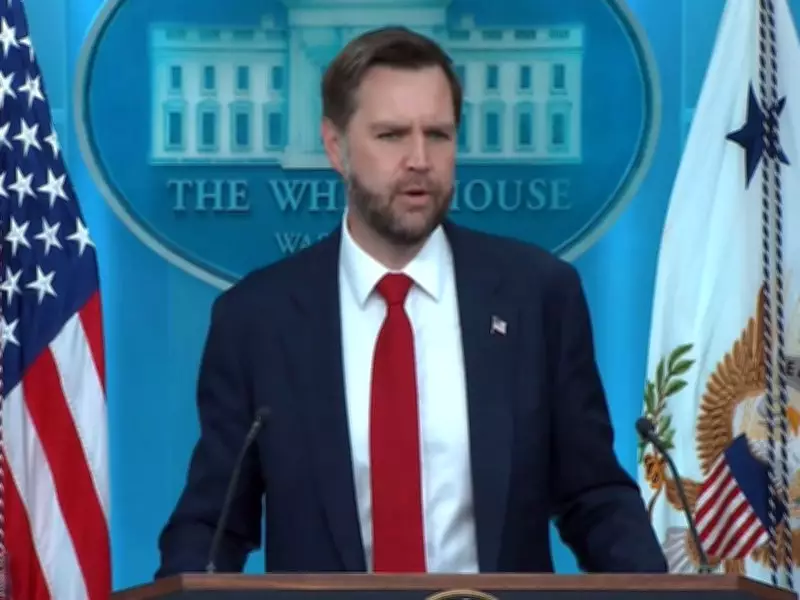
US Vice President JD Vance confirmed on Thursday that the 60-day negotiating period between the United States and Iran officially began on June 18, following a deal framework reached the previous day. Speaking to reporters at the White House, Vance stated, "I would say the 60-day period officially started today. So, yes, the deal started yesterday. We're going to start the 60-day clock today."
Missile Capabilities and Self-Defense
Addressing questions about President Donald Trump's stance on Iran's ballistic missile capabilities, Vance emphasized that the United States had significantly degraded Iran's missile arsenal. He clarified that any final agreement would still permit legitimate self-defense capabilities for Iran. "We destroyed a substantial number of their ballistic missiles and their ballistic missile launchers themselves. All the President said yesterday is that countries don't give up the right of self-defence," Vance explained. He added that while Israel retains the right to defend itself against Hezbollah attacks, Iran similarly cannot be denied self-defense. However, as part of the final deal, the US expects Iran to refrain from building missiles that could broadly threaten the world. "You can't tell a country whether Israel or Iran, they're not allowed to have any self-defence. That's not what the President has asked. But as part of the final deal, what we want to see is Iran not funding regional instability or terrorism. The nuclear weapons program is destroyed. It is gone," Vance asserted.
Energy Markets and Strait of Hormuz
Vance linked the emerging agreement to developments in global energy markets and maritime traffic through the Strait of Hormuz. He noted that Iran had been unable to export oil due to a conflict-related blockade, and that easing restrictions was already yielding results. "Iranians have been completely unable to sell oil, not because of sanctions, but because of the blockade. Fundamentally, the thing that we have done here is that we said we're going to lift the blockade, we're going to allow you to sell some of your oil, and they're going to open the Strait of Hormuz. We see that process starting to work already," he said.

Vance reported that 12.5 million barrels of oil transited through the Strait of Hormuz overnight, the highest volume since the start of the Iran conflict. He credited President Trump's peace deal for easing tensions, stabilizing energy markets, and restoring maritime traffic. "The president's peace plan in Iran is already bearing real fruits for the American people. Last night, 12.5 million barrels of oil went through the Strait of Hormuz, which is a high since the beginning of the conflict," Vance stated.
Impact on American Consumers
The Vice President highlighted tangible benefits for Americans, including falling oil and gas prices. He noted that oil prices had nearly returned to pre-conflict levels, and gasoline prices dropped below USD 4 per gallon for the first time since the conflict began. "Oil prices are down nearly to their level from the pre-war conflict, gas prices dropped below USD 4 a gallon today for the first time since the conflict, and importantly, they're going to keep falling further given how low oil prices are," Vance concluded.