
US Jobless Claims Rise but Stay at Low Levels
US initial jobless claims rose by 10,000 to 200,000 last week, remaining near historic lows despite inflation and economic headwinds, according to the Labor Department.


US initial jobless claims rose by 10,000 to 200,000 last week, remaining near historic lows despite inflation and economic headwinds, according to the Labor Department.

The alcoholic beverage industry has urged state governments to allow a 15-20% price increase to offset rising input costs triggered by the West Asia crisis.
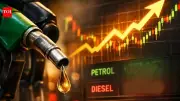
Petrol and diesel prices remain steady in India on Thursday, but government sources hint at possible hike as oil companies incur losses due to global crude rise.

The rollback of smart meters in Uttar Pradesh is expected to impact the industry. Pragya Pallavi of Kimbal highlights that consumer awareness is crucial for successful adoption of smart metering technology.

Shared lists with real-time sync. No signup needed — just open and shop together.
Recommended
One year after Operation Sindoor, India's defence strategy has shifted to tech-centric warfare, self-reliance, and massive procurement, reshaping its military doctrine and industrial policy.

Bank of Baroda predicts India's inflation to reach 4% in April due to rising food prices and global uncertainties, posing challenges for economic stability.

S&P Global Ratings has revised India's GDP growth projection for FY27 down to 6.6%, citing global headwinds and domestic challenges. The agency also maintained its FY26 estimate at 6.7%.

Madhya Pradesh CM Mohan Yadav announced an investor summit for Nimar region and new road in Rehta industrial area to boost business. Land identified for industrial use, MSME turnover in Burhanpur doubled.

US stock markets surged and oil prices plunged as investors bet on a breakthrough in US-Iran talks to reopen the Strait of Hormuz, boosting global crude supplies.
Shared lists with real-time sync. No signup needed — just open and shop together.
Recommended
Morgan Stanley says Middle East conflict offers India chance to boost investments in energy, fertilizers, defence, and data centres to strengthen domestic buffers and reduce supply chain vulnerabilities.

BMI, a Fitch Solutions company, forecasts the Indian rupee to average around Rs 95 per US dollar by end of 2026, citing persistent pressure from trade deficits and capital outflows.

A report warns of weak cement demand and rising cost pressures that may weigh on profitability over the next one to two quarters, impacting the sector.

A new analysis suggests that shifting to biogas in India's dairy sector could displace up to 4 million tonnes of LPG annually, saving Rs 2,000 crore if 10 million households adopt it.

The World MSME Forum warns that the rupee's 13% depreciation against the dollar is crippling micro, small, and medium enterprises, urging policy changes to boost domestic manufacturing.
Shared lists with real-time sync. No signup needed — just open and shop together.
Recommended
Indian companies announced a record $20.5 billion investment pledge in the US, with 12 firms signing immediate deals at the SelectUSA Investment Summit.

The government has approved railway projects worth Rs 23,437 crore to enhance connectivity to tourist destinations including Mahakaleshwar Temple and Ranthambore National Park.

The Union Cabinet approved ECLGS 5.0, providing Rs 5,000 crore credit guarantee to airlines hit by Iran war, with up to Rs 1,500 crore per carrier to ease liquidity and avert shutdowns.
Crude oil futures fell on Tuesday due to uncertainties in West Asia. Analysts expect volatility to persist as geopolitical tensions influence market sentiment.
Moody's report says India is the most resilient emerging market economy, better placed to manage future shocks due to clear and predictable monetary policy frameworks.
Shared lists with real-time sync. No signup needed — just open and shop together.
Recommended
The NCR housing market sees a Rs 1.53 lakh crore surge driven by international partnerships, with key projects and trends shaping the real estate landscape.

Uttar Pradesh CM Yogi Adityanath said the Ganga Expressway was built without bank loans, reflecting the state's improved financial discipline. Over Rs 36,000 crore was spent, with total expenditure exceeding Rs 42,000 crore including industrial clusters.

Gold prices face volatility as oil surges on Middle East tensions. US yields spike, rate hike bets rise. Key supports at $4500, $4410. Watch US jobs data.

Gold prices edged higher on MCX on Tuesday while silver fell to Rs 2.43 lakh per kg amid escalating Middle East tensions. Check city-wise rates here.

Indian mangoes sell for $50-$65 per box in the US due to high airfreight costs, tariffs, and strong demand. Learn why Americans pay a premium for Alphonso and Kesar varieties.
Shared lists with real-time sync. No signup needed — just open and shop together.
Recommended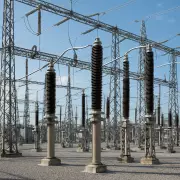
A persistent natural gas shortage has left Haryana's gas-based power plants stranded, forcing the state to rely on costly external purchases to meet a record peak demand of 16,454 MW in 2026.

US stocks traded near record highs on Monday as rising oil prices and tensions around the Strait of Hormuz kept investors cautious. The S&P 500 slipped 0.1%, while oil surged 2%.

New analysis warns UK food prices may be 50% higher by November 2024 vs pre-crisis levels, driven by climate, supply chains, and energy costs, squeezing household budgets.

Crude oil prices edged down on Monday but remained above $100 per barrel as US-Iran talks deadlock and Strait of Hormuz disruptions persist.

Residents of Tambaram Corporation face prolonged power cuts and voltage fluctuations as summer temperatures soar, causing distress and damage to appliances.
Shared lists with real-time sync. No signup needed — just open and shop together.
Recommended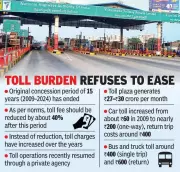
Commuters and APSRTC criticize NHAI for high toll charges on the Chennai-Kolkata NH near Amaravati, alleging that despite recovering project costs years ago, toll fees have increased instead of being reduced by 40% as per rules.
