
India's energy insulation cost: Rs 1,600-1,700 crore daily
India spent Rs 1,600-1,700 crore daily, totaling Rs 1 lakh crore in 10 weeks, to shield citizens from global energy price spikes due to Middle East conflict.


India spent Rs 1,600-1,700 crore daily, totaling Rs 1 lakh crore in 10 weeks, to shield citizens from global energy price spikes due to Middle East conflict.

Unchecked urbanisation and shrinking drains worsened Vasai Road flooding, IIT-B experts told Western Railway, which now lifts tracks, installs pumps, and improves drainage before monsoon.
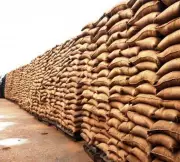
Haryana plans to build a 100-acre silo facility between Shahabad and Ambala to boost grain storage capacity and reduce post-harvest losses.
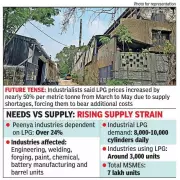
Bengaluru industries face a 50% LPG price hike in months, with commercial cylinders costing Rs 4,500 in open market, forcing MSMEs to absorb losses and consider shifting to PNG.

Shared lists with real-time sync. No signup needed — just open and shop together.
Recommended
Ten years ago, India aspired to be Vishwaguru, decolonising its mind. Now, it bows to China and the US, constrained by economic dependence and geopolitical realities.

Madhya Pradesh CM Mohan Yadav announced a Nimar region investor summit, new access road in Rehta, and tax reliefs to boost Burhanpur's industrial growth and ease of business.

Despite a lower MSCI weightage, India remains a key destination for emerging market investors due to strong fundamentals and growth prospects, says Jefferies.

An analysis of how seemingly beneficial policies can have hidden coercive elements, drawing parallels to the carrot-and-stick approach in governance.

Ghaziabad municipal commissioner Vikaramadiya Singh Malik has warned contractors of penalties for slow progress on road projects under the CM-GRID scheme, with some stretches showing less than 1% completion.
Shared lists with real-time sync. No signup needed — just open and shop together.
Recommended
Lemon prices in Goa's Panaji markets surge to Rs 8-10 per piece due to soaring summer temperatures, high demand for beverages, and supply constraints. Prices expected to drop by June end.

The Indian rupee is under severe pressure, hitting record lows near 95 per dollar due to rising crude prices, geopolitical tensions, and foreign fund outflows. Analysts warn the worst may not be over.

Wall Street stocks climbed on Friday after stronger-than-expected US jobs data eased economic concerns, even as investors monitored Middle East tensions and oil price volatility.

India's labour market is transitioning from agriculture to non-farm activities, but agriculture still employs 43% of workers. Gender, caste, and regional inequalities persist, with informality dominating 80-90% of employment.

West Godavari collector Chadalavada Nagarani's 'Circular Economy Blueprint' impressed CM Chandrababu Naidu, focusing on converting agricultural residue, seafood waste, and livestock manure into commercial products for rural employment and industrial growt
Shared lists with real-time sync. No signup needed — just open and shop together.
Recommended
Elon Musk says he paid over $10 billion in taxes in a single year, more than anyone in history. He defended billionaires' tax contributions amid California's proposed wealth tax.

Karnataka government approves 140 acres for Applied Materials' R&D near Bengaluru airport, amending land policy to attract semiconductor investments.

Telangana is fast-tracking Hyderabad's infrastructure to become a global city, targeting a $1 trillion economy by 2034 and boosting India's GDP share to 10% by 2047.

Kerala Water Authority's main pipeline repair at Karingachira will disrupt water supply to Tripunithura municipality from Friday to Sunday. Supply may resume Sunday night, but delays possible.

CII president Rajiv Memani lauded UP's policy-driven approach to investments and business ecosystem, congratulating CM Yogi Adityanath for industrial growth and infrastructure expansion.
Shared lists with real-time sync. No signup needed — just open and shop together.
Recommended
A report on income disparity in Nagaland reveals a Gini coefficient of 0.46, indicating significant inequality. Rural and urban coefficients are 0.42 and 0.44, respectively.

Did you know burning leaves, feeding wildlife, or planting certain species in your US garden could lead to fines? Discover 7 surprising garden rules and why they exist.

Dakshina Kannada district administration calls for stronger coordination between educational institutions, industries, and government departments to address a shortage of skilled manpower despite high graduation numbers.

Rumors of a fuel price hike and supply crunch led to long queues at petrol pumps in Bhubaneswar and Cuttack. Dealers and oil companies assure normal supply, urging citizens not to panic.
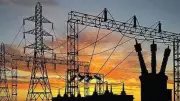
India's power demand is projected to grow over 5% in 2026-27, driven by agriculture, households, and emerging sectors like EVs, says ICRA.
Shared lists with real-time sync. No signup needed — just open and shop together.
Recommended
Ongoing West Asia conflict disrupts fuel supply in Odisha's Nabarangpur and Koraput, causing panic buying, long queues, and partial pump closures. Authorities impose sale limits and assure adequate stocks.

India received $137 billion in remittances in 2024, the highest globally, driven by its 19-million-strong diaspora. The World Migration Report 2026 highlights India's dominance in both remittance inflows and skilled migration.

The Indian rupee appreciated by 27 paise to close at 94.22 against the US dollar on May 7, after opening weaker at 94.77 amid high volatility in the interbank forex market.

India ranks among top 10 countries with highest gold reserves. RBI has brought home 104.2 metric tonnes of gold between Oct 2025 and Mar 2026, boosting domestic holdings to 77%.

US initial jobless claims rose by 10,000 to 200,000 last week, remaining near historic lows despite inflation and economic headwinds, according to the Labor Department.
Shared lists with real-time sync. No signup needed — just open and shop together.
Recommended
The alcoholic beverage industry has urged state governments to allow a 15-20% price increase to offset rising input costs triggered by the West Asia crisis.
