
Warren Blames Trump Policies for April CPI Rise
US Senator Elizabeth Warren criticized Trump's economic policies, saying they are shrinking families' paychecks, following the April CPI report showing persistent inflation.


US Senator Elizabeth Warren criticized Trump's economic policies, saying they are shrinking families' paychecks, following the April CPI report showing persistent inflation.

The 594-km Ganga Expressway from Meerut to Prayagraj is set to transform Uttar Pradesh's economy and real estate, connecting 12 districts and boosting investment opportunities.
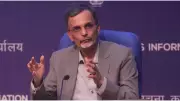
Chief Economic Advisor V Anantha Nageswaran said the West Asian crisis is a structural stress test for India's balance of payments, impacting inflation, exchange rate, and current account.

India's retail inflation rose to 3.5% in April from 3.4% in March, driven by higher food prices. Food inflation accelerated to 4.2%, while fuel inflation eased sharply. Core inflation remained below 4%.

Shared lists with real-time sync. No signup needed — just open and shop together.
Recommended
Tomato prices in Goa have surged from Rs 20 to Rs 50 per kg due to intense summer heat and supply shortages. Other vegetables like beans, ginger, and lime have also seen sharp hikes, with vendors citing reduced farm output and higher transportation costs.

Bhopal sees a sharp rise in water complaints as summer peaks, with one in five grievances related to water. Illegal pumps and dropping reservoir levels worsen the crisis, affecting even posh colonies.

The Hotel and Restaurant Association of Odisha praised PM Modi's appeal for domestic tourism, calling it a transformational opportunity for the hospitality sector.

PM Modi urges Indians to limit foreign travel, citing global uncertainties. Rising costs and geopolitical tensions already dampen demand, with Bangkok packages doubling.

US inflation eased in April as energy prices declined, with the CPI rising 3.4% annually, down from 3.5% in March. Core inflation also slowed, offering hope for potential Fed rate cuts.
Shared lists with real-time sync. No signup needed — just open and shop together.
Recommended
India's retail inflation rose to 3.48% in April, driven by higher food prices. Food inflation hit 4.20%, with tomato prices surging 35%. Rural inflation outpaced urban. The RBI projects 4.6% CPI for 2026-27.

Rajat Sharma explains the critical need to conserve foreign exchange reserves for India's economic stability and growth in Aaj Ki Baat.

PM Modi calls for reduced fuel and gold imports as Middle East conflict strains India's forex reserves. Government mulls policy options without abrupt measures.

Moody's has lowered India's GDP growth forecast for 2026 to 6.6%, citing global headwinds and domestic challenges. The agency also revised its 2025 estimate downward.

Indian markets fell sharply and the rupee plunged after PM Modi's austerity pitch, raising concerns over fiscal discipline and economic growth.
Shared lists with real-time sync. No signup needed — just open and shop together.
Recommended
Austerity measures without fairness risk failure. This article explores why equitable policies are essential for economic recovery and social stability.

Prime Minister's call for citizens to reduce consumption reframes economic resilience as a test of personal sacrifice, sparking debate on austerity's effectiveness.

A farmer from Paithan sold 25 sacks of onions for Rs 1,262 but after deductions was left with Re 1, highlighting the onion crisis and agrarian distress in Maharashtra.

BMC announces 10% water cut in Mumbai from May 15 due to below average monsoon forecast. Thane and Bhiwandi also affected. Water stock at 23.5% of required quantum.
SBI Research forecasts India's GDP growth at 7.5% for FY26 and 6.6% for FY27, citing resilient domestic demand despite global challenges. Credit growth and AI adoption are key drivers.
Shared lists with real-time sync. No signup needed — just open and shop together.
Recommended
India introduces Multi-Lane Free Flow tolling to eliminate stops at plazas, using FASTags and ANPR cameras for automatic deductions, aiming to reduce congestion and fuel waste.

PM Modi's push for workplace flexibility is framed as a strategy for economic resilience, not just convenience. Corporate India must reimagine work models to boost national strength.

India's real GDP is projected to reach 7.2% in Q4FY26, driven by strong domestic demand, as per an SBI research report, indicating robust economic growth.

India's cotton revival faces hurdles in policy execution. Experts stress on ground-level implementation for sustainable growth and farmer benefits.

Union Education Minister Dharmendra Pradhan inaugurated and laid foundation stones for 47 developmental projects worth nearly Rs 194 crore in Sambalpur, focusing on healthcare, tourism, and infrastructure.
Shared lists with real-time sync. No signup needed — just open and shop together.
Recommended
The Middle East conflict is escalating costs for Indian families, from LPG cylinders to furniture, electronics, and healthcare, as oil prices and shipping disruptions fuel inflation.

India spent Rs 1,600-1,700 crore daily, totaling Rs 1 lakh crore in 10 weeks, to shield citizens from global energy price spikes due to Middle East conflict.

Unchecked urbanisation and shrinking drains worsened Vasai Road flooding, IIT-B experts told Western Railway, which now lifts tracks, installs pumps, and improves drainage before monsoon.
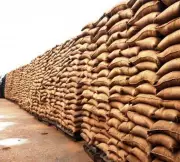
Haryana plans to build a 100-acre silo facility between Shahabad and Ambala to boost grain storage capacity and reduce post-harvest losses.
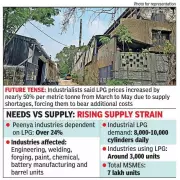
Bengaluru industries face a 50% LPG price hike in months, with commercial cylinders costing Rs 4,500 in open market, forcing MSMEs to absorb losses and consider shifting to PNG.
Shared lists with real-time sync. No signup needed — just open and shop together.
Recommended
Ten years ago, India aspired to be Vishwaguru, decolonising its mind. Now, it bows to China and the US, constrained by economic dependence and geopolitical realities.
