

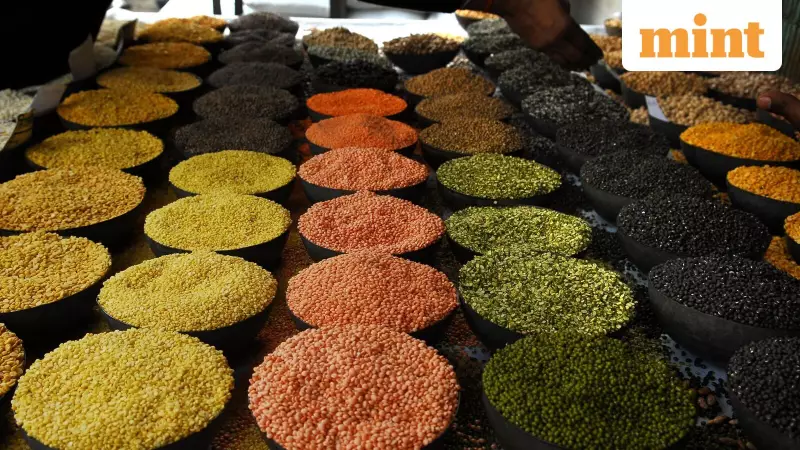
The Indian government is considering a significant move to bolster its agricultural research and development (R&D) efforts. According to two government officials familiar with the discussions, a dedicated R&D corpus for pulses and cotton could be announced in the upcoming Union Budget for the financial year 2027 (FY27). This initiative aims to tackle the persistent yield gaps that have kept India's productivity in these crucial crops below global averages, despite the country being the world's largest producer of pulses and the second-largest cultivator of cotton.
The Persistent Productivity Challenge
The core issue driving this potential budgetary allocation is a stark productivity deficit. Official data reveals that in FY25, India's average yield for pulses stood at 926 kg per hectare, which was lower than the global average of 1,015 kg. The situation for cotton was even more pronounced, with a yield of 440 kg per hectare compared to the worldwide average of approximately 820 kg. This gap exists even though India cultivated pulses over 27.52 million acres and cotton across 13 million hectares in FY25.
This low productivity makes domestic supplies highly vulnerable to weather disruptions and volatile international markets. In FY25, India produced 25.6 million tonnes of pulses and 29.7 million bales of cotton, figures that fall short of rising domestic demand. Consequently, India relies on imports to bridge the gap, sourcing pulses like tur, urad, and masur from countries including Myanmar, Canada, and Australia, and cotton from the US, Brazil, and Egypt.

Focus of the Proposed R&D Push
The proposed fund is expected to be carved out from the government's existing missions for these crops. For pulses, the emphasis will be on developing better seed genetics and region-specific agronomic practices to improve yields. "These new seed varieties will strengthen our pest and disease management systems, and expand field trials to speed up adoption at the farm level," said one of the officials, who requested anonymity.
For cotton, the R&D support will target long-standing challenges such as bollworm resistance, promoting water-efficient cultivation methods, and improving fibre quality. This is particularly urgent as yields have remained largely stagnant in recent years, and input costs have been rising. Currently, most seed-related research is undertaken by the Indian Council of Agricultural Research (ICAR), with no exclusive fund earmarked for pulses and cotton R&D.
Expert Calls for Sustained Investment
Agriculture experts and industry bodies have strongly endorsed the need for higher public investment in farm R&D. Anil Kumar S.G., founder of the Samunnati Group, suggested a "challenge-fund model" to invite both public and private sector players to invest in long-term research aimed at raising yields.
The demand projections underscore the urgency. A Niti Aayog report from September 2025 estimates that pulses demand could rise to 26.8 million tonnes by 2030 and 29.3 million tonnes by 2047 based on population growth. A normative approach, which estimates what people should ideally consume, projects a much sharper increase to 46.33 million tonnes by 2030.
"Given the demand for pulses projected by Niti Aayog, increasing yields has become far more important, and this can only be achieved through dedicated research," said Bimal Kothari, chairman of the India Pulses and Grains Association. Agriculture scientist Dr B.B. Singh, former assistant director general for pulses at ICAR, emphasized that sustained investment is needed to raise yields without stressing land and water resources.
This potential budget move follows the launch of the ₹11,440-crore Mission for Aatmanirbharta in Pulses (Dalhan Aatmanirbharta Mission) for FY26-FY31. However, no outlay has been announced yet for a proposed Cotton Productivity Mission. The final decision on the R&D corpus will be revealed when Finance Minister Nirmala Sitharaman presents the Union Budget for FY27.






