

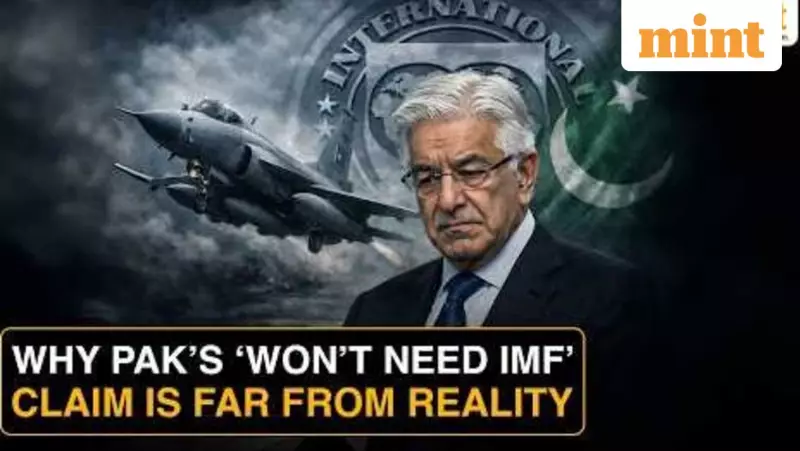
Pakistan's Foreign Minister, Khawaja Asif, made a bold assertion on Tuesday, suggesting the country could end its reliance on the International Monetary Fund (IMF) within the next six months. This surprising claim, made on January 9, 2026, was linked by the minister to a surge in aircraft orders for the national carrier. However, a closer look at Pakistan's staggering debt obligations and fragile economic indicators reveals a narrative starkly at odds with this optimism.
The Minister's Confident Assertion and Its Basis
In a statement that captured headlines, Foreign Minister Khawaja Asif expressed strong confidence about Pakistan's financial future. He pointed to an increase in orders for aircraft as a key driver for this anticipated economic turnaround. The underlying suggestion was that this activity in the aviation sector would generate enough foreign exchange and economic momentum to negate the need for further bailout packages from the international lender.
The claim aims to project an image of a nation on the cusp of financial self-sufficiency. For a country that has been a frequent borrower from the IMF for decades, such a declaration is politically significant. It attempts to shift the public and international perception from one of dependency to one of emerging strength.

The Daunting Reality of Pakistan's Debt Profile
Despite the minister's hopeful outlook, economic data presents a formidable counter-argument. Pakistan's external debt and liabilities remain alarmingly high, consuming a significant portion of the national budget through debt servicing. The country has repeatedly required IMF programs to stabilize its balance of payments, build foreign reserves, and implement structural reforms.
Analysts argue that a few aircraft orders, while positive, are insufficient to offset the macroeconomic imbalances. The nation faces persistent challenges including a high fiscal deficit, low tax-to-GDP ratio, and inflationary pressures. Exiting an IMF program typically requires demonstrating sustained economic stability, a path to debt sustainability, and robust revenue generation—milestones Pakistan has struggled to achieve permanently.
Why the Claim May Be Premature
Several factors cast doubt on the six-month timeline proposed by the Foreign Minister. First, the proceeds from aircraft deals are often structured over long periods and may not provide the immediate liquidity boost needed. Second, the fundamental issues plaguing Pakistan's economy—such as energy sector losses and underperforming state-owned enterprises—require deep, politically challenging reforms that extend far beyond half a year.
Furthermore, global financial institutions and credit rating agencies continue to view Pakistan's economy as vulnerable. The country's ability to meet its substantial external debt repayments in the coming years without the IMF's safety net is a primary concern for economists. The lender's programs also serve as a crucial signal to other bilateral and multilateral creditors, facilitating additional funding.
Implications and the Road Ahead
The disconnect between political statements and economic ground realities highlights the delicate situation Pakistan navigates. While expressing a desire to break free from the IMF's conditionalities is popular domestically, the practical path is fraught with difficulty. The next six months will be critical in observing whether Pakistan can indeed build enough reserves and implement enough reforms to walk the talk.
For now, the weight of evidence suggests that Pakistan's journey toward financial independence from the IMF will be longer and more arduous than the recent claim implies. The nation's debt story continues to be a sobering check against premature declarations of victory, underscoring the need for continued, disciplined economic management.






