

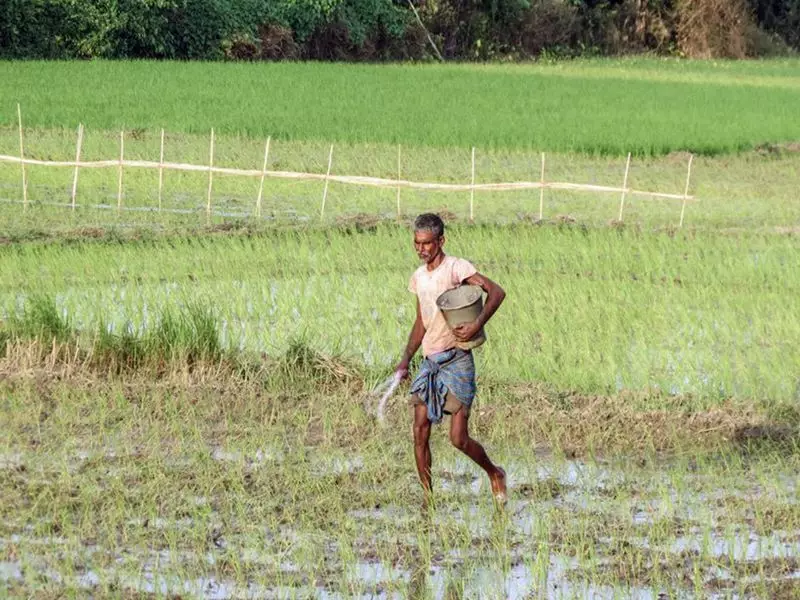
The Government of India has significantly increased its financial commitment to support farmers for the ongoing Rabi (winter crop) season. The total fertiliser subsidy bill has been revised upward by Rs 736 crore, taking the total allocation for the season to a substantial Rs 24,420 crore. This move is aimed at ensuring the continued affordability of key soil nutrients for the agricultural community.
Driving the Subsidy Increase
The primary reason for this additional financial outlay is an enhancement in the Nutrient-Based Subsidy (NBS) rates for Phosphatic and Potassic (P&K) fertilisers. The government has stepped up its support per tonne for these crucial nutrients. This policy intervention is designed to shield farmers from the volatility of international fertiliser prices and keep domestic retail prices stable and manageable.
Officials from the Ministry of Chemicals and Fertilisers confirmed the revised figures. The initial subsidy outlay for the Rabi season of 2023-24 was set at Rs 23,684 crore. The fresh injection of funds underscores the administration's focus on agricultural input cost management.

Stable Prices for Key Fertilisers
As a direct result of this increased subsidy support, the retail prices of major fertilisers have been held steady, providing predictability for farmers. The price of a 50-kg bag of Di-Ammonium Phosphate (DAP) remains fixed at Rs 1,350. Similarly, the price for Muriate of Potash (MOP) is unchanged at Rs 1,700 per bag.
This price stability is critical for Rabi season cultivation, which includes major crops like wheat, mustard, and pulses. Farmers can plan their input costs without fear of sudden price hikes, which contributes to overall food security planning for the nation.
Broader Implications for Agriculture and Economy
The decision to bolster the fertiliser subsidy has several important implications. Firstly, it directly supports farmer incomes by reducing their production costs. Secondly, it encourages the balanced use of nutrients, as the NBS scheme promotes the application of a mix of nitrogen, phosphate, potash, and sulphur based on soil health, rather than over-reliance on urea alone.
From a fiscal perspective, this increase adds to the government's overall subsidy expenditure. However, it is viewed as a necessary investment to maintain agricultural productivity and rural economic stability. The government absorbs the higher international costs to prevent them from being passed on to the end-user, the Indian farmer.
This proactive step highlights the Centre's continued commitment to the agricultural sector, ensuring that the backbone of India's economy has access to essential inputs at affordable rates during a crucial cropping season.






