India has issued a firm rebuttal to recent comments made by a senior United States official regarding the status of a long-pending bilateral trade agreement. The Ministry of External Affairs (MEA) on Friday, January 9, 2026, labelled the characterisation of negotiations as "not accurate", directly countering claims that Prime Minister Narendra Modi's actions led to a missed opportunity.
MEA Spokesperson Sets the Record Straight
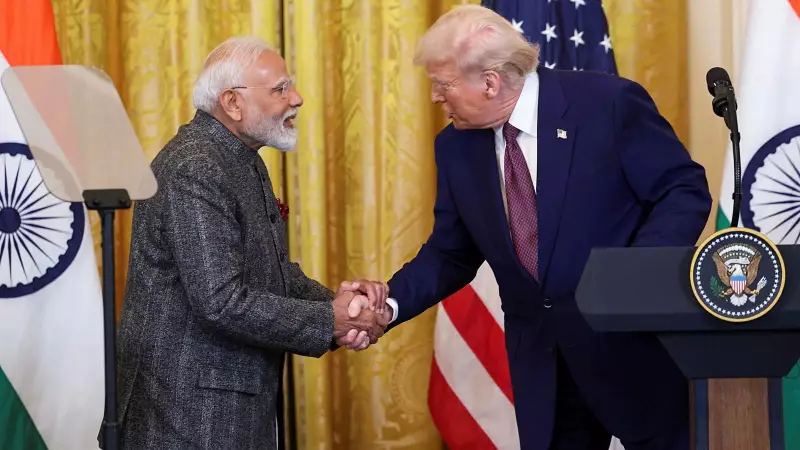
Addressing the media, MEA spokesperson Randhir Jaiswal responded to remarks by US Commerce Secretary Howard Lutnick. Lutnick had suggested that New Delhi had "missed the train" to sign a crucial trade pact and specifically stated that Prime Minister Modi "did not call US President Trump" after the deal was reportedly set up.
Jaiswal categorically rejected this narrative. He emphasised that the two leaders have maintained regular communication, revealing that Prime Minister Modi and President Donald Trump spoke on the phone on eight separate occasions during the year 2025. These conversations, he noted, covered various facets of the wide-ranging partnership between the two nations.

The Stalled Deal and Tariff Threat
The diplomatic clarification comes amid significant uncertainty surrounding the India-US trade deal, negotiations for which have seen multiple rounds over several years. Jaiswal acknowledged that the two countries have been "close to a deal on several occasions."
Simultaneously, the MEA spokesperson confirmed awareness of a potential economic pressure point. Washington is seeking to raise punitive tariffs on India to as high as 500 percent for its continued imports of Russian oil, a move that adds a layer of complexity to the ongoing trade discussions.
India's Stance and the Path Forward
Despite the pointed remarks from the US side and the looming tariff threat, India has reiterated its commitment to finding a mutually beneficial solution. Jaiswal stated that India remains "interested in a mutually beneficial trade deal between two complementary economies" and looks forward to concluding it.
The core of India's response underscores a disagreement over the public portrayal of diplomatic engagements. By highlighting the eight phone calls in 2025, India aims to correct the record and affirm that high-level communication channels have remained active and productive, contrary to the implication of a communication breakdown from the US Commerce Secretary.
The development sets the stage for the next phase of dialogue, where both nations will need to navigate trade interests, geopolitical considerations related to energy imports, and the dynamics of their strategic partnership.