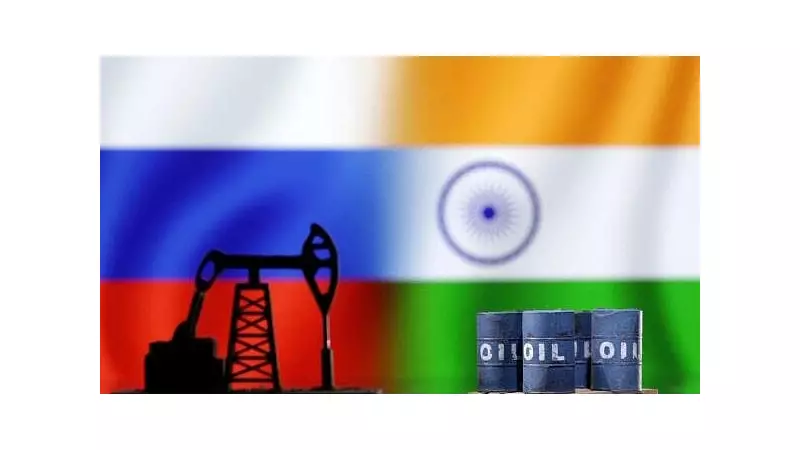
India has stated it is closely observing developments regarding a new legislative proposal in the United States that seeks to impose additional tariffs on countries purchasing Russian oil. This move comes as the bill's author, US Senator Lindsey Graham, revealed this week that former President Donald Trump has given his preliminary approval to the proposed law.
India's Cautious Stance on the Proposed Legislation
The Indian government, known for its strategic autonomy in foreign policy and energy security, is monitoring the situation with keen interest. The proposed US legislation, if enacted, could have significant ramifications for global energy markets and for nations like India that have diversified their oil import sources following geopolitical shifts.
Official sources indicated that New Delhi is following the developments but has not issued a formal diplomatic reaction at this preliminary stage. The bill's progress through the US legislative process and the potential stance of the current US administration will be key factors determining India's future diplomatic and trade responses.

Trump's Endorsement and Graham's Advocacy
The political momentum behind the bill gained notable attention when Senator Lindsey Graham, a prominent Republican figure, announced that former President Donald Trump has "green-lighted" the proposed legislation. This endorsement, revealed in the week leading up to January 9, 2026, suggests the bill could become a focal point in US trade and foreign policy, especially in the context of ongoing geopolitical tensions.
Senator Graham has been a vocal advocate for stronger measures against Russia, and this bill represents a tool to economically pressure nations that continue to engage in energy trade with Moscow. The proposed additional tariffs aim to reduce the revenue Russia earns from oil exports, thereby curtailing its capacity to fund military operations.
Potential Implications for India's Energy Strategy
India, a major importer of crude oil, has consistently defended its right to secure energy from the most affordable sources to serve its vast population and growing economy. Following the onset of the Russia-Ukraine conflict, Indian refiners have capitalized on discounted Russian crude, which has become a significant part of the country's import basket.
The potential enactment of this US bill presents a complex challenge:
- Diplomatic Balancing Act: India would need to navigate its strong strategic partnership with the USA while protecting its core national interest in energy security and economic stability.
- Economic Impact: Additional tariffs could increase the cost of importing Russian oil, potentially affecting domestic fuel prices and the trade deficit.
- Strategic Diversification: The situation may accelerate India's ongoing efforts to further diversify its energy suppliers and increase investments in renewable energy sources.
Analysts suggest that India's response will be calibrated and pragmatic, focusing on dialogue and its longstanding position that energy purchases are a necessity driven by economic, not political, considerations. The development underscores the intricate interplay between global geopolitics, energy economics, and the sovereign choices of nations in a multipolar world.