How to Identify a Deadly Krait Snake
Kraits are among the most venomous snakes in the world, inhabiting many parts of South and Southeast Asia and causing significant mortality in areas where they live. Despite their danger, kraits are often misidentified due to their shy nature and nocturnal habits. To stay safe during an encounter, it is critical to understand how to identify a krait correctly.
Identifying a krait requires careful observation of multiple characteristics, not just color or size. Factors such as physical features, behavior, habitat, and activity patterns all contribute to accurate identification. Because kraits are frequently mistaken for non-venomous snakes, knowledge and precautions are essential to avoid potential dangers.
Key Signs of an Indian Krait Snake
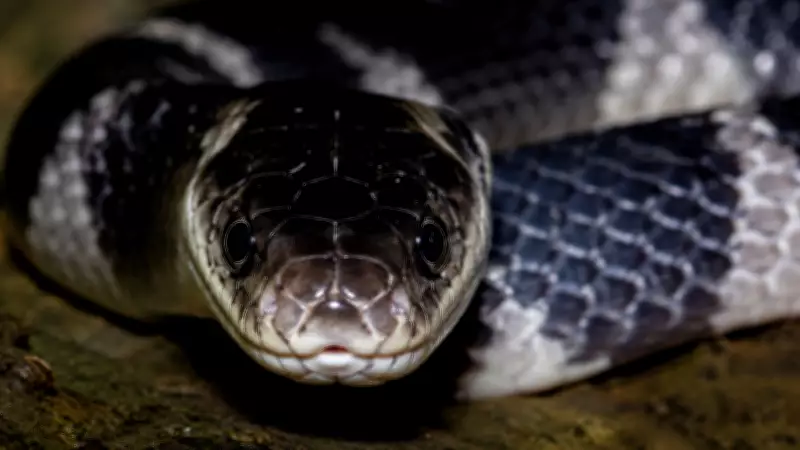
A krait is most likely identified by its slender, smooth, glossy body, often with black and white or black and yellow banding. It has a short, flat head that blends into the neck, round pupils, and a calm, non-aggressive demeanor when disturbed. Kraits are primarily nocturnal and commonly found in rural or semi-rural environments.

Body Shape and Physical Structure
The physical shape of a krait is a key identifier. These snakes are moderately sized, ranging from three to five feet in length, with the banded krait being larger than other species. The body is thin, smooth, and slightly triangular, making it stiff and firm compared to non-venomous snakes. Their scales are very smooth and glossy, causing the body to reflect light. This smoothness is one of the easiest physical traits to recognize.
Color Patterns and Markings
Color patterns are commonly used to identify kraits, but no single trait should be used alone as it can lead to errors. Many krait species have prominent black and white or black and yellow banding. For instance, the banded krait displays yellow and black rings, making it easier to recognize. The Indian krait, however, has a deep blue-black coloration with faint white crossbands. Some kraits have unique color combinations, such as the red-headed krait, which has a bright red head and tail with a black body. Caution is necessary because many non-venomous snakes have similar banding patterns.
Head Shape and Eye Features
The head of a krait is short and flat, blending smoothly with the neck, making it difficult to distinguish where the head ends and the body begins. This contrasts with vipers, which have wide, triangular heads. Kraits have small eyes with round pupils. Their faces are typically simple, with few distinctive features, though some markings may be visible under certain conditions.
Behavior and Activity Patterns
Behavior is often the most reliable way to identify a krait in the wild. Kraits are primarily nocturnal, active at night and hidden during the day. They emerge after sunset to hunt and move slowly along the ground. During the day, they are inactive and hide in burrows, under debris, inside termite mounds, or even within human homes. When disturbed, kraits remain unusually calm, often staying still or attempting to escape quietly instead of striking immediately. A key defensive behavior is coiling tightly with the head hidden under the body. Unlike cobras, they do not raise their heads or spread a hood when threatened.
Habitat and Distribution
Kraits are widely distributed across India, Nepal, Bangladesh, Sri Lanka, and many parts of Southeast Asia. They are highly adaptable, living in forests, grasslands, farmland, and areas near human settlements. They are commonly found near villages and agricultural fields because these areas provide abundant food sources, especially rodents. They may also be found near water channels, canals, and irrigation systems. If a snake is encountered at night in such environments and matches other physical characteristics, it is more likely to be a krait.
Silent Symptoms of a Krait Snake Bite
Krait bites are difficult to detect because they often cause minimal pain and swelling. Many victims do not realize they have been bitten until symptoms appear. The venom affects the nervous system, leading to abdominal pain, drooping eyelids, muscle paralysis, and breathing difficulties. As the toxin spreads, it can cause complete paralysis. Symptoms develop gradually, so people may be unaware of the danger until it is too late.

About the Author: TOI Lifestyle Desk
The TOI Lifestyle Desk is a dynamic team of dedicated journalists who curate lifestyle news for The Times of India readers. They go beyond the obvious, delving into the extraordinary to provide daily inspiration and information on fashion, travel, food, wellness, and more.