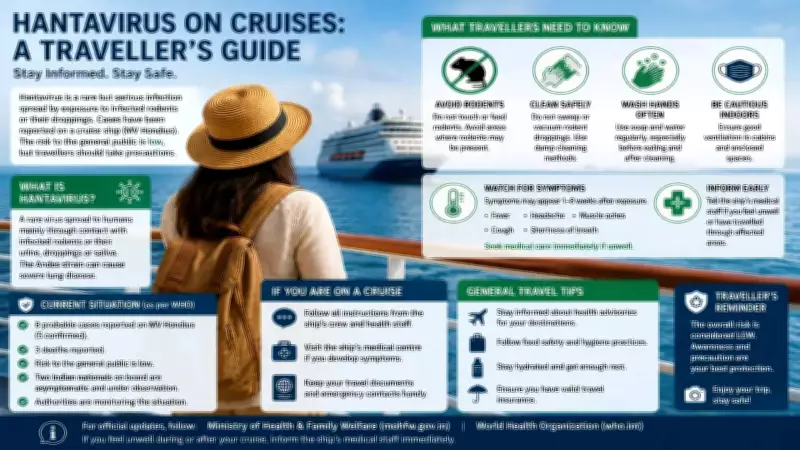
In a recent update, India's Union Health Ministry has activated precautionary surveillance measures after reported cases of hantavirus infection aboard the expedition cruise vessel MV Hondius. As per official information shared through the World Health Organization (WHO) under the International Health Regulations (IHR) framework, there are eight probable cases reported onboard the ship so far. Among these, five are laboratory-confirmed infections and three deaths. The reports also suggest that there are two Indian nationals onboard and are reportedly asymptomatic. As per government sources, the Ministry of Health and Family Welfare is closely monitoring the situation along with the National Centre for Disease Control (NCDC), the Integrated Disease Surveillance Programme (IDSP), WHO, and international health authorities.
What WHO Says
WHO has assessed the current public health risk as low. However, authorities continue to keep a close eye on the hantavirus infections. WHO also stated that currently the only hantavirus strain known to have limited human-to-human transmission is the Andes virus.
What Is Hantavirus?
According to WHO, hantaviruses are a group of rodent-borne viruses. These are serious and infect humans severely. They can get the infection via rodent's urine, saliva, or droppings. The strain in the cruise ship outbreak is believed to be the Andes virus, a hantavirus found in South America. The infection can lead to hantavirus cardiopulmonary syndrome (HCPS). Symptoms may begin between one and eight weeks after exposure and can include:

- Fever
- Muscle aches
- Headache
- Nausea and abdominal discomfort
- Cough and breathing difficulty in severe cases
As of now, there is no licensed vaccine or specific antiviral treatment for hantavirus.
What It Means for Cruise Travellers
Cruise ships remain highly sensitive environments for infectious disease monitoring because passengers and crew live in close quarters for longer periods. Ships also move to several places across ports, making contact tracing significant.
What Indian Travellers Need To Know
For Indian travellers, especially those planning expedition cruises or travel to remote wilderness regions in South America, experts advise caution but not panic. Travellers should:
- Avoid rodent-infested spaces
- Use caution while camping
- Avoid staying in poorly ventilated cabins or lodges, which are breeding grounds for rodents
- Avoid sweeping dry rodent droppings; as per WHO, damp cleaning method is better
- Practice good hygiene
The Union Health Ministry has said India remains vigilant and high-level review meetings are being held to assess preparedness and response measures. For travellers, the current risk remains low according to WHO, but awareness is essential during international travel.