World Tuberculosis Day: A Stark Reminder of India's Heavy Burden
Every year, World Tuberculosis Day serves as a critical reminder that tuberculosis remains a formidable global health challenge, particularly in nations like India. While newer diseases often capture headlines, TB continues to affect millions silently, demanding urgent attention and action.
The Global and Local Impact of Tuberculosis
According to World Health Organization data from 2022, approximately 10.6 million people worldwide were affected by TB, with nearly 1.3 million deaths attributed to the disease. These figures underscore the significant toll TB takes on global health. India alone accounts for roughly a quarter of the world's TB cases, making it a pressing local issue with global implications.
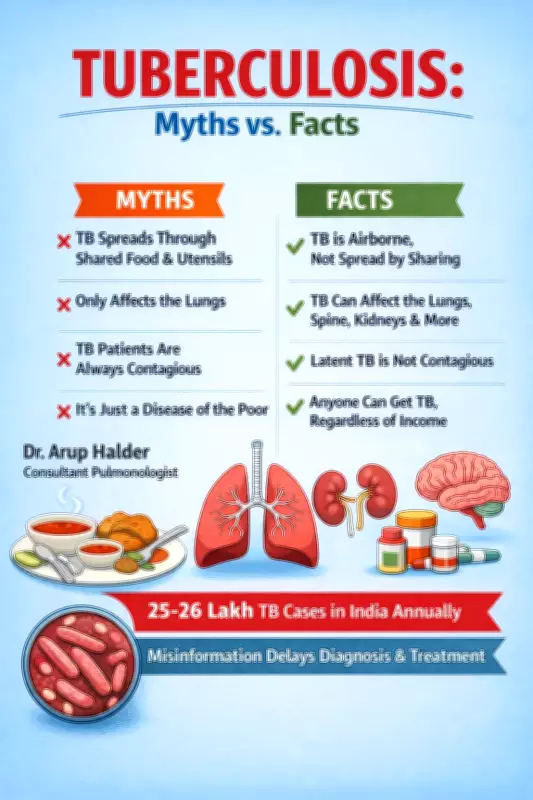
In the 2023-24 period, India reported an estimated 25 to 26 lakh TB patients, highlighting the persistent burden. Despite TB being both preventable and curable, factors such as delayed diagnosis, incomplete treatment regimens, and pervasive social stigma perpetuate its spread. Many individuals overlook early symptoms like persistent coughs or unexplained weight loss, exacerbating the problem.

Debunking Common Myths That Hinder TB Management
Dr. Arup Halder, Consultant Pulmonologist at CK Birla Hospitals, CMRI, emphasizes that misinformation significantly delays diagnosis and deepens stigma. He addresses several prevalent myths:
Myth 1: TB Spreads Through Casual Contact
"The most damaging myth is that TB transmits via shared food, utensils, clothes, or casual interactions like handshakes," Dr. Halder explains. "TB is airborne and spreads when a person with active pulmonary TB coughs, speaks, sneezes, or laughs in enclosed, poorly ventilated spaces. Activities such as sharing meals, handshakes, hugs, or using shared toilets do not pose a risk."
Myth 2: All TB Cases Are Infectious
"It's crucial to distinguish between latent and active TB," he adds. "Individuals with latent TB, where bacteria lie dormant without symptoms or visible on chest X-rays, cannot transmit the disease. Only those with active, untreated pulmonary TB are infectious. Confusing these leads to unnecessary fear and social exclusion."
Myth 3: TB Only Affects the Lungs
"TB is not exclusively a lung disease," Dr. Halder notes. "It can impact the spine, kidneys, lymph nodes, and brain. While pulmonary TB is most common, extrapulmonary cases occur regularly and are often missed due to lack of awareness among patients and some clinicians."
Myth 4: TB Is Solely a Disease of Poverty
"While overcrowding, malnutrition, and poor ventilation accelerate transmission, TB does not observe income brackets," he states. "Conditions like diabetes, smoking, and compromised immunity carry significant independent risks, making TB a concern across all socioeconomic levels."
Myth 5: Prior Treatment Guarantees Immunity
"Reinfection and relapse are possible, and multidrug-resistant TB, which does not respond to first-line therapy, remains a major challenge in India's TB elimination efforts," Dr. Halder concludes.
The Path Forward: Awareness and Action
World Tuberculosis Day transcends mere awareness posters; it calls for recognizing TB's enduring presence. Early testing, adherence to treatment, and open discussions about the disease are vital. The fight against TB is not only medical but also social, requiring collective efforts to combat stigma and misinformation.
By addressing these myths and promoting accurate information, we can move closer to effective TB management and reduction in India and globally.