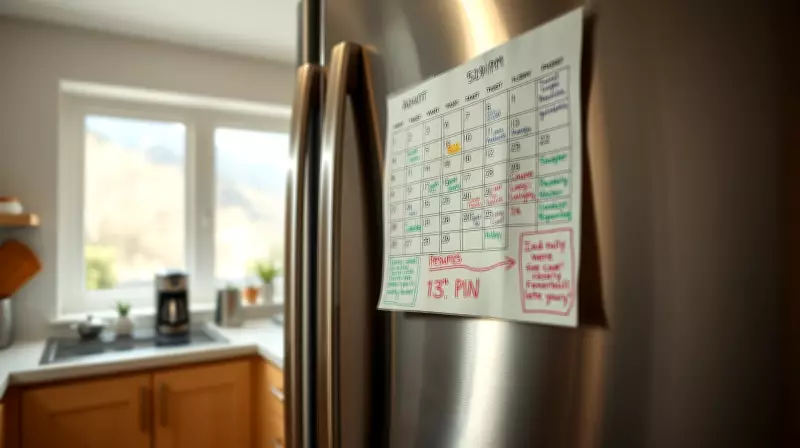
In an age of smart homes, cloud-synced calendars and digital reminders, a paper note on the fridge feels like a deliberate choice. It is an incredibly visible combination of scribbles, circled dates, and notes related to future events. To a tech enthusiast, using this old-fashioned method could easily be seen as stubbornness.
Yet, behavioural science suggests that this habit has very little to do with being old-fashioned. Instead, placing a physical schedule in the middle of a high-traffic room reveals a smart approach to cognitive efficiency. People who use these analogue tools are turning memory into a shared task that the environment helps manage.
Moving schedules from invisible digital documents to a tangible plane is a valuable mental strategy practised by people. Not only does a paper schedule placed on the fridge contain specific dates, but it also affects family dynamics and the process of information handling and remembering important dates.

Delegation of Mental Burdens to the Fridge Wall
People have powerful minds, but their capacity to keep track of future commitments is limited. Remembering all kinds of dates, such as soccer training sessions, doctors' appointments and work deadlines, can create constant background stress. For many people, simply writing those things down on paper brings quick relief.
This particular strategy has been very well studied in the behavioural sciences, in the journal Trends in Cognitive Sciences, which sets out the science behind cognitive offloading. It describes how humans instinctively use physical actions or tools in their physical environment around them to decrease the demands on internal mental memory systems. Relying on visual cues does not mean the brain is failing; it means we are working around its limits. In other words, once an appointment is written on a calendar, a person can stop spending mental energy on it. They no longer have to constantly think about the task since the paper takes care of it. As a result, this approach can reduce stress and help the mind focus on immediate needs. It reduces stress and helps you remember important dates. This strategy makes remembering a shared task. It is an effective way to stay organised in today's busy world.
The Benefit of Physical Space
One might argue that a mobile phone app is just as efficient as paper for organising appointments. Nevertheless, there is a drawback to digital notifications: they appear briefly, are easily dismissed by a single swipe and can hide behind the lock screen. By contrast, a paper calendar depends on being physically present.
The psychological strength of this approach is supported by an empirical study published in Behavioral Sciences, which analysed how transferring goals into the physical environment impacts our prospective memory, our ability to remember and execute tasks in the future. The study suggests that offloading upcoming obligations to reliable external tools can reduce the mental effort needed to stay on track. Instead of using internal focus to remember a commitment, letting the environment store the plan can help preserve attention for the task at hand.
The refrigerator door is a common example of this kind of reminder method. While an application can only be intentionally opened by the user, a paper calendar is consistently present in front of their eyes. Every trip to the kitchen for a drink or a snack offers a chance to glance at the calendar. All the key information is right there in the room, making it less likely that important dates will be forgotten. In the end, being faithful to a paper-based planner does not equal falling behind. It is simply an effective way to stay organised.