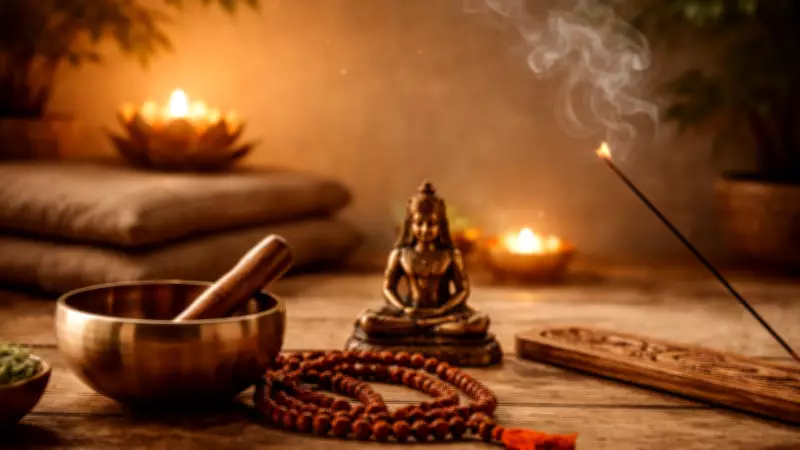
4 Hindu Meditation Practices to Cultivate Inner Peace and Mental Clarity
In a world that constantly demands more speed, noise, and reactivity, Hindu wisdom presents a gentler alternative: the mind does not require conquest but rather training. According to this perspective, peace is not an external pursuit but an internal discovery achieved by steadying attention, easing restlessness, and repeatedly returning to one's center. This is why meditation traditions rooted in Hindu thought remain so enduring—they are not based on escape but on discipline, repetition, and inner clarity. Some methods utilize sound, others the breath, sight, or the observation of the mind itself. Each practice operates uniquely, yet all direct us inward, toward stillness. Below, we delve into four key techniques that offer profound guidance for mental tranquility.
Mantra Japa: Using Sound to Steady the Mind
One of the most familiar forms of meditation in Hindu practice is japa, the repetition of a mantra. A mantra can be a sacred syllable, a divine name, or a phrase imbued with spiritual significance. When repeated slowly and attentively, it provides the mind with a single, consistent thread to grasp. The beauty of japa lies in its simplicity—it offers a mind prone to jumping between memories, worries, and desires one sound, one rhythm, and one point of return. Over time, this repetition performs a quietly powerful function: it interrupts mental noise. Instead of fueling every passing thought, japa creates a form of inner containment. This is why it remains central in many Hindu households and spiritual traditions, used in prayer, silence, while walking, or sitting alone. The practice does not demand perfection; it merely asks for presence, and within that presence, the mind often begins to settle.
Breath Awareness: Returning to the Constant Anchor
In Hindu philosophy and yogic practice, the breath is more than a physical function—it serves as a bridge between body and mind. When the breath becomes agitated, the mind typically follows suit; conversely, when the breath grows even and conscious, the mind often softens. This principle makes breath-based meditation highly effective. By observing the inhale and exhale or gently lengthening the breath through pranayama, practitioners learn to interrupt inner turbulence before it spreads. The breath becomes a real-time anchor, particularly useful during moments of anxiety, anger, or overwhelm. What renders this practice so profound is that it does not require the mind to battle itself; instead, it offers the mind a place to rest. The breath is always present, always returning, and always accessible, imparting one of Hindu wisdom's simplest lessons: peace begins with attention.

Trataka: Focusing the Gaze to Quiet the Senses
Trataka is a more concentrated meditation form where the eyes rest steadily on a single object, often a candle flame. In Hindu tradition, it trains concentration and reduces scattered thoughts. Initially, the practice may seem almost too simple, but that is precisely its strength. The eyes are a primary gateway to distraction, pulling the mind outward toward movement, comparison, and endless stimulation. Trataka reverses this habit by holding the gaze still, prompting the nervous system to slow down. The flame transforms into more than just a visual point; it becomes a focal point that gently gathers the mind. Over time, trataka can sharpen focus and foster a sense of inner composure. It is especially beneficial for individuals who find silent meditation challenging due to rapid thoughts, as the act of looking steadily teaches steadiness from within.

Witness Consciousness: Observing Without Identification
Perhaps the deepest meditation practice in Hindu wisdom is witness consciousness, which involves observing thoughts, emotions, and sensations without immediate identification. In many Hindu schools of thought, the self is distinct from the transient contents of the mind. Thoughts arise, feelings change, but the awareness that perceives them remains constant. Meditating in this manner means stepping back from the storm—instead of declaring, "I am anxious," the practitioner learns to note, "Anxiety is present." Rather than "I am angry," there is simply anger passing through awareness. This subtle shift can be transformative, creating space between the individual and their emotions. This is not denial but clarity; witness consciousness does not suppress emotions but prevents them from becoming identity. This distinction often serves as the doorway to peace, as ceasing to believe every thought allows for a recovery of inner freedom.