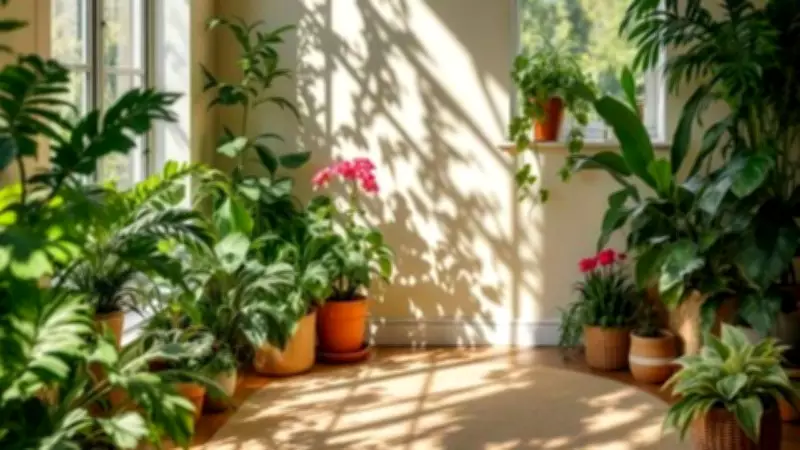
Imagine walking into a home and being introduced to a collection of houseplants with names like Daisy, George, and Luna. It might sound unusual at first, but psychologists say this habit reveals something fascinating about human nature.
The Psychology Behind Naming Plants
While you may smirk at the idea of someone introducing you to their monstera plant as Molly or addressing their cactus as Kevin, psychology may have some startling facts for you. Apparently, giving names to your plants might be the most normal thing ever! The fact is, psychologists have something interesting to tell us about our plant-naming practices.
While the whole concept of "plant parents" has been making the rounds for decades now, what many of us don’t know is that there’s actually something fascinating going on here. We not only take care of our plants but also talk to them, cheer when they get new leaves, fret if they start to droop, and even give them personality. Although it might sound like a strange thing on the surface, psychologists think there is more than meets the eye.

Anthropomorphism and Human Nature
Anthropomorphism, which means attributing human traits and emotions to an inanimate thing, is what lies behind this behavior. We often do that. We give names to our cars, we scream at computers that get stuck, and we say "thank you" to voice assistants after being told directions. From the psychological point of view, humans possess the ability to project human traits onto non-human things. According to the psychological findings presented by researchers Adam Waytz, Nicholas Epley, and John Cacioppo, this ability serves both to make our lives easier and to meet our needs for social interaction. The process of giving a name to a plant is just one of many examples of such a natural human ability.
Emotional Connections with Plants
However, giving names to plants can be something more than just anthropomorphism. An interesting paper published in 2025 in Frontiers in Psychology examined people's ability to create emotional connections with indoor plants. The participants in the experiment were plant owners who described their relationships with plants in terms of friendship, parenthood, companionship, and even brotherly or sisterly bonds. The people in the study exhibited behaviors such as communicating with plants, carefully watching over them, and attributing personality traits to them.
This is logical given how people respond to living things. Unlike an artificial object, a plant has a life cycle; it develops and reacts to stimuli. It develops new leaves, it blossoms. Occasionally, despite our best efforts, it can fail to thrive. It is only natural for such evidence of life to make us take notice and get engaged.
Mental Health Benefits of Houseplants
It has been established in scientific literature that keeping houseplants positively affects people’s mental health. A study published in 2022 included Chinese adults from urban communities and found that people who engaged in caring for their houseplants had higher levels of well-being and mindfulness compared to those who didn’t keep any plants.
This does not mean that naming your pothos will immediately make you happy. Nevertheless, giving names to your plants will give them a sense of personification, thus motivating you to take care of them and interact with them. The activities of watering, pruning, and looking at their growth will turn into calming habits amidst an otherwise busy day.
Reconnecting with Nature
It is even scientifically possible. Human beings have developed in an environment where there was no separation between them and nature. Our current lifestyles and urban settings have forced us into living in environments filled with concrete and manmade elements. Houseplants are one way through which we reconnect to nature. Numerous scientific studies have proven that having indoor plants can decrease stress and increase happiness. This is just another way to deepen that relationship.
Of course, not all people give nicknames to their flora. There are individuals who appreciate plants only for their aesthetic value. Also, there could be those who own a dozen indoor plants and do not give any of them a name. There is nothing wrong with that.

However, what should be emphasized is the fact that naming plants is a much more common practice and it carries more meaning than most people assume. It is far from being an indication of being weird or strange; quite the contrary, it often indicates positive personal traits, such as empathy, attentiveness, creativity, and the ability to build emotional connections.
The Growing Trend
Maybe this is exactly why the trend keeps gaining more and more popularity. Living plants are a breath of fresh air in a society where many people spend countless hours locked inside buildings and communicating with one another only through screens. They ask nothing in return but remind us of the simple fact – growth comes silently and subtly.
So next time you hear about a snake plant named Steve, try not to react with disgust. According to psychology, there is nothing wrong with such an attitude. This person might just be showing a typical human characteristic – the need to bond with living nature.