Multani Mitti Powder vs Stone: Which Form Delivers Better Glowing Skin?
For centuries, Indian beauty rituals have revered Multani Mitti, also known as fuller's earth, as a cornerstone of natural skincare. This mineral-rich clay has been a trusted ally for women long before modern cosmetics, serving as a potent natural cleanser, oil absorber, and glow-enhancing face pack. Naturally occurring in shades of brown, white, and occasionally green due to its mineral composition, Multani Mitti functions like a detoxifying mask, drawing out impurities and revitalizing the skin.
Origin and Cultural Significance of Multani Mitti
The name Multani Mitti translates directly to clay from Multan, referencing the historic region in present-day Pakistan where it was originally mined from the Indus plains. This valuable clay was traded extensively across the Middle East and South Asia, prized not only for cosmetic applications but also for its industrial use in degreasing wool fabrics. Its enduring legacy raises a key question for contemporary skincare enthusiasts: should one opt for Multani Mitti powder or the traditional stone form to achieve glowing skin, especially during the summer months?
Multani Mitti Powder: Pros and Cons
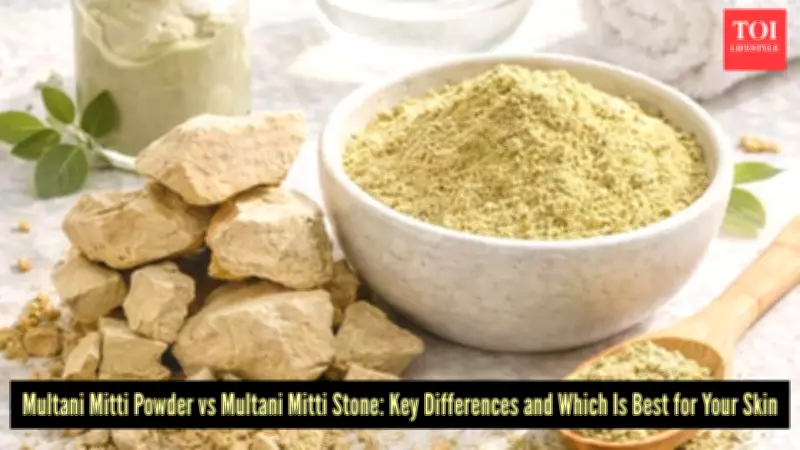
Multani Mitti is predominantly available in two formats: a fine powder and solid stone chunks. The powdered version offers significant convenience, being ready to use straight from the package. It can be effortlessly mixed with various natural ingredients like milk, aloe vera, yoghurt, or rose water to create customized DIY face masks. Widely accessible in beauty stores and online platforms, it is particularly suitable for beginners seeking an easy entry into natural skincare.

However, a notable drawback is quality inconsistency. Some commercial powders may contain fillers or adulterants, compromising purity. Despite this, for quick, hassle-free applications, Multani Mitti powder remains a popular and effective choice.
Multani Mitti Stone: Pros and Cons
In contrast, the stone form of Multani Mitti is less processed and retains a more natural state. Traditionally used in Indian households for generations, women would manually crush the stone into a powder before application, ensuring a pure, unadulterated clay experience. This method guarantees authenticity and potency, as the stone is typically free from additives.
The primary downside is the effort required. Crushing and soaking the stone before use demands time and manual labor, making it less convenient than its powdered counterpart. For those prioritizing purity and traditional efficacy over ease of use, the stone variant is the ideal selection.
Which is Better for Glowing Skin?
Both forms of Multani Mitti generally provide similar skincare benefits, including deep cleansing, oil control, and enhanced radiance, since they originate from the same source. The stone form is often regarded as more natural and pure, offering an untainted clay that may deliver superior results for glowing skin. Conversely, the powder version excels in convenience and user-friendliness.
To achieve glowing skin, experts recommend the stone variant for its purity, but caution against daily application, as it can strip the skin of natural oils. Using it once or twice weekly, blended with rose water, milk, or aloe vera, is sufficient to regulate sebum production and promote a healthy, luminous complexion. Ultimately, the choice depends on individual preferences: opt for the stone for maximum purity, or the powder for practicality, both leading to radiant results when used correctly.