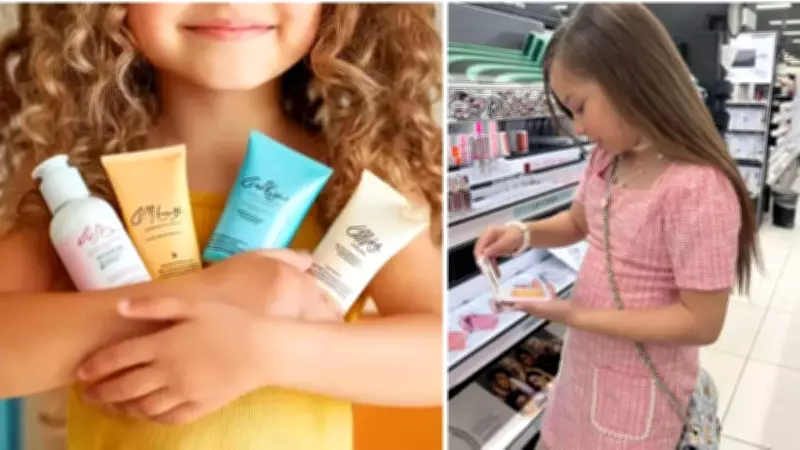
Hollywood Star's Toddler Skincare Launch Ignites Heated Controversy
In a move aimed at capturing youthful curiosity, Hollywood actress Shay Mitchell has introduced a new skincare brand specifically designed for toddlers. The launch, however, has triggered immediate backlash, with critics labeling it as tone-deaf and sparking a widespread debate about beauty standards for young children.
Mitchell's Justification and Immediate Backlash
Promoting panda-face sheet masks on Instagram, Mitchell wrote, "Kids are naturally curious and instead of ignoring that, we can embrace it. With safe, gentle products parents can trust, and sweet moments that bring us closer." Responding to the criticism, she clarified that her intention is not about beauty. "I think this is coming down to it not being a beauty thing," Mitchell stated. "Kids don’t look at masks and think about fixing, they think about it being a cooling sensation and a shared moment."
The underlying goal, according to Mitchell, is to educate children about self-care, though this rationale has been met with skepticism, with many arguing that the real issue gets "masked" by commercial interests.

Do Toddlers Even Need Skincare? Experts Weigh In
Dermatologists are unanimous in their concern. Dr. Navjot Arora, a prominent dermatologist, emphasizes, "Toddlers do not need skincare in the cosmetic or beauty sense. At this age, a child’s skin is naturally soft and well-hydrated. Their skin is also far more sensitive and permeable than an adult's, which means unnecessary products can actually cause irritation, allergies, rashes, or long-term sensitivity. Introducing beauty-oriented products such as face masks, scrubs, or sheet masks is neither medically needed nor developmentally appropriate."
Dr. Geeta Grewal, a cosmetologist, adds, "Toddlers have naturally soft, healthy skin. Their skin barrier is new, strong, and doesn't need extra products like facemasks, serums, toners, or treatments. Healthy food, sleep, and play are the best 'skincare' at this age. Toddlers don’t need skincare routines. Their skin is already perfect."
The Psychological Impact: Early Beauty Pressure
Beyond physical risks, experts warn of psychological consequences. Dr. Arora explains, "These products may unintentionally send a message that appearance needs 'enhancement,' even before a child understands what beauty standards are. Early exposure to such practices can create pressure, fuel comparisons, and shift a child’s focus toward looks instead of play, creativity, or learning. When beauty becomes a performance for social media or branding, kids are pulled into a culture they are too young to navigate."
Social Media Influence and Peer Pressure
Social media is identified as a primary driver behind this trend. Zaib Khurram Habib, a mother of three, shares, "There is a lot of peer pressure among kids about looks and it is largely due to social media where physical appearance is considered to be of primary importance. The manufacturers are riding on this craze and targeting kids through advertisements on the platforms kids are exposed to." She advocates for traditional remedies, noting, "The OG ‘dadi maa ke gharelu nuskhe’ are the best for small children and toddlers."
This shift is evident in Generation Alpha, who often follow viral trends rather than trusted skincare practices. With social media influencers' purchasing power projected to reach an astounding $5.5 trillion by 2029, according to Mintel, the commercial incentive is significant.
Mothers Divided: A Generation Gap Emerges
Millennial mothers observe a stark contrast with their Gen Alpha children. Hamna Kamal, a teacher and mother of two, says, "There is definitely a shift in the obsession rate of children about their skin. I see the way my 11-year-old daughter interacts with her friends, these kids are very self-conscious. Am I looking good? Is my skin looking dry? Is my scalp dry? When I was at this age, I did not have an idea of dry scalp or skin! But my daughter is very particular, the cream that she uses should not be used by anybody else."

On the other hand, hygiene concerns post-pandemic lead some mothers to reject skincare entirely. Mohaddesa Zaidi, mother of a toddler, states, "I wouldn’t even want people touching my child’s face without washing their hands, skincare toh door ki baat hai. Their skin is delicate, and hygiene matters way more than any so-called 'routine.' Kids need care, not beauty pressure. They should be learning confidence and comfort in their own skin, not thinking something needs to be 'fixed.' I don't think any child needs them."
The Counterargument: Self-Care and Healthy Habits
Some mothers see potential benefits. Soumya Luthra, a stay-at-home mom, shares, "For me, skincare for kids (and for adults) should be less about 'beauty' and more about self-care. I have a 4-month old, but as he grows, that’s how I would like him to think about skincare as well – building healthy habits around it and making it more about care than appearance."
Isha Jaiswal, an accountant and content creator, adds, "If a gentle product helps with dryness or sensitivity, it's fine. But people shouldn’t follow trends blindly. As a new mother, I feel toddler skincare should always focus on health and safety, not beauty or perfection."
Vandana Paswan believes, "Skincare, if presented to children as self care with its benefits, will carry the necessary message and not be deemed as an obsession. A skin care routine does give a sense of responsibility to the kids. It also gives them a sense of control which they love. As they grow they also become more independent in the long-run."
Expert Advice: Prioritize Health Over Trends
Psychologist Jyoti Sharma cautions, "I don’t think even teenagers need skincare products beyond a face wash and mild moisturiser. Toddlers using skincare is a big no for me. Chote bachhon ki skin already bohot achi hoti hai. 11 saal tak they have baby skin. They need minimum products and it's ideal if they’re household products like coconut oil and olive oil."
Dr. Arora concludes with a clear recommendation, "Parents and caregivers should prioritize skin health over beauty trends. Stick to dermatologist-approved basics—gentle cleansers, adequate hydration, sun protection for outdoor exposure, and avoiding any unnecessary cosmetic products. Preserve the innocence of childhood by keeping beauty pressures at bay."