

Indian Navy Prepares for Historic Maritime Convergence in Visakhapatnam
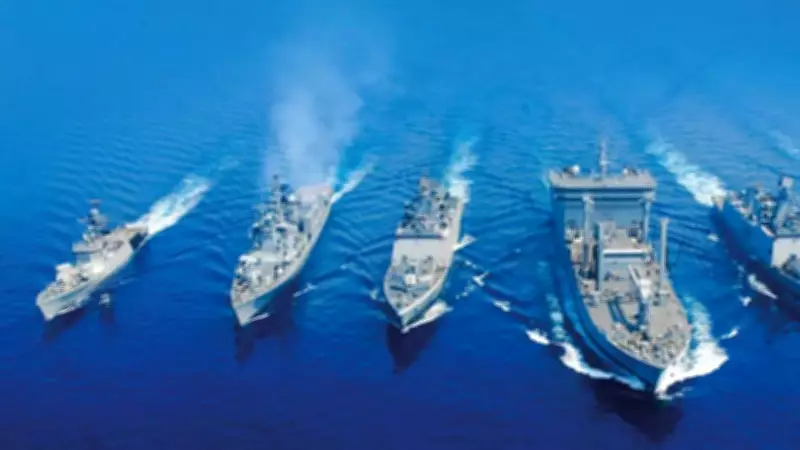
The Indian Navy is poised to orchestrate a landmark chapter in India's maritime narrative as Visakhapatnam, the 'City of Destiny,' prepares to host the prestigious International Fleet Review (IFR) and the multinational Exercise MILAN from February 15 to 25. This dual event strategically positions Visakhapatnam at the epicenter of India's Indo-Pacific engagements, reinforcing the nation's naval diplomacy and multilateral maritime outreach.
Unprecedented Scale and Strategic Depth
According to authoritative Navy sources, the current edition of IFR and MILAN will be distinguished by its expanded scope and profound strategic significance. Navies from an impressive 72 countries, including global powers such as the United States and Russia, are confirmed to participate. The mega joint naval events will showcase a formidable assembly of over 60 warships and naval aircraft from three participating nations, underscoring the event's magnitude.
The IFR is designed to elevate India's eastern seaboard as a pivotal hub for naval diplomacy and enhanced multilateral maritime cooperation. Notably, this year marks the inaugural participation of warships and assets from Germany, the Philippines, and the United Arab Emirates. The Philippines will deploy the 'BRP Miguel Malvar' (FFG-06), while the UAE Navy will contribute the warship Al Emarat, symbolizing broadening international naval partnerships.

INS Vikrant: The Star Attraction and Strategic Leverage
The aircraft carrier INS Vikrant, celebrated for its pivotal role in Operation Sindoor's naval leg, is set to be the centerpiece of the fleet review. Previously deployed with its carrier battle group in the northern Arabian Sea, INS Vikrant played a crucial role in compellence strategies, effectively pressuring the Pakistan Navy into a defensive posture and prompting urgent ceasefire requests. For the IFR, it will sail to the Bay of Bengal, demonstrating India's blue-water capabilities.
In a significant diplomatic move, China and Turkey have not been invited to the event. Reports indicate this decision is linked to their military support for Pakistan during last year's conflict in May, highlighting the geopolitical undercurrents shaping participation.
High-Profile Attendance and Operational Focus
The IFR on February 18 will be graced by President Droupadi Murmu, Governor S Abdul Nazeer, and Andhra Pradesh Chief Minister N Chandrababu Naidu. Defence Minister Rajnath Singh will participate in MILAN-2026 on February 19, emphasizing the government's commitment to maritime security.
MILAN 2026 aims to unite navies from friendly foreign countries to strengthen professional bonds, share best practices, and enhance cooperative capabilities at sea. The exercise's sea and harbour phases will concentrate on critical operational areas including interoperability, maritime domain awareness, anti-submarine warfare, air defence, and search-and-rescue operations.
Strategic Synergy and Technological Integration
Significantly, the IFR will coincide with the Indian Ocean Naval Symposium's conclave of chiefs, showcasing India's convening power in a contested maritime region. Beyond the warships at sea, the International City Parade will extend naval camaraderie into the streets, while a high-level maritime seminar will sharpen the intellectual discourse of the gathering.
These events are poised to transform IFR and MILAN 2026 beyond ceremonial rituals into dynamic platforms for strategic dialogue, operational trust-building, and enduring people-to-people engagement.
Technology and Governance: A Balanced Approach
Technology will feature prominently at IFR 2026, with a clear emphasis on its role as an amplifier of capacity, while governance shapes its effects. The event will highlight advancements such as drones, autonomous surface and subsurface vehicles, and AI-enabled maritime domain awareness tools, which can significantly multiply the reach and efficiency of even modest naval fleets.

The fleet review, as a time-honoured naval tradition, assembles ships and sailors from friendly foreign navies, serving as a vital platform for confidence-building, fostering mutual respect, and enhancing operational familiarity. This edition promises to set new benchmarks in international maritime cooperation and strategic alignment.





