AI Summit Sparks Widespread Traffic Disruptions Across Central Delhi
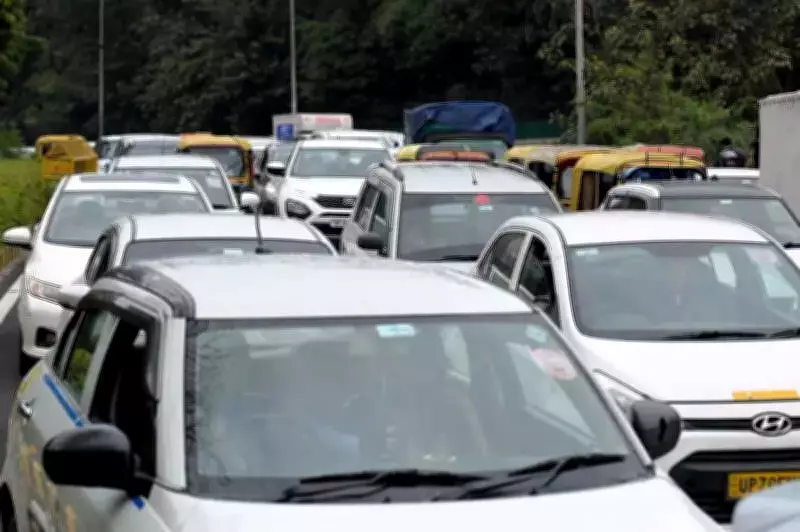
With numerous heads of state arriving in the capital for a high-profile AI summit, traffic management in central Delhi was elevated to a high-security mode on Wednesday. The extensive and sensitive VVIP movements, combined with the weekday rush, resulted in severe traffic congestion on multiple stretches, as vehicles navigated past barricades and tightly controlled intersections managed by police personnel.
Morning to Afternoon VVIP Movements Intensify Traffic Woes
The initial wave of VVIP movements commenced in the morning with the arrival of summit delegates and persisted throughout the afternoon. Each arrival significantly impacted areas around the airport as convoys proceeded to prominent hotels, including The Oberoi, The Claridges, Le Meridien, The Imperial, Leela Palace, Taj Palace, Hyatt Regency, and The Ashok. National Highway-8 and the Dhaula Kuan region experienced particularly severe disruptions, slowing traffic to a crawl.
Commuters Voice Frustration on Social Media Platforms
Frustrated commuters took to social media to express their grievances. One user posted, "There's heavy traffic towards Terminal 1. Please advise Delhi Traffic Police to deploy more personnel." Another remarked, "International travel now feels faster than reaching home from the airport. Delhi traffic tests patience more than immigration queues." These comments highlight the widespread inconvenience caused by the summit-related traffic measures.

Strict Traffic Restrictions and Multiple Movement Cycles
While the most stringent traffic restrictions were anticipated later in the day, especially around 6 pm when delegates were scheduled to move to Bharat Mandapam, the summit venue, earlier individual schedules of VVIPs also affected traffic flow. Multiple convoys traveled to locations such as Hyderabad House and AIIMS for bilateral meetings and other engagements. By 4 pm, sources reported at least 40 such 'movement cycles' had already occurred, exacerbating congestion.
Personal Accounts Highlight Commuter Struggles
Anjali, a commuter, noted the irony that while the AI summit aims to simplify life through technology, the resulting traffic chaos made movement across central Delhi exceedingly difficult. She described approaching Bharat Mandapam via Mathura Road or nearby arteries as daunting. Leaving GK-II at 3:40 pm for a meeting near Parliament, Anjali faced constant route changes due to worsening traffic near Lajpat Nagar. "Diversions via Ring Road, South Extension, Defence Colony, and Golf Links all led to more snarls," she said. Running extremely late, she ultimately had to cancel the meeting and arrived at her ITO office by 5 pm.
Widespread Congestion and Security Measures
Multiple reports indicated prolonged checks on roads near central Delhi hotel zones and a heavy security buildup around India Gate, further slowing traffic. Congestion was reported across various stretches throughout the day, including:
- Teen Murti Chowk
- Barapullah Road stretch
- Sardar Patel Marg
- Ring Road (AIIMS-sensitive stretch)
- South Extension corridor
- Mathura Road
- Pragati Maidan Tunnel
- C-Hexagon
- Connaught Place outer circle
- Mother Teresa Crescent
- Dhaula Kuan
- NH-8 Delhi-Gurgaon stretch
- Golf Links, New Delhi
Delhi Traffic Police Respond to Operational Challenges
Officials from Delhi Traffic Police explained that simultaneously managing multiple high-security delegations across diverse routes is a complex and real-time operation, particularly on a weekday. An officer stated, "We had more than 5,000 cops handling traffic, but needed to follow security protocol." The focus remained on maintaining tight security while attempting to minimize road disruptions as much as possible, though the scale of VVIP movements inevitably led to significant delays for the public.