

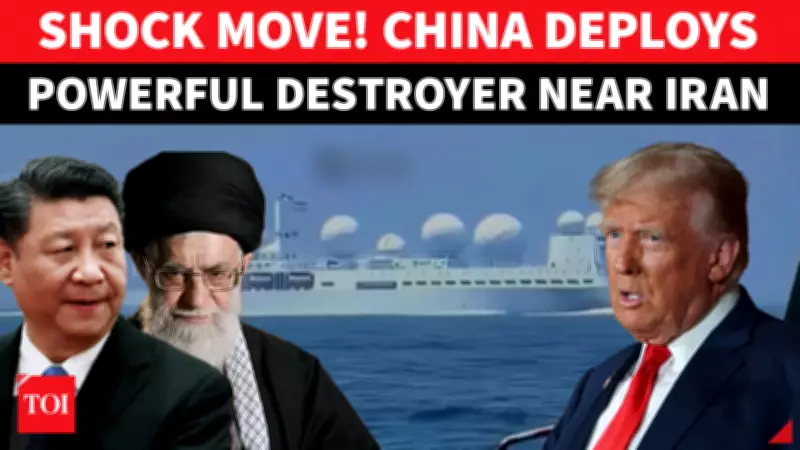
China Deploys Advanced Warships to Gulf of Oman as US-Iran Tensions Escalate
In a significant military development, the Chinese Navy has deployed a formidable naval task force to the strategic waters of the Gulf of Oman. This deployment comes at a time of heightened tensions between the United States and Iran, with the region witnessing a rapid military buildup from multiple global powers.
Chinese Naval Deployment Details
According to verified reports and satellite imagery analysis, the Chinese naval contingent includes several advanced vessels:
- Type 055 Destroyer: This is China's most powerful and technologically advanced guided-missile destroyer, representing the pinnacle of the People's Liberation Army Navy's surface combat capabilities.
- Type 052D Destroyer: A multi-role warship that complements the Type 055 with sophisticated air defense and anti-submarine warfare systems.
- Liaowang-1 Surveillance Ship: A specialized electronic intelligence gathering vessel designed to monitor naval movements and communications across vast maritime areas.
The presence of these warships in the Gulf of Oman, a critical chokepoint near the Strait of Hormuz through which approximately 20% of the world's oil passes, represents a substantial show of force and strategic interest from Beijing.

US THAAD System Spotted in Jordan
Simultaneously, satellite images released by Chinese sources have revealed what appears to be a newly installed Terminal High Altitude Area Defense (THAAD) missile defense system in Jordan. This advanced American anti-ballistic missile system is designed to intercept short, medium, and intermediate-range ballistic missiles during their terminal flight phase.
The deployment of THAAD in Jordan, which shares borders with both Israel and Saudi Arabia, significantly enhances US defensive capabilities in the region and represents a clear strategic countermeasure to potential missile threats from Iran and its proxies.
Strategic Implications and Intelligence Support
Military analysts and regional experts suggest that China's naval deployment serves multiple strategic purposes:
- Monitoring Western Naval Movements: The Liaowang-1 surveillance ship is particularly positioned to track US and allied naval activities in the Persian Gulf and Arabian Sea, providing Beijing with real-time intelligence on Western military operations.
- Potential Intelligence Support to Iran: There is growing speculation among defense analysts that China may be providing Tehran with valuable maritime intelligence gathered by its advanced surveillance capabilities, potentially including data on US naval positions and movements.
- Regional Power Projection: The deployment of China's most advanced destroyers represents a clear statement of Beijing's growing naval power and its willingness to project force far beyond its traditional sphere of influence in the Western Pacific.
This development comes amid escalating rhetoric between Washington and Tehran, with both nations conducting military exercises and deploying additional assets to the region. The simultaneous presence of advanced Chinese warships and American missile defense systems creates a complex strategic environment where multiple global powers are positioning themselves for potential contingencies.
Reshaping the Regional Balance of Power
The convergence of these military deployments is fundamentally reshaping the security dynamics of the Middle East. The Gulf waters, traditionally dominated by US naval power, are increasingly becoming a focal point of global power rivalry as China expands its maritime presence and capabilities.
This development represents a significant escalation in what many analysts describe as a new era of great power competition, with the Middle East serving as a crucial theater where US and Chinese strategic interests increasingly intersect and potentially clash.

The timing of these deployments is particularly noteworthy, occurring against the backdrop of ongoing diplomatic efforts to address regional security concerns and prevent further escalation of hostilities. As military buildups intensify on multiple fronts, the risk of miscalculation or accidental confrontation grows, making the Gulf region one of the world's most volatile and strategically significant flashpoints.





