

China's Strategic Dilemma Over Taiwan
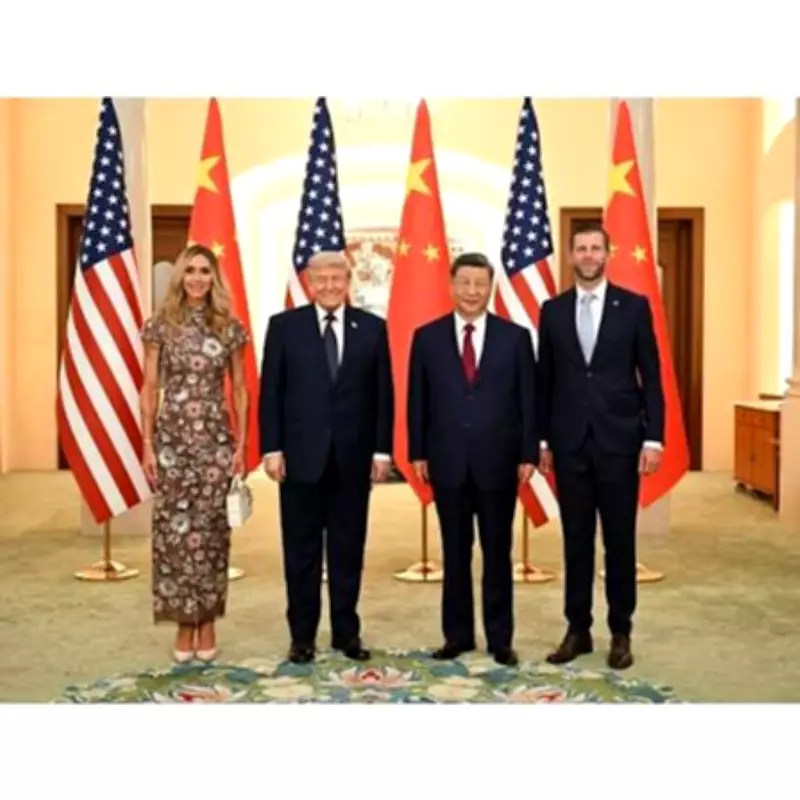
China faces a fundamental dilemma regarding Taiwan: not whether to apply pressure, but how much pressure is sufficient and what methods to use. This question has been highlighted by recent developments, including US President Donald Trump's visit to Beijing in May 2026 and the ambiguous signals about Washington's commitment to Taiwan's defence. Meanwhile, Kuomintang (KMT) chairwoman Cheng Li-wun visited the US from June 1 to 16 after her April trip to China, leaving cross-Strait relations in a state of uncertainty.
Contradictory Signals From Beijing
During Cheng's US visit, China announced a ten-point policy package offering trade facilitation for Taiwanese farmers and businesses, even as it launched a special maritime traffic law-enforcement operation east of Taiwan. These contradictory moves reflect Beijing's attempt to balance economic inducements with military pressure. The thaw in US-China relations provides Beijing political space on Taiwan, especially as it faces domestic economic pressures and prepares for the 21st National Congress of the Communist Party in 2027.
Beijing has recently eased its belligerent rhetoric and reduced aggressive military pressure, signalling that for now it is content to maintain the status quo: deterring a de jure declaration of Taiwanese independence and preventing external powers from engaging with the island. However, this approach runs counter to Taiwan's structural reality and domestic politics.

Structural Realities and Domestic Politics
While the US has delayed arms sales to Taiwan amid its focus on the Gulf region, deterring China over Taiwan remains a key part of its regional strategy. A momentary thaw in US-China relations, evident from Trump's visit, will not overcome this structural reality. For China, aggressive military pressure alienates the majority of Taiwanese fence-sitters and strengthens the Democratic Progressive Party (DPP) base, raising risks of confrontation with the US and its allies. Going slow, however, strengthens pro-independence constituencies and risks China being perceived as weak internationally.
China has thus fallen into a cycle of occasional aggressive military threats followed by accommodative positions involving economic inducements for key groups like farmers and businesses, alongside propaganda. This strategy has proven ineffective in deterring both the US and Taiwan.
Upcoming Elections and Future Trajectories
Taiwan heads into crucial local elections in November 2026, testing political strength before the presidential elections in 2028. Major players in Taiwan will likely bend toward the status quo to win elections, even as they target each other over engagement with China. The Communist Party of China is also selecting local delegates for its 21st National Congress in 2027.
Taiwan may receive greater US attention after Gulf tensions ease. Despite delays in arms sales after Trump's Beijing visit, the US cannot afford to appear weak. Letting Taiwan fend for itself is not strategically sound, as it would embolden Beijing not only over Taiwan but also in the Western Pacific.
Xi Jinping faces a difficult challenge: avoiding tensions while addressing domestic economic troubles in a crucial year before he likely seeks a fourth term. Trump's tendency to shift policy positions complicates China's calculations. Beijing cannot rely on short-term US concessions like delayed arms sales, nor can such promises change the structural reality of America's long-term strategic investment in Taiwan. After Cheng Li-wun's visit, Taiwan's Legislative Yuan president and senior KMT leader Han Kuo-yu visited the US, underscoring continued high-level US engagement with the island.
Chinese expectations of US compliance on military support may be short-lived, reducing Xi's political space at home. While neither side wants a bloody confrontation, Beijing's compulsion to show commitment to unification and Washington's structural investments in Taiwan may lead to rising tensions in the Taiwan Strait in the near future.






