

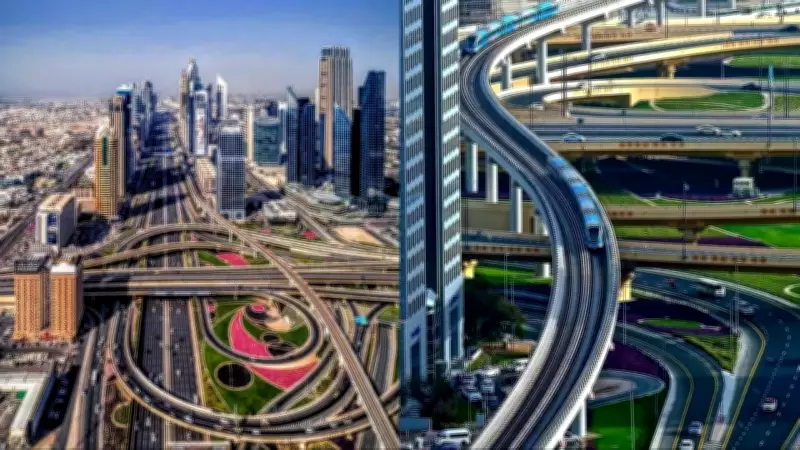
Dubai's Comprehensive Battle Against Traffic Congestion
Dubai, recognized as one of the world's fastest-growing urban centers, is implementing an ambitious and multi-faceted strategy to address chronic traffic congestion and prepare for future mobility challenges. As the city's population continues to expand and vehicle numbers increase, the Roads and Transport Authority (RTA) has launched comprehensive strategic plans and ongoing infrastructure enhancements designed to reduce travel times, improve safety, and support Dubai's vision of a smart, sustainable transportation ecosystem.
The Growing Challenge of Urban Mobility
Dubai's rapid urban expansion and economic diversification have driven a consistent annual increase in vehicles on the road, estimated at approximately 10% according to RTA officials. This growth places significant pressure on key roadways during peak commuting hours, particularly in residential-to-business corridors, around educational institutions, and along major arteries including Sheikh Zayed Road and Ras Al Khor Road.
Traffic congestion extends beyond mere inconvenience, impacting daily life, productivity, and environmental emissions. This reality has prompted the RTA to reshape mobility planning around both immediate relief measures and long-term innovative solutions.

Artificial Intelligence Revolutionizes Traffic Management
One of the most transformative elements of Dubai's congestion-reduction strategy involves the deployment of AI-powered traffic technologies. In 2025, the RTA initiated a major upgrade to its traffic signal system called UTC-UX Fusion, which utilizes artificial intelligence and digital twin technologies to dynamically optimize traffic lights in real time.
According to RTA data, this advanced system has already enhanced traffic flow across critical intersections by up to 37%, with average travel times reduced by 10% to 20% during initial trials. By completion in 2026, this intelligent system will span hundreds of major intersections, substantially decreasing wait times and smoothing traffic patterns across the entire road network.
Separately, Dubai has launched an AI-powered traffic laboratory that employs real-time data and predictive algorithms to forecast congestion before it escalates, enabling authorities to manage events, construction zones, and peak periods more proactively. These technological initiatives collectively demonstrate Dubai's ambition to become a global leader in intelligent transport systems through data-driven mobility management.
Major Infrastructure Enhancements Across Dubai
The RTA continues to expand and reconfigure infrastructure to improve traffic flow throughout the city:
- A new exit at Bu Kadra Interchange has significantly reduced rush-hour travel times, cutting peak travel duration by over 50% at crucial connection points.
- A recently opened bridge on Al Qudra Road has increased traffic capacity by nearly 200% and reduced waiting times by more than half on a vital east-west corridor, benefiting approximately 400,000 daily commuters.
- Upgrades to the Dubai Healthcare City exit connecting to Sheikh Zayed Road aim to double vehicle throughput and dramatically alleviate congestion in one of the city's busiest zones.
Additionally, the RTA completed an extensive program of traffic improvements at more than 50 locations around Dubai in 2024 and beyond, including lane expansions, new entries and exits, and roundabout reconfigurations. Some of these enhancements have reduced travel times by up to 60%, particularly around major residential and commercial intersections, directly supporting smoother peak-hour flows and broader system resilience.
Targeted Solutions for School Zone Congestion
Traffic congestion around educational institutions presents a persistent challenge, especially during morning drop-off and afternoon pick-up periods. The RTA has implemented specific traffic works in school zones affecting multiple areas, expanding parking capacity, reconfiguring entrances and exits, and installing enhanced safety features. These measures have resulted in 25% to 40% reductions in congestion near educational facilities.

Looking toward the future, the RTA will pilot a school transport pooling initiative in 2026, partnering with private operators to decrease the number of private vehicles on the road during peak times. This approach aims to ease congestion while providing safer, more efficient alternatives for student transportation, representing part of a broader push toward shared and multi-modal mobility that reduces pressure on road networks while encouraging sustainable travel habits.
Next-Generation Mobility Solutions
While infrastructure upgrades address current congestion issues, Dubai is simultaneously advancing toward futuristic mobility solutions that promise to transform urban movement:
- Driverless Vehicles and Pods: Recent announcements reveal autonomous transit routes, including driverless pods linking metro stations to key destinations, will be unveiled as part of Dubai's 2026 mobility ecosystem. Dubai has also launched operations of driverless RT6 taxi vehicles, marking a significant milestone in adopting autonomous public transport technologies that enhance both efficiency and safety.
- Air Taxi Services: Dubai's Air Taxi program, which has reached approximately 80% completion according to RTA officials, aims to introduce urban vertical flight mobility as a future commuting option that completely bypasses road congestion.
- Dubai Loop Underground Network: Perhaps the most ambitious project is the Dubai Loop, a high-speed underground transportation network being developed in collaboration with The Boring Company. The first phase, which began construction in early 2026, covers a 6-kilometer section of a planned 24-kilometer system that could revolutionize urban travel and substantially relieve surface road congestion. This subterranean mobility solution could dramatically reduce travel times and ease demand across major corridors, representing a radical innovation for the region's transport landscape.
Integrated Multi-Modal Transportation Approach
Dubai's congestion strategy extends beyond cars and roads to include comprehensive multi-modal integration with public transit and e-mobility solutions. The RTA's e-hail strategy has experienced significant growth, reducing private vehicle numbers on roads by promoting ride-hailing platforms during peak hours. Local analysis indicates this shift has decreased daily vehicle counts and carbon emissions while improving peak-period traffic flow.
By strengthening connections between metro, tram, bus, pods, and e-hailing services, Dubai encourages commuters to choose alternatives to private vehicles, a crucial step in reducing congestion over the long term. For commuters, this integrated approach translates to faster peak travel times through infrastructure expansion and advanced traffic signal control, reduced school congestion via dedicated measures and pooling pilots, improved flow around critical corridors like Healthcare City and Al Qudra Road, more efficient intersection management through AI and predictive analytics, and fewer private vehicles through shared mobility and e-hailing adoption.
Next-generation transit solutions including driverless pods, air taxis, and underground networks are being gradually implemented to fundamentally reshape urban mobility. Dubai's comprehensive traffic strategies reflect a broader ambition to build a human-centered mobility ecosystem that integrates technology, sustainability, and quality of life objectives alongside economic growth and global competitiveness. The focus on smart infrastructure, shared mobility, and futuristic transport innovations positions the emirate as a global leader in urban mobility planning.
For commuters, residents, investors, and city planners alike, the RTA's multi-pronged strategy offers promising prospects that historical gridlock can evolve into a more efficient, safer, and future-ready transportation reality.





