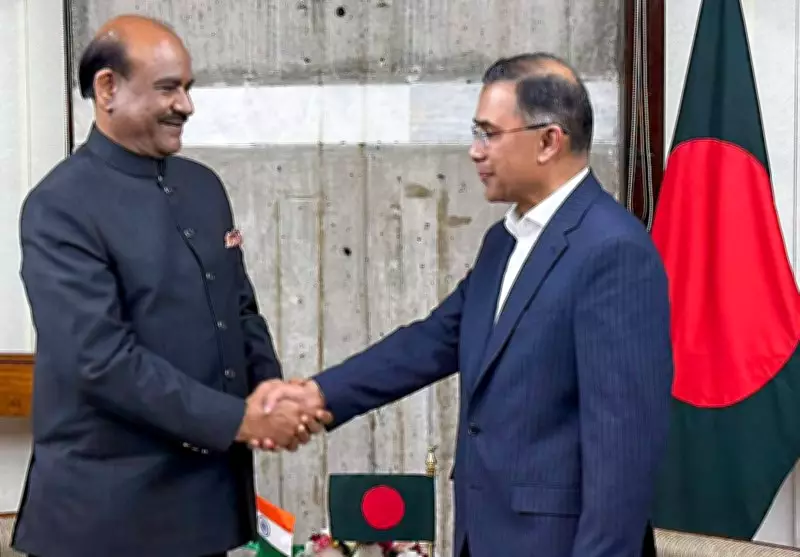
India's new High Commissioner to Dhaka, Dinesh Trivedi, announced on the day he presented his credentials to Bangladesh President Mohammed Shahabuddin that New Delhi would resume issuing tourist visas to Bangladeshi nationals from June 28, ending a nearly two-year suspension. The move, coupled with the Centre's decision to accord Trivedi the status of a Union Cabinet Minister in the Table of Precedence for ceremonial functions, signals that India is serious about resetting ties with one of its most important neighbours.
Diplomatic Irritants Persist
The optimism was quickly tempered by another diplomatic irritant. Days earlier, Bangladesh had protested after Prime Minister Tarique Rahman's adviser, Zahed Ur Rahman, was stopped by immigration officials at New Delhi airport while travelling on a personal visa. Though the matter was resolved quickly, it highlighted the mistrust that continues to shadow the relationship. Together, these developments illustrate where India-Bangladesh ties stand today: on the path to a reset, but still some distance from a full restoration.
From Strategic Partnership to Diplomatic Chill
For more than a decade under Sheikh Hasina, Bangladesh emerged as India's closest partner in South Asia. Security cooperation deepened, connectivity projects expanded, power trade grew, and bilateral commerce reached record levels. The relationship suffered its biggest setback after Hasina's ouster in August 2024. The interim administration led by Muhammad Yunus adopted a more cautious approach towards India, while New Delhi grew increasingly concerned over attacks on minorities, rising anti-India sentiment, and Dhaka's expanding engagement with China. Tourist visas were suspended, sharply reducing travel for medical treatment, education, tourism, and business.

Why Tarique Rahman Matters
The election of BNP leader Tarique Rahman as Prime Minister has given both capitals an opportunity to recalibrate ties. Unlike the interim government, the new administration has an electoral mandate, providing New Delhi with a more stable political interlocutor. India's decision to send Lok Sabha Speaker Om Birla and Foreign Secretary Vikram Misri to Rahman's swearing-in reflected its willingness to engage the new government, while Dhaka has also acknowledged the importance of maintaining stable ties with its largest neighbour.
A Political Envoy in Dhaka
Trivedi's appointment reflects that new approach. He is no ordinary diplomat. A former Railway Minister, seasoned parliamentarian, and a politician with deep roots in West Bengal, he becomes one of the rare political appointees to head India's mission in Dhaka. The decision to accord him Cabinet-rank protocol further reinforces that he enjoys direct political backing from the highest levels of government. That matters because India-Bangladesh relations today require more political management than conventional diplomacy. Many of the outstanding issues — from border management and illegal migration to water-sharing and trade — require coordination across several Indian ministries as well as state governments, particularly West Bengal, Assam, Meghalaya, and Tripura. A political heavyweight may therefore be better placed than a career diplomat to navigate these domestic and bilateral challenges.
Positive Signals, Persistent Challenges
The resumption of tourist visas is the strongest confidence-building measure announced so far. But border issues, particularly allegations by Dhaka regarding "push-ins" of suspected illegal migrants and India's concerns over illegal immigration and cross-border crime, continue to generate friction. Incidents such as the questioning of the Bangladesh PM's adviser demonstrate how quickly diplomatic goodwill can come under strain.
The China Factor
Rahman's decision to make Malaysia and China — not India — his first overseas destinations as Prime Minister was closely watched in New Delhi. China remains Bangladesh's largest infrastructure partner and defence supplier, financing ports, industrial parks, and transport projects. India understands that Bangladesh will continue balancing relations with multiple powers. The objective for New Delhi is not to prevent Dhaka's engagement with Beijing, but to ensure that India remains Bangladesh's preferred strategic partner where security, connectivity, and regional integration are concerned.

The Road Ahead
The coming months will show whether symbolic gestures translate into substantive progress. A Modi-Rahman bilateral summit, expansion of visa services, faster implementation of connectivity projects, and smoother cooperation on border management will all be key indicators. The relationship is no longer in free fall, but neither has it returned to the strategic comfort of the Hasina era. For now, it rests on cautious optimism, and on whether both governments can rebuild the trust that once made India-Bangladesh ties a model for regional cooperation.