India Explores Russian Su-57 as Interim Stealth Fighter Solution
With India's indigenous Advanced Medium Combat Aircraft (AMCA), a fifth-generation stealth fighter jet, still approximately a decade away from operational deployment, New Delhi is actively investigating interim options to address the critical gap in advanced air combat capabilities. Recent reports highlight that the Russian Sukhoi Su-57 is emerging as a leading candidate for this role, offering a potential strategic partnership to bolster India's defense posture in the near term.
Global Showcase at Aero India 2025
At the prestigious Aero India 2025 event held in Bengaluru, both Russia and the United States prominently displayed their fifth-generation fighter jets, the Su-57 and F-35 Lightning II, respectively. Russia extended a proposal for joint production of the Su-57, coupled with significant technology transfer, aiming to foster deeper defense collaboration. Concurrently, the United States pitched the F-35 as a means to strengthen bilateral defense ties with India, emphasizing its advanced technological features.
Strategic Imperatives Amid Regional Rivalry
The urgency for acquiring a fifth-generation platform is driven by China's rapid expansion of its stealth fighter fleet, which includes the Chengdu J-20 and Shenyang J-35 aircraft. Notably, China has reportedly offered 40 J-35 fighters to Pakistan, escalating regional security concerns and underscoring the need for India to enhance its aerial capabilities promptly.

Su-57 vs. F-35: A Comparative Analysis
Reports suggest that the Su-57 may present a more viable option for India compared to the F-35. The American F-35 comes with operational restrictions, particularly regarding limited integration with indigenous Indian weapons systems, which could hinder operational flexibility. In contrast, the Russian Su-57 is viewed as a more adaptable choice, potentially allowing for greater customization to meet India's specific defense requirements.
Advanced Technical Discussions Underway
Senior Russian aerospace officials have confirmed that technical discussions with India are progressing to explore joint production of the Su-57E, the export variant of Russia's first operational fifth-generation fighter. Vadim Badekha, CEO of United Aircraft Corporation (UAC), described these talks as being at an "advanced stage," with potential licensed production planned at facilities currently manufacturing the Su-30MKI. This initiative would involve extensive participation from Indian industry and systems, fostering local technological development.
Alexander Mikheev, CEO of state arms exporter Rosoboronexport, further elaborated that Russia has offered not only the supply of Su-57E jets but also assistance in organizing their production in India and supporting the development of India's AMCA program. This comprehensive proposal aims to create a synergistic relationship, enhancing India's defense manufacturing capabilities while addressing immediate operational needs.
Understanding the Su-57 Fighter
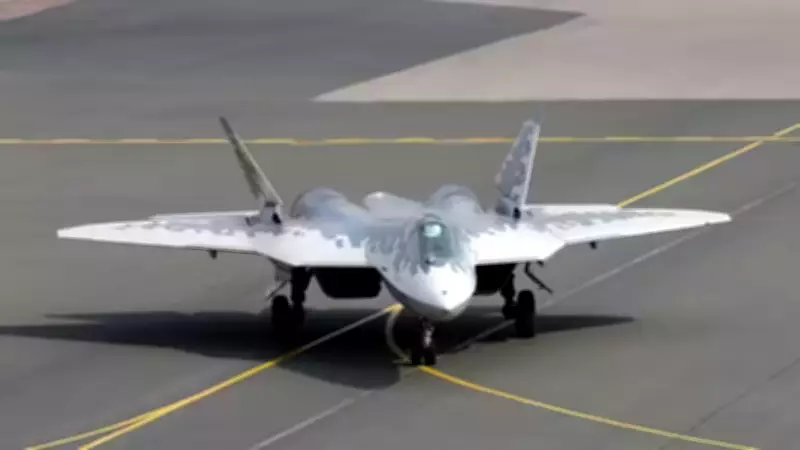
The Sukhoi Su-57 is Russia's inaugural operational fifth-generation fighter, developed under the PAK FA program to replace aging MiG-29 and Su-27 variants. Designed as a versatile multirole platform, it excels in air superiority, strike missions, suppression of enemy air defenses, and network-centric operations. Unlike Western stealth fighters that prioritize minimal radar cross-section, the Su-57 emphasizes super-maneuverability alongside reduced radar signature, incorporating internal weapons bays, composite materials, and 3D thrust-vectoring engines to balance agility with stealth. The aircraft entered limited service with the Russian Aerospace Forces in 2020 and continues in low-rate serial production.
Overview of the F-35 Lightning II
The Lockheed Martin F-35 Lightning II is a United States fifth-generation multirole fighter engineered for air superiority, strike missions, electronic warfare, and intelligence operations. It is available in three variants: the conventional F-35A, the short-takeoff/vertical-landing F-35B, and the carrier-based F-35C. While renowned for its technological sophistication, the F-35 imposes restrictions on the use of non-US weapons systems, which may limit operational flexibility for nations like India seeking to integrate indigenous equipment.