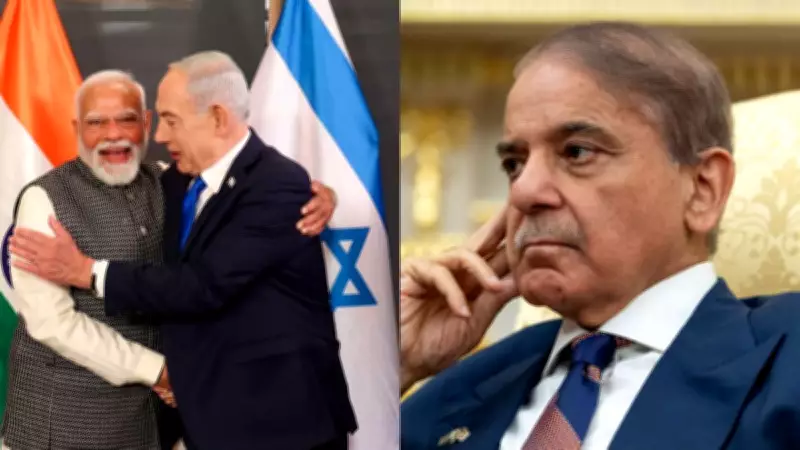
India-Israel Strategic Partnership Reshapes West Asia, Alarms Pakistan
The evolving strategic alliance between India and Israel in West Asia is creating a significant shift in regional geopolitics, often described as a 'hexagon of alliances' that extends beyond bilateral ties to include other key nations. This development is already causing concern in Pakistan, which perceives it as a challenge to its traditional influence and strategic interests in the region.
Formation of the Hexagon of Alliances
India and Israel have been strengthening their partnership across multiple domains, including defense, technology, and counter-terrorism. This collaboration is not isolated but forms part of a broader network involving countries like the United Arab Emirates, Saudi Arabia, Bahrain, and Oman. Together, these nations create a strategic hexagon that enhances security cooperation, economic integration, and diplomatic alignment in West Asia.
Key aspects of this alliance include:

- Defense and Security: Joint military exercises, intelligence sharing, and arms deals that bolster regional stability against common threats.
- Economic Ties: Increased trade and investment flows, particularly in sectors like energy, infrastructure, and technology.
- Diplomatic Coordination: Collaborative efforts on international platforms to address issues such as terrorism and regional conflicts.
Impact on Regional Dynamics
This hexagon of alliances is altering the balance of power in West Asia. By aligning with Israel and other Gulf nations, India is expanding its footprint in a region historically dominated by Pakistan's influence through its ties with countries like Saudi Arabia and the UAE. The normalization of relations between Israel and several Arab states, facilitated in part by India's diplomatic efforts, has further accelerated this shift.
Notable changes include:
- Enhanced counter-terrorism cooperation that targets groups operating in the region, indirectly affecting Pakistan's strategic calculus.
- Economic diversification away from traditional partners, reducing dependency on Pakistan-centric alliances.
- Increased Indian involvement in regional security initiatives, positioning New Delhi as a key player in West Asian affairs.
Pakistan's Concerns and Reactions
Pakistan has expressed unease over this developing alliance network, viewing it as a threat to its geopolitical standing. Historically, Pakistan has relied on its relationships with Arab nations for economic aid, military support, and diplomatic backing on issues like Kashmir. The strengthening of India-Israel ties, coupled with India's growing rapport with Gulf countries, undermines this dynamic.
Specific worries for Pakistan include:
- Potential isolation in regional forums where India and its allies could marginalize Pakistani interests.
- Loss of leverage in bilateral disputes with India, as New Delhi gains broader international support.
- Economic repercussions, such as reduced investment from Gulf nations that are now engaging more with India.
In response, Pakistan has sought to reinforce its own alliances, particularly with China and Turkey, but the rapid pace of India's integration into West Asia poses a persistent challenge.
Future Implications and Strategic Outlook
The India-Israel hexagon of alliances is likely to deepen in the coming years, with implications for global geopolitics. As India continues to pursue its 'Act West' policy, this partnership could serve as a model for other nations seeking to navigate complex regional landscapes. For Pakistan, adapting to this new reality will require strategic recalibration, potentially through enhanced diplomacy or economic reforms to maintain relevance.
In summary, the strategic convergence between India and Israel in West Asia is not just a bilateral affair but a transformative force that is already rattling Pakistan and reshaping the contours of regional power. This alliance underscores India's rising global stature and the evolving nature of international relations in a multipolar world.