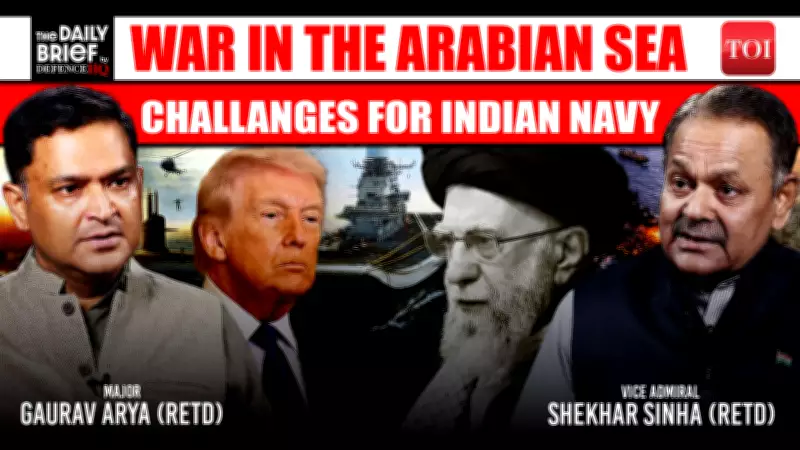
Arabian Sea Tensions Escalate: India's Naval Challenge in Focus
The strategic waters of the Arabian Sea have become a focal point of international concern as tensions between the United States and Iran continue to escalate. In a recent episode of The Daily Brief by DefenceHQ, Major Gaurav Arya engaged in a critical discussion with retired Vice Admiral Shekhar Sinha, examining the complex maritime challenges facing the region.
Sinking of Iranian Naval Vessel Raises Legal Questions
The conversation centered on the recent sinking of an Iranian naval vessel near Sri Lanka, an incident that has sparked significant debate about maritime law and international waters. Vice Admiral Sinha provided expert analysis on the legality of such military actions in international waters, emphasizing how these developments create dangerous precedents for global maritime security.
The growing risks to global shipping lanes and energy routes formed a crucial part of the discussion. As one of the world's busiest maritime corridors, the Arabian Sea serves as a vital artery for international trade, particularly for energy shipments from the Middle East to global markets. Any disruption in this region could have cascading effects on the global economy.

Indian Navy's Strategic Responsibilities
The episode provided detailed examination of the specific challenges facing the Indian Navy in this volatile environment. With India's extensive coastline and strategic position in the Indian Ocean Region, the navy bears significant responsibility for:
- Protecting crucial sea lanes of communication
- Safeguarding Indian merchant ships and their crews
- Securing national interests in the broader Indian Ocean Region
- Maintaining freedom of navigation for all vessels
Vice Admiral Sinha highlighted how the Indian Navy must balance multiple responsibilities while navigating the complex geopolitical landscape. The discussion emphasized that India's naval forces must remain vigilant and prepared to respond to various scenarios that could emerge from the ongoing US-Iran tensions.
Broader Implications for Regional Security
The analysis extended beyond immediate naval concerns to consider the broader implications for regional stability. The Arabian Sea tensions represent more than just a bilateral conflict between the US and Iran—they have become a litmus test for maritime security cooperation and international law enforcement in contested waters.
The Indian Navy's role has never been more critical, as it must simultaneously protect national interests while contributing to regional stability. This requires sophisticated diplomatic engagement alongside military readiness, as the waters of the Arabian Sea continue to witness increased military presence from multiple nations.
As global powers maneuver in these strategic waters, India faces the complex task of protecting its maritime interests while avoiding escalation of regional conflicts. The discussion concluded that proactive diplomacy, enhanced surveillance capabilities, and international cooperation will be essential components of India's strategy to navigate these challenging waters successfully.